
Where to Stay in Nashville (Best Areas Explained): A No-Fluff Guide for 2026
Here’s the thing: Nashville isn’t one city. It’s a collection of distinct pockets, each with its own rhythm, price point, and personality. Picking where to stay isn’t just about proximity to Broadway. It’s about matching your trip’s energy to a place that supports it, without surprise noise, hidden parking fees, or a 20-minute rideshare every time you want coffee.
Let’s walk through this like we’re chatting over a local brew. No jargon. No recycled blog fluff. Just practical clarity about where to actually rest your head in Music City.
First, a Quick Reality Check
Nashville has changed. A lot. What was a quiet residential street in 2022 might now have a boutique hotel, a rooftop bar, and weekend lineups that start at 10 AM. Based on 2026 hospitality data, average nightly rates in core neighborhoods have shifted 15–25% since 2023, and “walkable” doesn’t always mean “quiet.”
Also, Broadway isn’t the only game anymore. Some of the city’s best food, live music, and local energy live a short ride away from the honky-tonk corridor. The trick isn’t avoiding downtown entirely. It’s knowing what you’re signing up for and what alternatives might serve you better.
Downtown / Broadway: The Obvious Choice (With Caveats)

Let’s start where most people do. Downtown Nashville, especially the Broadway strip, is where the postcards come from. Neon signs. Live music spilling onto sidewalks. The energy is electric.
Who it suits: First-timers who want to be steps from the action. Groups celebrating a milestone. Travelers who plan to stay out late and don’t mind noise.
What to expect:
- Hotels range from budget chains to luxury towers. Using 2026 averages, expect $180–$350+ per night depending on season and proximity to Broadway.
- Walking is easy to attractions, but parking is expensive ($35–$55/night at most hotels) and often valet-only.
- Noise is real. Even upper-floor rooms can pick up street sound on Thursday–Saturday nights. If you’re a light sleeper, request a room facing away from Broadway or bring earplugs.
A practical note: If you book downtown, check whether your hotel charges a “destination fee” (common in 2026). These $25–$40 nightly add-ons often include Wi-Fi or gym access you might not use. Factor that into your comparison.
When to skip it: If you prefer quiet evenings, are traveling with young kids, or want to experience Nashville beyond the tourist corridor.
The Gulch: Trendy, Walkable, Pricier
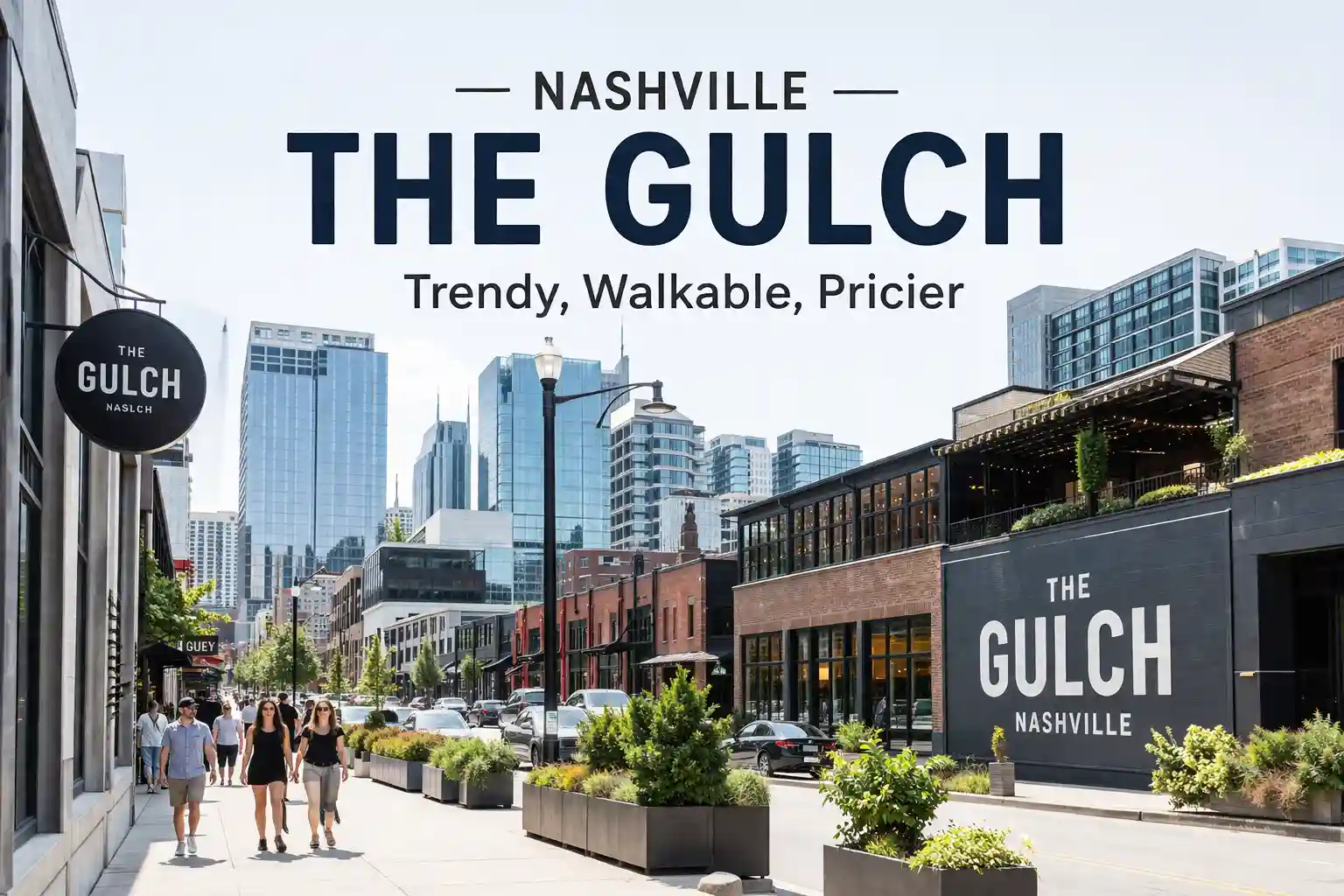
Think of The Gulch as Nashville’s polished younger sibling. It’s sleek, Instagram-ready, and packed with restaurants, boutiques, and rooftop bars. The area feels more “urban chic” than “country casual.”
Who it suits: Couples, solo travelers, or small groups who value design, dining, and easy walks to downtown (about 10–15 minutes on foot).
What to expect:
- Boutique hotels and upscale extended-stay options dominate. Nightly rates using 2026 averages: $200–$400+.
- Highly walkable within the neighborhood, with good sidewalk infrastructure and pedestrian crossings.
- Parking is still pricey but often included in higher-tier bookings. Validate with your hotel before assuming.
Why people like it: You get proximity to downtown without being in the Broadway fray. Dinner options are diverse, and the vibe shifts easily from daytime coffee runs to evening cocktails.
One consideration: The Gulch can feel a bit curated. If you’re seeking gritty local character or budget-friendly eats, you might want to venture east or south for dinner.
East Nashville: Artsy, Local, Slightly Removed
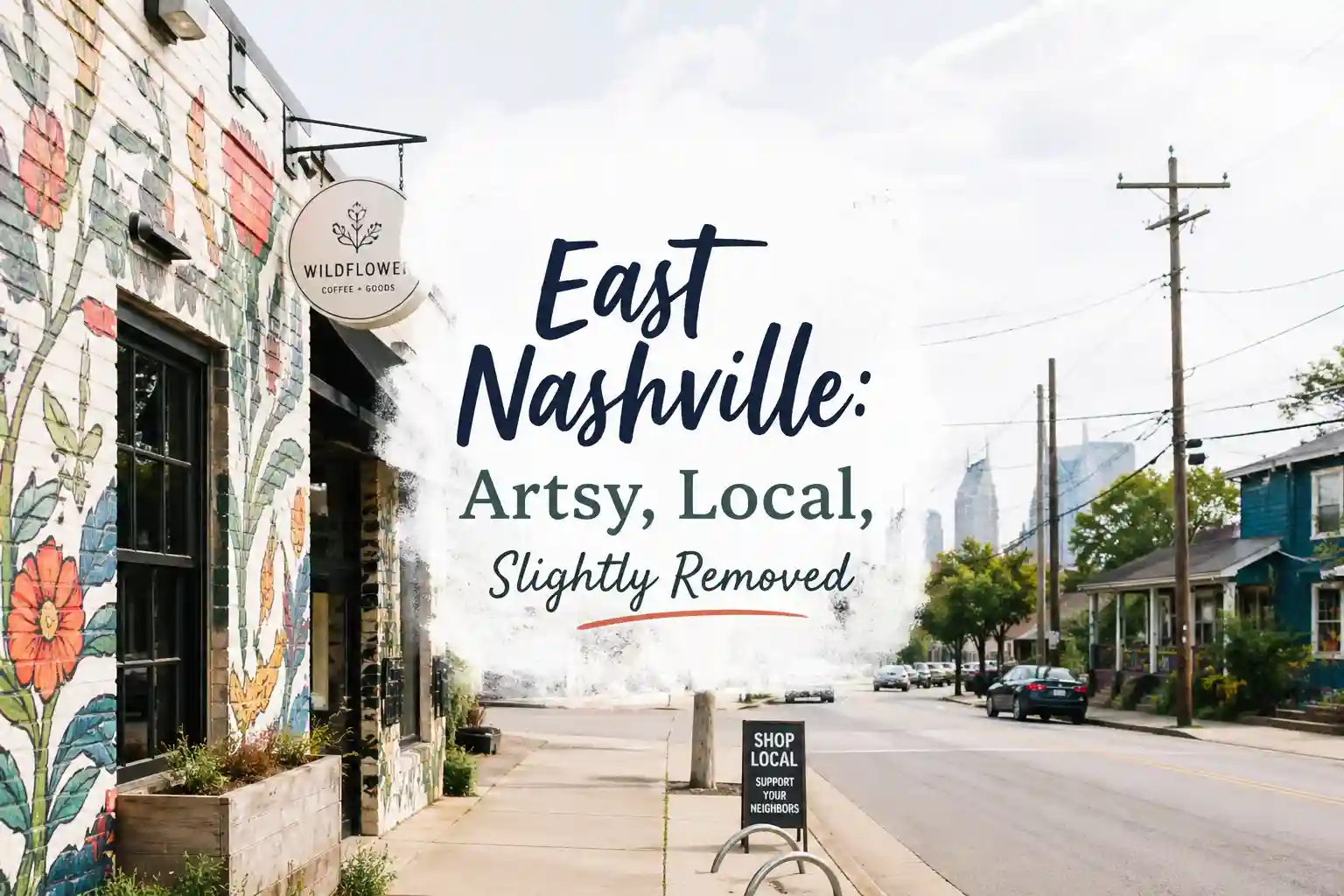
East Nashville has been the city’s creative hub for years. It’s where musicians, artists, and longtime residents mix with newer arrivals. The vibe is relaxed, eclectic, and less polished than downtown.
Who it suits: Repeat visitors, travelers who prefer neighborhood cafes over hotel bars, anyone who doesn’t mind a 5–10 minute rideshare to downtown in exchange for local flavor.
What to expect:
- Lodging leans toward vacation rentals, boutique inns, and smaller hotels. Average nightly rates: $140–$280 using 2026 data.
- Walkable within pockets (Five Points, Riverside), but you’ll likely use rideshares or a car to reach downtown attractions.
- Dining and nightlife feel more “discovered” than marketed. Think taco shops, vinyl bars, and live music in unassuming venues.
A heads-up: East Nashville is residential. Respect quiet hours, especially if staying in a rental home. Also, parking at rentals isn’t always guaranteed; confirm before booking.
Why it works: You experience Nashville like someone who lives there. The trade-off is convenience. If your priority is hopping between Broadway honky-tonks late at night, the short rideshare adds up.
12 South: Boutique, Instagrammable, Residential
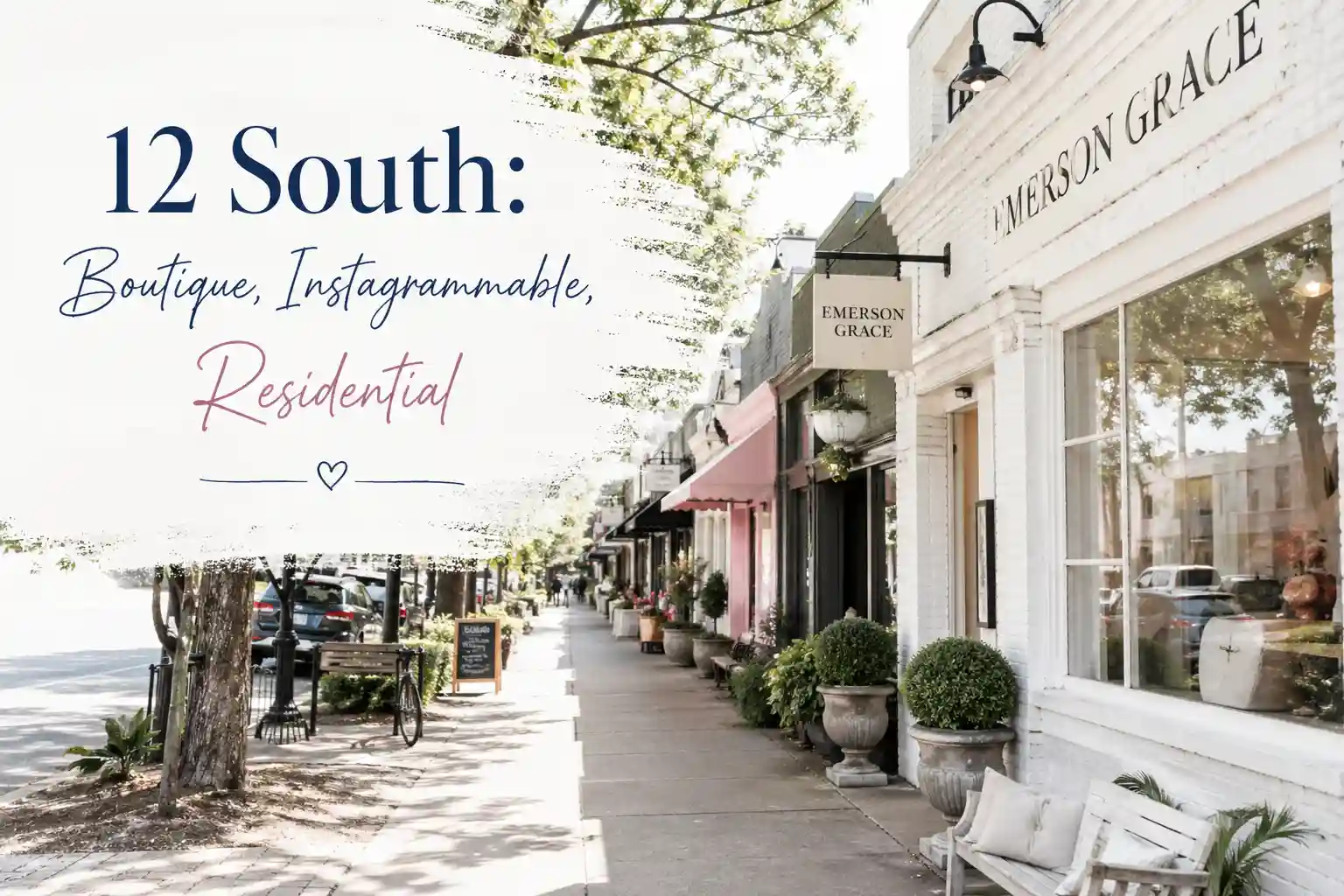
This corridor south of downtown blends cute shops, colorful murals, and a relaxed pace. It feels like a neighborhood that happens to be tourist-friendly.
Who it suits: Couples, friends’ trips, or solo travelers who want a “staycation” vibe with easy access to both local spots and downtown.
What to expect:
- Small hotels, stylish B&Bs, and vacation rentals. Nightly rates using 2026 averages: $160–$320.
- Very walkable within the 12 South strip itself. Getting to downtown requires a short rideshare (5–8 minutes) or a pleasant 25-minute walk.
- Parking varies: some rentals include a spot; hotels may charge $20–$35/night.
Why people choose it: The photo ops are real (hello, “I Believe in Nashville” mural), but the area also has genuine local businesses. You can grab breakfast at a neighborhood cafe, browse indie shops, and still reach Broadway quickly if you want.
One thing to know: 12 South gets busy on weekends. If you prefer quiet mornings, request lodging on a side street rather than directly on the main corridor.
Germantown: Historic, Food-Focused, Quiet
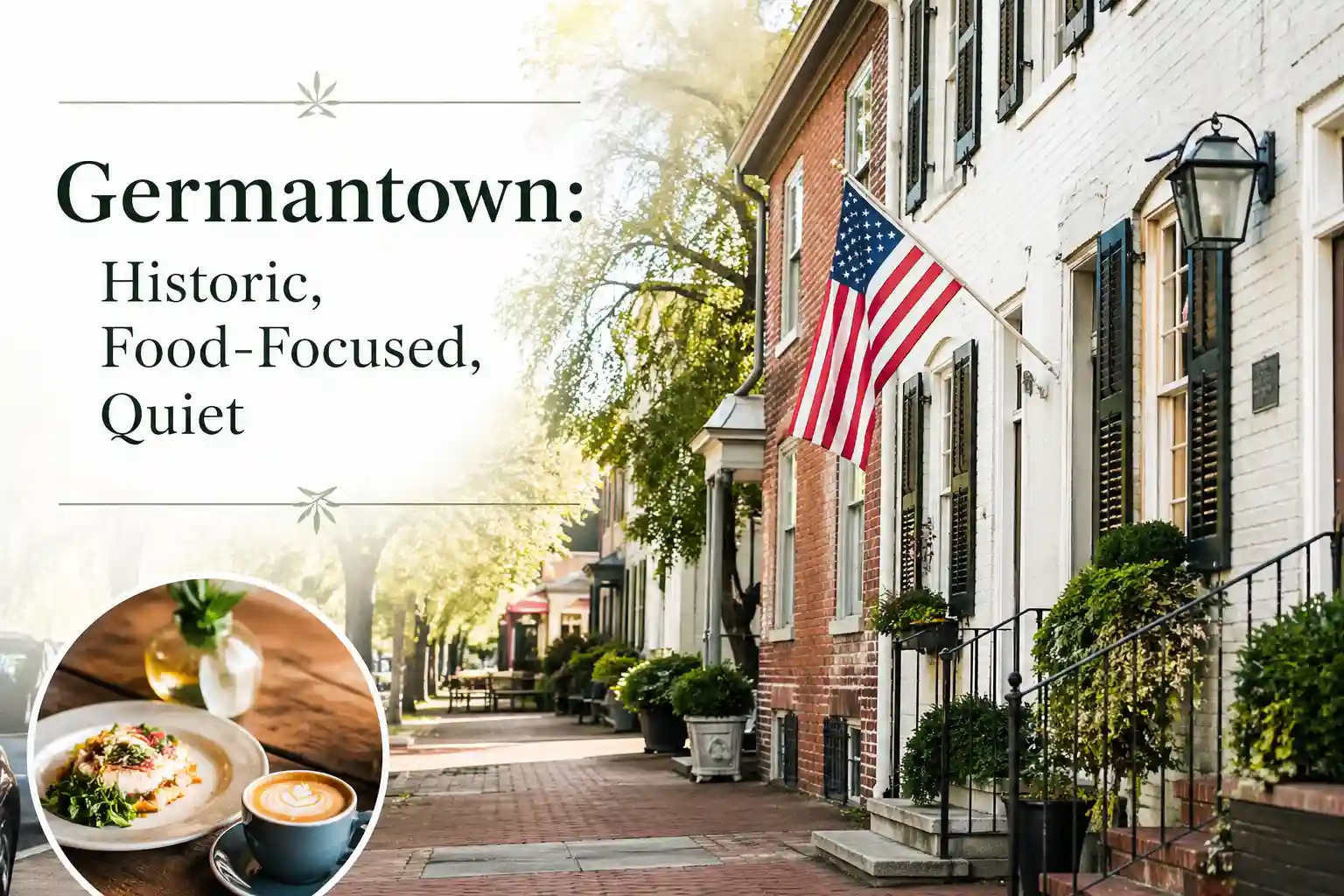
Germantown sits just north of downtown. It’s one of Nashville’s oldest neighborhoods, with restored homes, cobblestone streets, and a strong food scene.
Who it suits: Foodies, history buffs, travelers who want to be near downtown but prefer a calmer base.
What to expect:
- Boutique hotels and upscale vacation rentals. Average nightly rates: $175–$340 based on 2026 pricing trends.
- Walkable to downtown (10–15 minutes) and to attractions like the Farmers’ Market.
- Parking is often easier here than downtown, with some hotels including it or offering lower nightly fees.
Why it stands out: You get historic charm without sacrificing access. Dinner options range from Southern comfort food to modern international cuisine—all within a few blocks.
A practical note: Germantown is quieter at night. That’s a pro if you value rest. If you’re hoping to stumble home from a late show, factor in the short walk or rideshare.
Midtown: Balanced, Central, Good Value

Midtown sits between downtown and Vanderbilt University. It’s a mix of hotels, apartments, and student-friendly spots.
Who it suits: Budget-conscious travelers, families, or anyone who wants central access without downtown pricing or noise.
What to expect:
- Chain hotels, extended-stay options, and some boutique properties. Nightly rates using 2026 averages: $130–$250.
- Walkable to Music Row, Vanderbilt, and a short rideshare to downtown (5 minutes) or The Gulch (8 minutes).
- Parking is more available and often cheaper than downtown—sometimes included.
Why it works: You’re centrally located without paying the “Broadway premium.” It’s a practical home base for exploring multiple neighborhoods.
One consideration: Midtown can feel transitional. Some blocks are lively; others are quiet. Check recent reviews or street-view imagery if location specifics matter to you.
Music Row / Green Hills: Quieter, Residential, Car-Friendly
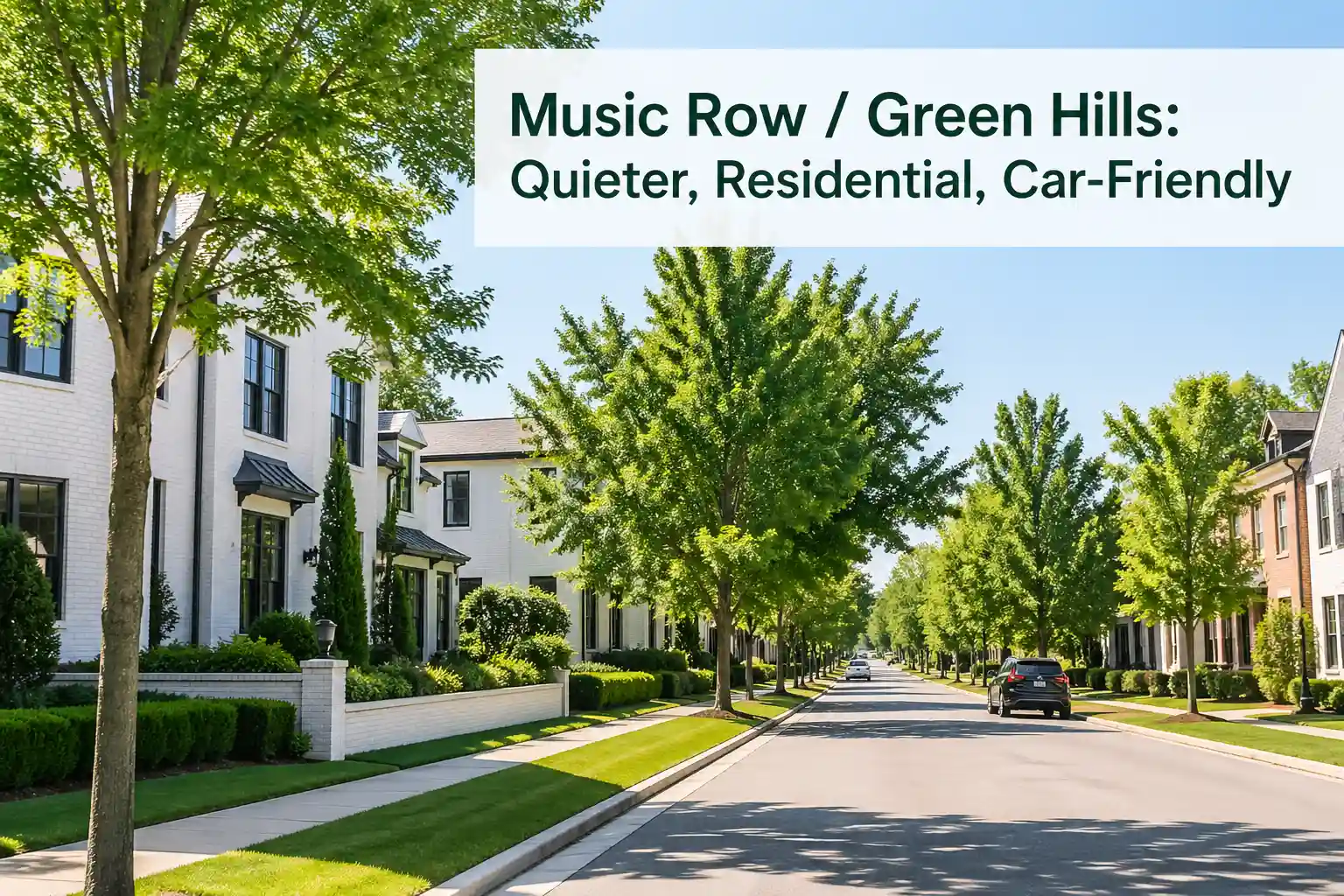
These areas sit slightly farther from downtown but offer a different pace. Music Row is industry-focused; Green Hills is upscale residential with shopping.
Who it suits: Travelers with a car, those attending industry events, or visitors who prefer a suburban feel with easy highway access.
What to expect:
- Chain hotels, extended-stay properties, and some boutique options. Nightly rates: $120–$240 using 2026 data.
- Not highly walkable to downtown attractions. You’ll rely on a car or rideshare (10–15 minutes to Broadway).
- Parking is typically included or low-cost.
Why choose these: Lower noise, more space, and often better value. If your itinerary includes day trips (like Franklin or the Natchez Trace), starting outside the core can simplify logistics.
A trade-off: You sacrifice spontaneous walkability. If your plan centers on downtown exploration, the extra transit time adds up.
What Most Travel Blogs Get Wrong About Nashville Neighborhoods
You’ll see endless posts ranking areas by “coolness” or “proximity to Broadway.” That’s surface-level advice that ignores how Nashville actually functions in 2026.
Here’s a bigger insight: The “best” area depends entirely on your trip’s rhythm, not just a generic list.
Many blogs still push Downtown as the default for everyone. But if you’re traveling with kids, value quiet evenings, or want to experience local neighborhoods, starting elsewhere often creates a better trip. Proximity isn’t always convenient. Sometimes it’s noise, higher costs, and limited dining variety.
Another oversimplification: assuming “walkable” means you won’t need a car. In practice, Nashville’s walkability is pocketed. You can walk within East Nashville or 12 South easily. But getting between neighborhoods often requires a short ride. Planning around that reality saves frustration.
Also, pricing isn’t static. A hotel that seemed affordable in January might double during CMA Fest or NFL weekends. Always check event calendars before locking in dates.
A Quick Story: My Own Nashville Misstep
Early on, I booked a Downtown hotel because every guide said it was essential. The location was perfect for Broadway. What I didn’t account for: a bachelorette party on my floor, hallway noise until 2 AM, and a $45/night parking fee I missed in the fine print. The next trip, I stayed in Germantown. Same access to downtown, quieter nights, and a great breakfast spot downstairs. The difference wasn’t the city. It was matching the neighborhood to what I actually needed that trip.
Practical Moves That Actually Help
You don’t need a perfect plan. Just a few smart habits.
Check the event calendar first. Nashville’s pricing and crowd levels shift dramatically around festivals, concerts, and sporting events. A $150 room can become $400 overnight. Verify dates before you commit.
Read recent reviews for noise mentions. Filter hotel reviews by “most recent” and search for words like “noise,” “street,” or “party.” One or two mentions might be outliers. A pattern tells you something.
Factor in total cost, not just room rate. Parking fees, destination fees, and rideshare estimates add up. A slightly higher nightly rate that includes parking might save money overall.
Use maps to visualize your day. Drop pins on your must-see spots. Then see which neighborhood sits closest to the cluster. Sometimes the “obvious” choice isn’t the most efficient.
Ask about cancellation policies. Nashville weather and event schedules can change. Flexible bookings reduce stress if plans shift.
Quick Answers to Questions People Actually Ask
Is Downtown safe at night?
Generally, yes—especially in well-lit, populated areas like Broadway. As with any city, stay aware of your surroundings, avoid poorly lit side streets late at night, and use rideshares if you’re unsure. According to Nashville police data, tourist zones have visible patrols during peak hours.
Do I need a car if I stay outside Downtown?
It depends on your itinerary. If you plan to explore multiple neighborhoods or take day trips, a car helps. If you’re focusing on one or two areas and using rideshares, you can skip it. Factor in parking costs and traffic when deciding.
Which area is best for families?
Midtown, Germantown, or Green Hills often work well. They offer quieter nights, more space, and easier parking. Downtown can work too—just request a room away from Broadway and confirm noise policies.
What about vacation rentals versus hotels?
Rentals offer more space and kitchen access, which families or those with longer stays appreciate. Hotels provide consistency, daily housekeeping, and often easier cancellation. Check local short-term rental regulations, some Nashville neighborhoods have restrictions.
How far in advance should I book?
For peak seasons (spring, fall, major events), aim for 2–3 months ahead. For quieter periods, 3–6 weeks often works. Last-minute deals exist, but limit your options.
Practical Recommendations
If you take away one thing, let it be this: start with your non-negotiables. Is quiet sleep essential? Prioritize Germantown or Green Hills. Do you want to walk to dinner and live music? The Gulch or 12 South might fit. Is the budget the main driver? Midtown or East Nashville often delivers better value.
Another move that pays off: pick a neighborhood that aligns with your evening plans, not just your daytime itinerary. If you’ll be out late on Broadway, staying nearby reduces transit hassle. If you prefer early nights and morning coffee walks, a residential pocket creates a better rhythm.
Finally, remember that no area is perfect for everyone. The goal isn’t to find the “best” neighborhood. It’s to find the one that best supports your version of a good trip.