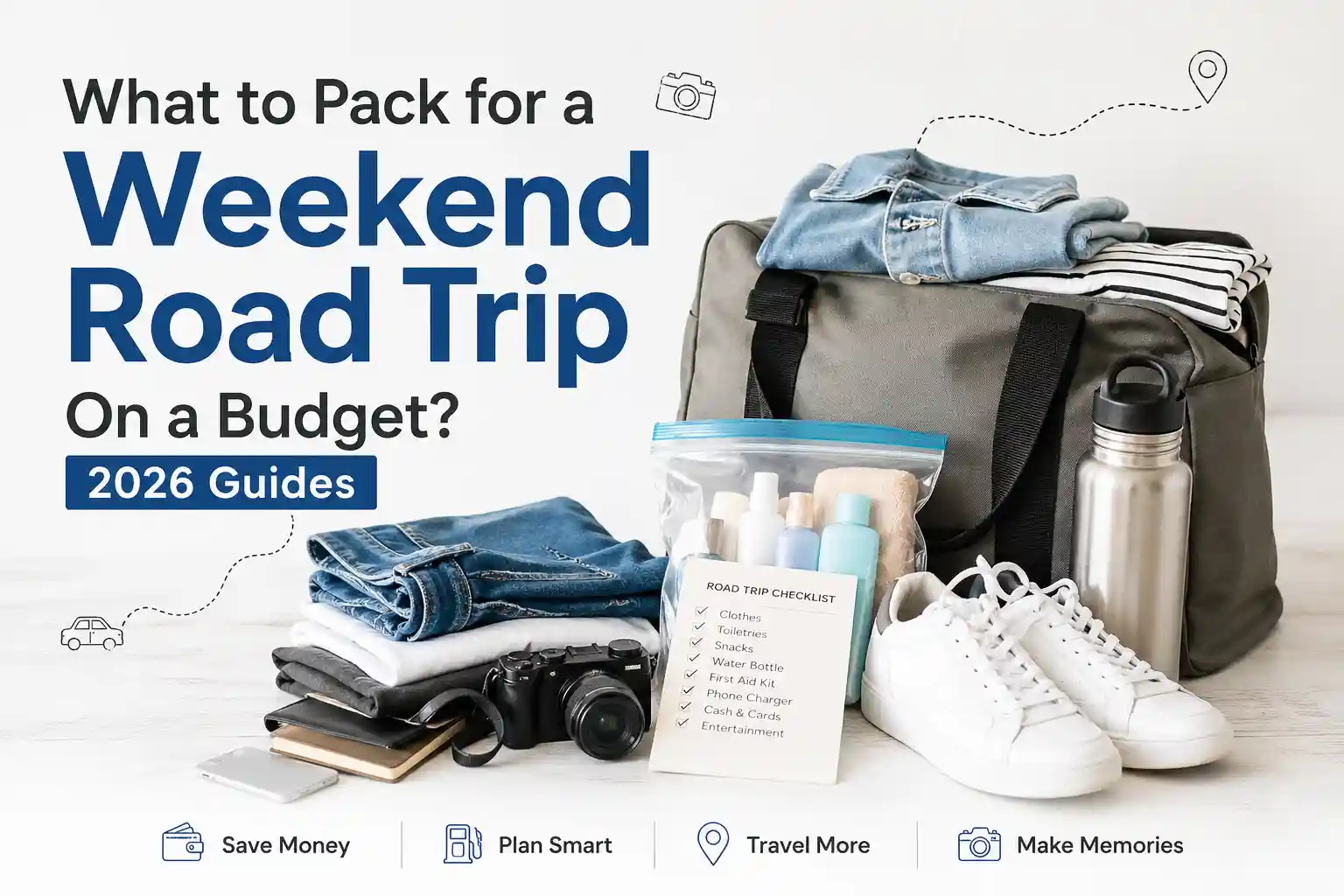
What to Pack for a Weekend Road Trip On a Budget? 2026 Guides
Reality Check: Budget Road Tripping in 2026 (US Context)
First, a quick truth: “budget” looks different now. Using 2026 averages for domestic travel:
- Fuel costs remain volatile, with regional spikes common during peak travel weekends
- Lodging patterns have shifted: motels near interstate exits often cost less than downtown hotels, but booking apps add hidden fees
- Food expenses add up fast: the average traveler spends $45–65/day on meals when eating out exclusively
According to AAA’s 2026 travel analysis, the most common budget-breakers on short road trips aren’t the big-ticket items; they’re the small, repeated choices: impulse snacks at rest stops, last-minute phone mounts, or replacing forgotten toiletries at tourist-town prices.
One pattern you’ll notice: the travelers who stay closest to their budget aren’t the ones who pack the least. They’re the ones who pack with intention, prioritizing items that prevent repeat spending.
Core Guide: The Budget Road Trip Packing Framework (Structured by Value)
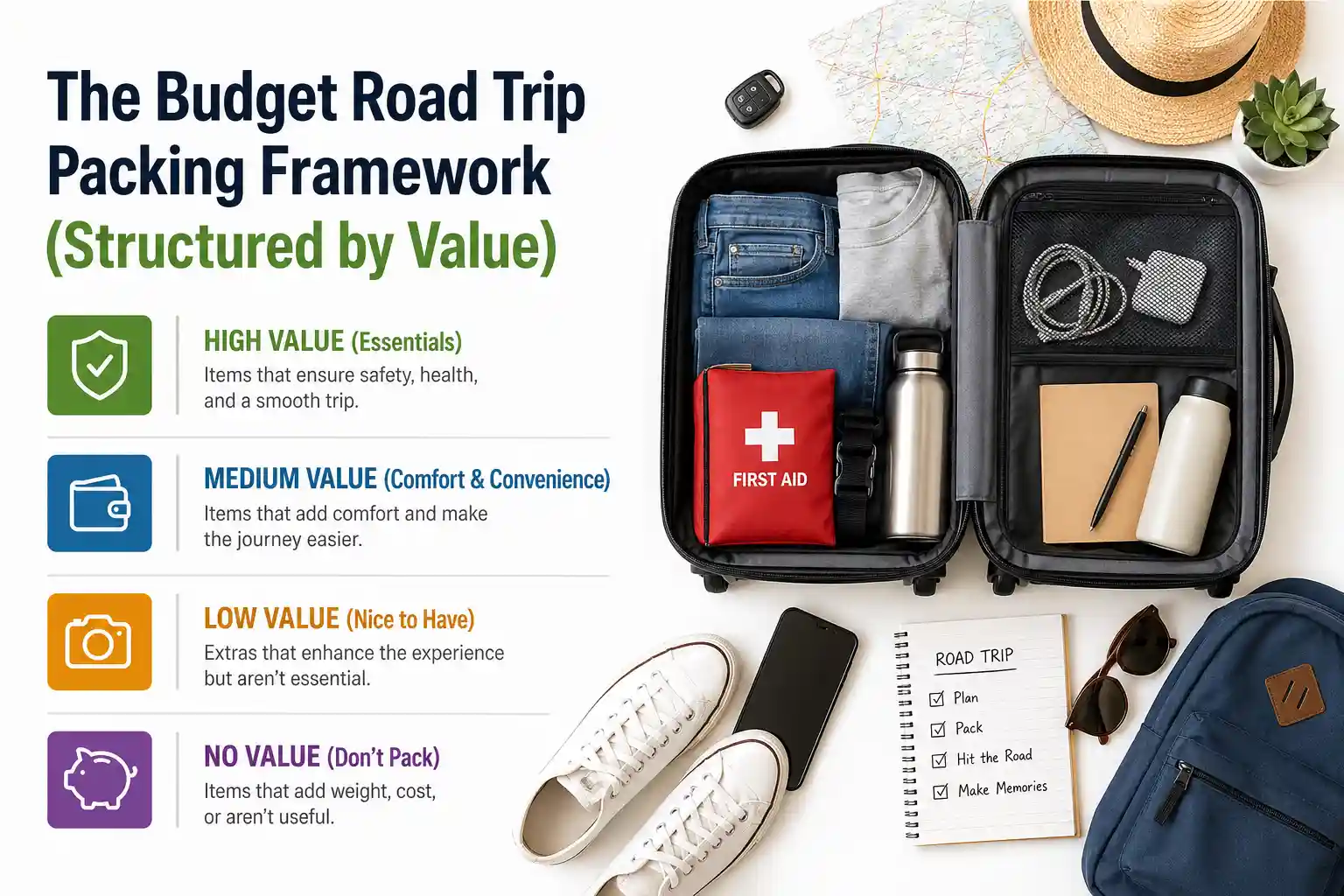
Tier 1: Non-Negotiables (Prevent Costly Surprises)
Vehicle essentials: Jumper cables or portable jump starter, tire pressure gauge, basic first-aid kit. Based on roadside assistance data, minor car issues account for nearly 30% of unexpected trip expenses.
Navigation backup: Download offline maps for your route. Cell service gaps in rural areas are still common in 2026, and data overages add up.
Payment redundancy: One primary card + one backup + small cash stash ($40–60). Many small-town vendors still prefer cash, and card readers occasionally fail.
Medications + basic health items: Pain relievers, allergy meds, blister pads. Buying these mid-trip at a tourist convenience store can cost 2–3x more.
Tier 2: Comfort Items That Earn Their Space
Reusable water bottles + cooler: Fill up at grocery stores, not gas stations. Using 2026 averages, this simple swap saves $12–20/day on beverages alone.
Layering clothing system: One moisture-wicking base, one insulating mid-layer, one weather-resistant outer. Weather can shift dramatically across US regions—even on weekend trips.
Portable power bank (under 100Wh): Keep devices charged without hunting for outlets. FAA guidelines allow these in carry-ons; for road trips, they’re equally essential.
Multi-use toiletries: Solid shampoo bars, tinted moisturizer with SPF, lip balm with sun protection. Fewer items = less weight = better fuel efficiency.
Tier 3: Strategic Nice-to-Haves (Only If They Save Money Long-Term)
Compact cooking gear: If your lodging has a kitchenette, a small pan + utensils + shelf-stable ingredients can cut meal costs by half.
Entertainment downloads: Podcasts, audiobooks, playlists saved offline. In practice, relying on streaming while driving burns data and drains battery.
Reusable shopping tote: For grocery runs, souvenir hauling, or unexpected laundry stops. Takes up minimal space, prevents bag fees.
Practical Strategies: Packing Systems That Protect Your Budget
The “One-Bag Buffer” Rule
Pack everything you think you need, then remove one full bag’s worth. What shows up quickly in real trips: you’ll rarely miss the extras, but you’ll notice the savings in fuel efficiency and reduced decision fatigue.
Food Strategy: The 80/20 Approach
- 80% packed: Non-perishable snacks, breakfast items, lunch components
- 20% flexible budget: One nice dinner out, local treats, coffee stops
This balance prevents the “we’re hungry now” panic that leads to expensive drive-thru decisions.
The Car Organization Method
Use three distinct zones:
- Driver’s reach: Documents, phone mount, snacks, water
- Passenger access: Daypack with layers, camera, guidebooks
- Trunk core: Cooler, emergency kit, luggage
In most cases, this setup reduces “where did I put that?” stops and keeps you moving efficiently.
What Most Travel Blogs Get Wrong About Budget Road Trip Packing
You’ll see endless lists telling you to “pack light” or “bring a cooler.” That’s generic advice that ignores how budget travel actually works. The bigger insight? Packing for a budget isn’t about deprivation; it’s about preventing repeat spending.
Many blogs still recommend buying travel-sized toiletries. In practice, decanting your regular products into reusable silicone bottles costs less upfront and creates less waste. A common mistake is assuming “travel size” equals “budget-friendly.”
Another oversimplification: “just use what you have at home.” While tempting, this ignores trip-specific needs. A common failure pattern: forgetting a phone car mount, then buying a cheap one at a rest stop that breaks mid-trip, forcing a second purchase. The smarter approach: invest once in a reliable, versatile mount before you leave.
Common Mistakes That Quietly Inflate Costs
Overpacking “just in case” clothing: Extra shoes or outfits add weight, reducing fuel efficiency. Using 2026 vehicle averages, every 100 lbs of extra weight can reduce MPG by 1–2%.
Skipping the car check: Low tire pressure or old wiper fluid might seem minor, but they can lead to bigger expenses mid-trip. A quick pre-departure check takes 10 minutes and prevents surprises.
Underestimating snack strategy: Buying chips and soda at every rest stop adds $15–25/day. Packing simple alternatives (nuts, fruit, homemade trail mix) cuts that dramatically.
Forgetting a basic repair kit: Duct tape, zip ties, and a multi-tool can fix minor issues that would otherwise require a store stop or service call.
Assuming all lodging includes basics: Some budget motels don’t provide coffee makers, microwaves, or even reliable Wi-Fi. Packing a portable kettle or Ethernet adapter can save frustration and extra spending.
Scenario-Based Advice: Tailoring Your Pack to Your Trip Type
Solo Traveler: Focus on security and simplicity. Pack a doorstop alarm for lodging, keep valuables in a discreet daypack, and prioritize multi-use items. What tends to work best: one versatile outfit that works for hiking, dining, and driving.
Couple or Two Friends: Share bulky items: one cooler, one first-aid kit, one set of charging cables. Coordinate clothing colors to mix and match, reducing the total number of items. In most cases, splitting costs on shared gear makes higher-quality items affordable.
Family with Young Kids: Pack a dedicated “kid emergency kit”: change of clothes, small toys, snacks, basic meds. Keep it separate from adult bags for quick access. Based on family travel patterns, having this ready prevents costly impulse buys at rest stops.
Pet-Inclusive Trips: Bring your pet’s regular food, a portable bowl, waste bags, and a familiar blanket. Many travelers find that sticking to their pet’s routine reduces stress and avoids emergency vet visits from dietary changes.
FAQ: What Budget Road Trippers Actually Ask
How much cash should I bring?
Using 2026 averages, $40–60 in small bills covers tolls, tips, and small vendors that don’t accept cards. Keep the rest on a debit/credit card for larger purchases.
Is a cooler really worth the trunk space?
For trips over two days, yes. A basic soft-sided cooler + ice packs lets you pack drinks, sandwiches, and perishable snacks. From real spending patterns, this saves $10–15/day versus buying convenience-store meals.
What if my car breaks down?
Pack a basic emergency kit: flashlight, reflective triangles, water, non-perishable snacks, and a portable phone charger. According to roadside assistance data, having these items reduces stress and secondary costs during delays.
Can I save money on lodging by packing sleep gear?
Sometimes. A compact sleep sack or travel pillow can make budget motels more comfortable, but don’t over-invest. What shows up quickly: comfort items matter most if you’re sensitive to unfamiliar bedding.
How do I avoid hidden fees on booking apps?
Book directly with the property when possible. Many budget motels offer the same rate without app service fees. If using an app, filter for “no resort fees” and read recent reviews mentioning hidden charges.
Practical Recommendations
What tends to work best in real-world budget road tripping is packing for friction points, not ideal scenarios. In most cases, I recommend prioritizing items that prevent repeat spending: a reliable phone mount, reusable containers, and basic car tools. These small investments pay for themselves within one trip.
The most efficient approach for clothing: wear your bulkiest items (jacket, boots) on travel days. Pack only what you’ll genuinely need between laundry opportunities. A common mistake I’ve seen is packing for “what if” weather three days out. Check the forecast 24 hours before departure and adjust then.
If you’re traveling with others, coordinate packing to avoid duplicates. One pattern you’ll notice: groups that assign categories (one person handles snacks, another handles tech) end up with lighter, more functional packs overall.