
Best Things to Do in Chattanooga for First-Time Visitors (2026 Guide)
Reality Check: Visiting Chattanooga in 2026
First, a quick truth: Chattanooga has transformed dramatically over the last decade. It’s no longer just a stopover between Nashville and Atlanta. Based on Chattanooga tourism data and 2026 visitor patterns:
Peak seasons shift: Spring (April-May) and fall (Sept-Oct) draw the biggest crowds for outdoor activities; summer brings family travel spikes.
Parking realities downtown: Street parking fills fast on weekends; garages near the Aquarium and North Shore cost $8–$15 for short stays.
Attraction timing matters: Ruby Falls and Rock City see the longest lines midday; early morning or late afternoon visits often mean shorter waits.
In 2026, according to Chattanooga Area Convention & Visitors Bureau updates, most of the downtown corridors have updated pedestrian infrastructure, making walking between attractions more comfortable. One pattern you’ll notice: the most efficient itineraries group activities by geography, not just popularity.
Core Guide: First-Timer Essentials (Structured by Experience Type)
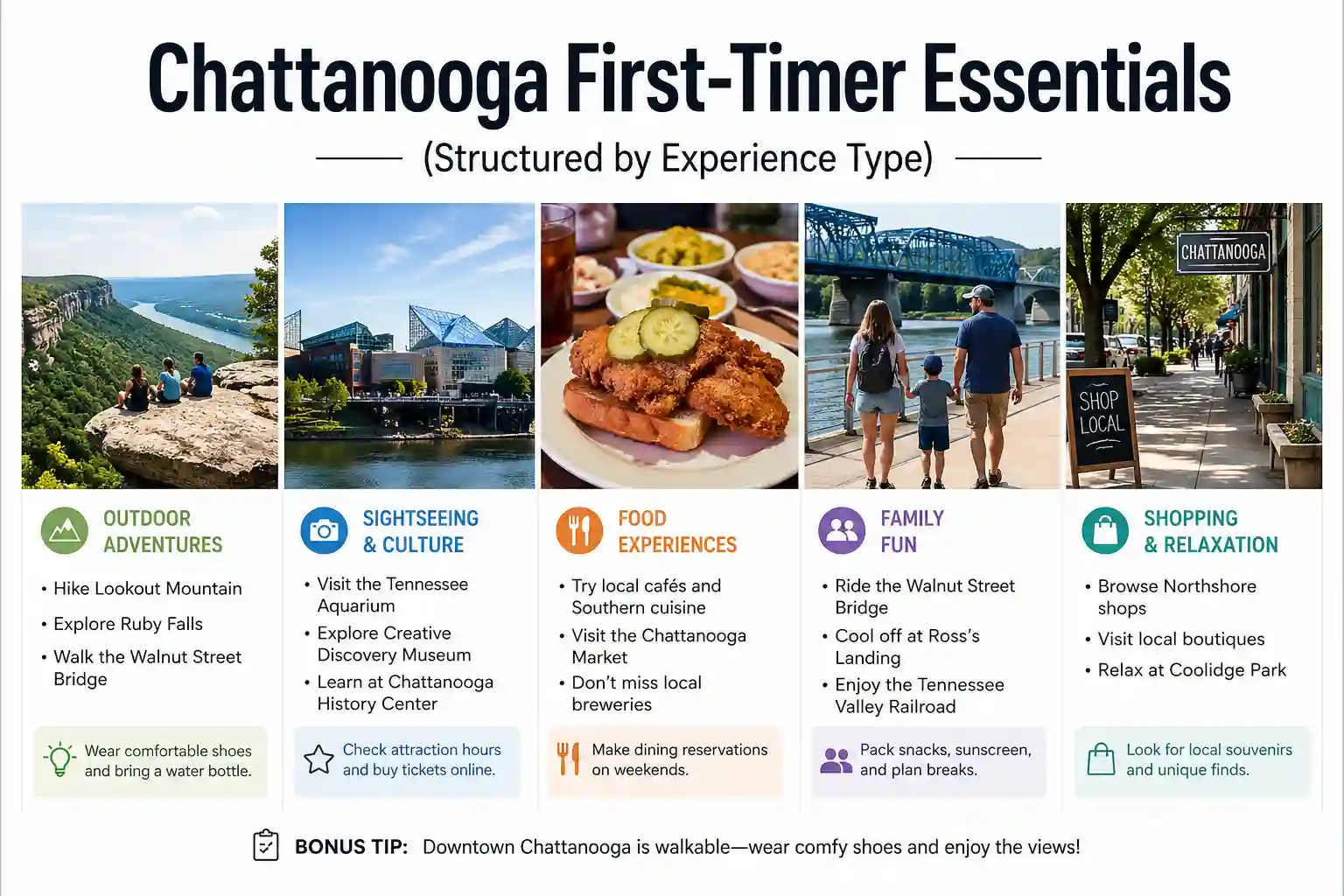
For Iconic Views & Natural Wonders
Lookout Mountain Experiences
- Ruby Falls: An underground waterfall inside the mountain. Timed tickets recommended. The cave walk is paved but involves stairs; allow 90 minutes total.
- Rock City Gardens: Seven-mile walking trail with panoramic views from the “See Rock City” overlook. Wear grippy shoes—sandstone paths get slick with mist.
- Incline Railway: Historic steep railway connecting downtown to Lookout Mountain. Great for avoiding the drive-up if parking is tight.
Why this cluster works: All three sit within a 10-minute drive of each other. Many travelers find that tackling Ruby Falls early (opens 9 AM), followed by Rock City in late afternoon, avoids peak crowds and harsh midday light for photos.
For Urban Exploration & Culture
Downtown + North Shore
- Tennessee Aquarium: Two interconnected buildings (River Journey and Ocean Journey). Allow 2.5–3 hours minimum. Timed entry helps manage flow.
- Walnut Street Bridge: This is one of the world’s longest pedestrian bridges. Best at sunset for river views and city skyline photos.
- North Shore dining: Frazier Avenue offers concentrated local restaurants within walking distance of the bridge. Reservations recommended for weekend dinners.
Why this cluster works: Everything is walkable or a short ride apart. In most cases, starting at the Aquarium in the morning, crossing the bridge midday, and finishing with dinner on the North Shore creates a natural, low-stress flow.
For History & Quirky Charm
Chattanooga Choo Choo + Southside
- Chattanooga Choo Choo: Historic train station turned hotel/entertainment complex. The grounds are free to explore; paid experiences include train rides and themed dining.
- Southside District: Emerging arts and food corridor with local breweries, murals, and smaller galleries. Less tourist-dense than downtown.
Why this works: These spots appeal to travelers who prefer atmosphere over adrenaline. From real booking behavior, visitors who enjoy slow travel or have mobility considerations often prefer this pacing.
Practical Strategies: Making Your First Visit Actually Work
Group by Geography, Not Just “Top Lists”
Chattanooga’s layout favors clustered planning. Using 2026 averages for visitor movement:
- Lookout Mountain cluster: Ruby Falls, Rock City, Incline Railway, Point Park.
- Riverfront cluster: Aquarium, Walnut Street Bridge, Coolidge Park, North Shore.
- Downtown/Southside cluster: Choo Choo, museums, local dining.
Trying to jump between clusters multiple times in one day adds unnecessary transit time. What tends to work best is dedicating half-days to specific zones.
Book Timed Entries Early (But Not Too Early)
For Ruby Falls and the Tennessee Aquarium, timed tickets help manage crowds. Based on attraction operations data:
- Book 3–7 days ahead for weekend visits.
- Same-day tickets often available for weekday mornings.
- Avoid booking months out unless traveling during major events (Ironman, Riverbend Festival).
A common mistake is assuming “more advanced = better.” In practice, flexibility within a week window often yields better time slots without locking you into rigid plans.
Pack for Micro-Transitions
Chattanooga’s appeal is variety—but that means you might hike a mountain trail in the morning and dine upscale in the evening. The most efficient approach:
- Wear comfortable walking shoes that aren’t purely athletic.
- Bring a lightweight layer (riverfront evenings get breezy).
- Keep a small daypack for water, sunscreen, and a phone charger.
What Most Travel Blogs Get Wrong About Chattanooga for First-Timers
You’ll see endless lists ranking “Top 10 Chattanooga Attractions” that treat every experience as equally essential. That’s surface-level advice that ignores how first-time visitors actually experience the city. The bigger insight? More isn’t better; curated is.
Many blogs still push a “do everything” itinerary: Ruby Falls, Rock City, Aquarium, Choo Choo, hiking, biking, and dinner reservations—all in 48 hours. In practice, that pace leads to exhaustion, not enjoyment. What shows up quickly in search isn’t always sustainable on the ground.
Another common oversimplification: “just walk downtown.” While Chattanooga is increasingly walkable, distances between clusters (like downtown to Lookout Mountain) require a car or rideshare. Assuming everything is adjacent leads to wasted time and unexpected transit costs.
Common Mistakes That Quietly Wreck First Visits
Underestimating Lookout Mountain transit time: The drive from downtown takes 15–20 minutes without traffic; add a buffer for parking and shuttle waits.
Skipping reservation checks for popular restaurants: North Shore spots like St. John’s or Main Street Meats fill weekends. A common mistake is assuming walk-in availability.
Overlooking weather impacts on outdoor plans: River activities and mountain views depend on clear conditions. Always have a backup indoor option (Aquarium, museums).
Assuming all attractions are equally stroller/wheelchair friendly: Ruby Falls’ cave path has stairs; Rock City has inclines. Check accessibility details in advance if needed.
Packing for only one vibe: Chattanooga blends outdoor ruggedness with urban polish. Dressing solely for hiking or solely for dining leaves you underprepared for transitions.
Scenario-Based Advice: Tailoring Your Visit to Your Travel Style
Families with Kids (Ages 5–12): Prioritize the Tennessee Aquarium and Coolidge Park (carousel, splash pad). Many travelers find that limiting to two major activities per day prevents overwhelm. Add the Incline Railway for a fun, short experience with big views.
Couples or Solo Travelers Seeking Atmosphere: Focus on the North Shore + Walnut Street Bridge at sunset, followed by dinner on Frazier Avenue. Add a morning visit to Rock City for photography without crowds. What tends to work best is leaving space for unplanned wandering.
Outdoor-Focused Visitors: Start early with a Lookout Mountain hike (Sunset Rock or Stringer’s Ridge for shorter options), then transition to riverfront relaxation. In most cases, pairing one strenuous activity with one low-key experience balances energy across the day.
Travelers with Limited Mobility: The Aquarium, Walnut Street Bridge (flat, paved), and Chattanooga Choo Choo grounds offer rich experiences with minimal elevation change. Based on attraction accessibility info, Ruby Falls’ cave tour involves stairs, but the overlook areas remain viewable.
FAQ: What First-Time Visitors Actually Ask
How many days do I need to see Chattanooga?
For a first visit focused on highlights, 2 full days cover the core clusters comfortably. Using 2026 visitor averages, most travelers feel rushed trying to compress everything into one day.
Do I need a car?
If staying downtown and focusing on riverfront/North Shore attractions, you can manage with walking + rideshares. For Lookout Mountain experiences or day trips to nearby trails, a car adds flexibility.
What’s the best time of year to visit?
Spring (April-May) and fall (Sept-Oct) offer mild weather and peak foliage. Summer is popular for families, but hotter and more crowded. Winter sees fewer tourists, but some outdoor attractions have reduced hours.
Are Chattanooga attractions expensive?
Major paid attractions (Ruby Falls, Rock City, Aquarium) range $25–$35 per adult in 2026. Many outdoor experiences (Walnut Street Bridge, parks, hiking) remain free.
Is Chattanooga safe for solo travelers?
Downtown and North Shore areas are generally well-patrolled and pedestrian-friendly during daylight and early evening. As with any city, standard urban precautions apply.
Practical Recommendations
What tends to work best for first-time visitors is prioritizing experience quality over quantity. In most cases, I recommend selecting one “anchor” activity per half-day (like the Aquarium or Ruby Falls) and building lighter experiences around it. This approach reduces decision fatigue and creates space for spontaneous moments.
The most efficient approach for logistics: book timed-entry tickets for your top 1–2 paid attractions ahead of time, but leave dining and smaller activities flexible. Restaurant reservations matter more than rigid hourly scheduling for everything else.
A common mistake I’ve seen is treating Chattanooga like a theme park checklist. In practice, the city rewards a slower pace. One pattern you’ll notice: travelers who leave buffer time between activities report higher satisfaction than those who pack every hour.
Leave a Reply