Is Traveling Alone Safe in Tennessee? 2026 Guide to Solo Trips
Most travelers find that Tennessee feels welcoming and manageable when they plan with context, not fear. The state’s major cities have seen crime reductions in recent years, and outdoor destinations like the Great Smoky Mountains remain accessible with proper preparation. But “safe” isn’t a guarantee; it’s a set of choices you make before and during your trip.
Tennessee Safety in 2026 (The Numbers vs. The Experience) Reality Check
First, a quick grounding in data. Tennessee’s statewide violent crime rate sits above the national average, at 8.91 incidents per 1,000 people. Property crime is also elevated compared to the U.S. overall. But statewide averages mask important local variation.
What shows up quickly when you dig deeper: many of Tennessee’s safest communities, like Nolensville, Signal Mountain, and Maryville, report violent crime rates well below 2 per 1,000. Meanwhile, urban centers like Nashville and Memphis have seen measurable declines in violent crime over the past two years. That doesn’t mean risk disappears. It means your safety depends more on where you go, when you go, and how you move through a place than on a single statistic.
One pattern you’ll notice from real booking behavior and traveler feedback: solo visitors who research neighborhoods, stick to well-lit areas after dark, and keep valuables secured report far fewer issues than those who assume “tourist zones” are automatically low-risk.
Building a Safer Solo Trip in Tennessee: Core Guide
Before You Go: Smart Prep Beats Last-Minute Panic
Check neighborhood-level safety: Use city police department resources (like Nashville’s tourist safety tips) to identify areas with higher visitor awareness needs.
Download offline maps: Cell service drops in the Smokies and rural stretches. Save your route, lodging, and emergency contacts ahead of time.
Share your itinerary: Based on Tennessee State Parks guidance, leaving a trip plan with a trusted contact is one of the simplest ways to add a safety net.
Pack for flexibility: Weather shifts fast in East Tennessee. A lightweight rain layer and sturdy footwear prevent minor issues from becoming major setbacks.
On the Ground: Daily Habits That Reduce Risk
Keep valuables out of sight: According to Nashville police guidance, removing items from rental cars and avoiding visible cash reduces theft opportunities.
Use ride apps wisely: When using rideshares, verify the driver and vehicle before entering. Many travelers find that waiting indoors until their ride arrives cuts exposure.
Trust your gut in crowds: Broadway in Nashville or Beale Street in Memphis can get densely packed. Keep your bag in front, and step away if a situation feels off.
Stay connected: Carry a portable charger. Based on 2026 averages for solo travelers, a dead phone creates more vulnerability than almost any other single factor.
Outdoor Safety: Great Smoky Mountains & Beyond
Hiking solo in the Smokies is rewarding, but it carries inherent risks. Park guidance emphasizes staying on marked trails, checking the weather, and carrying the ten essentials. One thing many people underestimate: how quickly conditions change at elevation. What’s sunny at the trailhead can turn windy and cold two miles up.
From real booking behavior and park incident reports, the most common solo-hiker issues aren’t wildlife encounters; they’re slips on wet rocks, dehydration, or losing the trail after dark. Wear ankle-supporting boots, carry more water than you think you need, and plan to finish hikes well before sunset.
Practical Strategies: The Solo Traveler’s Safety Framework
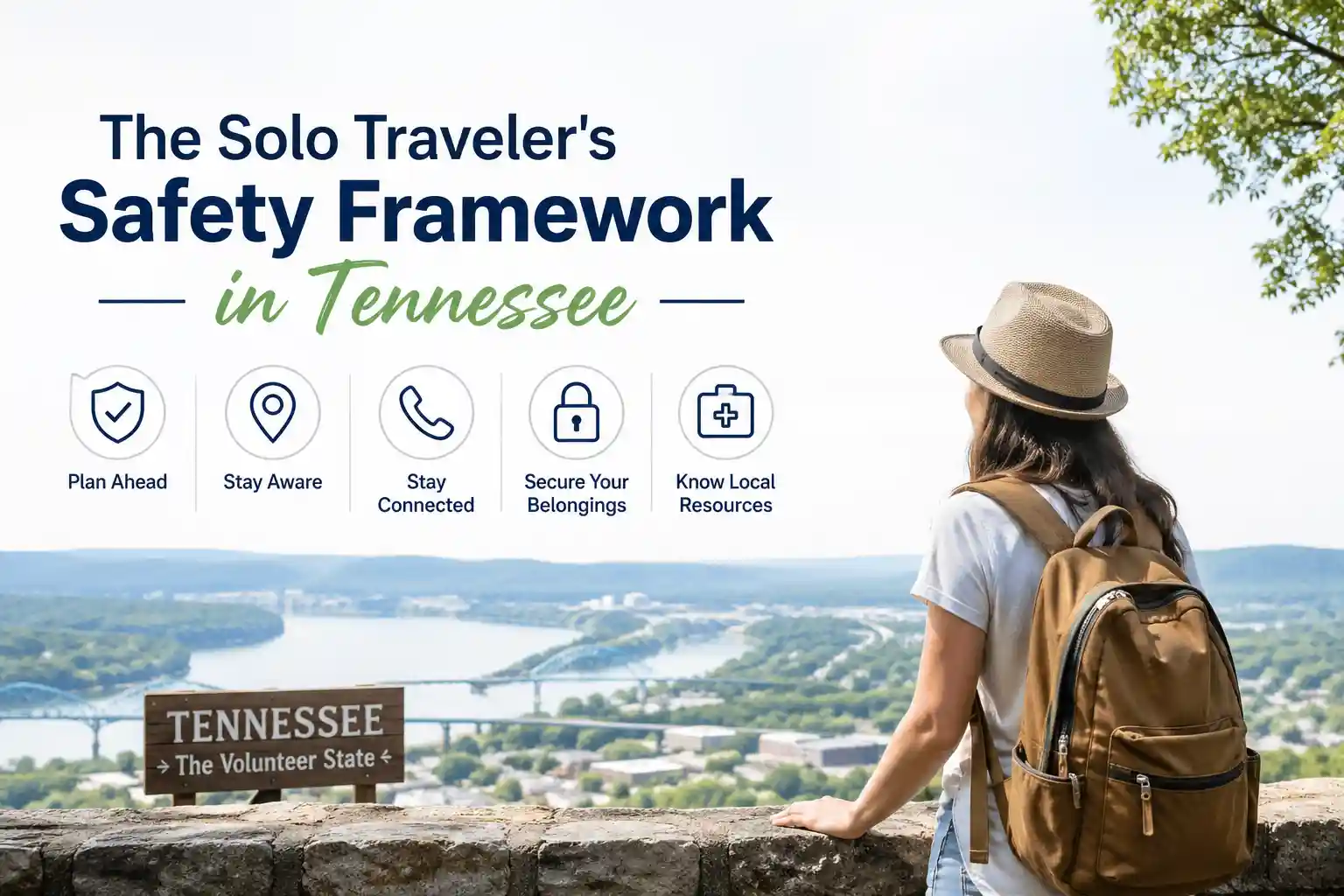
The “Two-Check” Rule for Accommodations
Before booking, do two quick checks:
- Location scan: Use street view to see lighting, sidewalk conditions, and proximity to main roads.
- Recent review filter: Sort reviews by “most recent” and scan for mentions of safety, noise, or staff responsiveness.
In most cases, this 10-minute step prevents far more stress than any premium upgrade.
The “Exit Strategy” Mindset
A common mistake is assuming you’ll figure things out when you arrive. Instead, identify your exit options ahead of time:
- Where’s the nearest well-lit public space if you need to regroup?
- What’s the backup transportation option if your first choice falls through?
- Do you have the address of your lodging saved offline?
The “Low-Profile” Packing Approach
You’ll want to avoid drawing unnecessary attention. That means:
- Using a crossbody bag instead of a flashy backpack
- Keeping electronics in inner pockets when not in use
- Avoiding visible expensive jewelry or camera gear in crowded areas
What Most Travel Blogs Get Wrong About Solo Safety in Tennessee
You’ll see plenty of articles that boil safety down to “just be careful” or “trust your instincts.” That’s not wrong—but it’s not actionable. The deeper insight? Safety isn’t just about avoiding danger. It’s about designing your trip so small setbacks don’t cascade.
Many blogs also treat Tennessee as a monolith. In practice, risks in downtown Memphis at 2 a.m. differ vastly from risks on a midday hike in Cades Cove. One pattern you’ll notice from real traveler reports: solo visitors who segment their planning by activity type (urban exploring vs. outdoor hiking vs. small-town touring) make smarter choices than those who apply one-size-fits-all advice.
Another oversimplification: assuming that because crime statistics exist, they predict individual experience. From real booking behavior and post-trip feedback, the travelers who feel safest aren’t the ones who memorized crime maps. They’re the ones who built flexible plans, kept communication lines open, and adjusted in real time.
Common Mistakes That Quietly Increase Risk
Over-relying on “tourist zone” assumptions: Just because an area is popular doesn’t mean it’s low-risk after hours.
Skipping the offline backup: Cell towers don’t cover every trail or rural road. Downloading maps and saving key contacts offline saves hours of stress.
Packing valuables in checked luggage: Based on TSA guidelines, essential documents, medications, and electronics should stay in your carry-on.
Ignoring weather windows: Tennessee weather shifts fast. Checking the forecast the morning of prevents being caught unprepared.
Assuming all trails are equally maintained, from park guidance, trail conditions vary by season. Asking a ranger for current conditions beats guessing.
Scenario-Based Advice: Tailoring Safety to Your Tennessee Trip
Solo Urban Exploration (Nashville, Memphis, Knoxville): Focus on neighborhood awareness and transportation planning. Many travelers find that staying in well-reviewed accommodations near main transit corridors reduces late-night walking needs.
Solo Outdoor Adventure (Great Smoky Mountains, Fall Creek Falls): Prioritize trail research, weather checks, and communication plans. Based on NPS guidance, letting someone know your route is one of the most effective safety steps you can take.
Small-Town or Rural Travel: Cell service can be spotty. Download offline maps, carry a portable charger, and confirm lodging check-in times ahead of arrival.
Solo Female Travel Considerations: Many female solo travelers report feeling comfortable in Tennessee’s main tourist areas when using basic precautions: avoiding isolated areas after dark and keeping accommodations in well-lit zones.
FAQ: What Solo Travelers Actually Ask About Tennessee
Is it safe to walk alone in downtown Nashville at night?
Many travelers find the main entertainment corridors well-patrolled and active. However, staying on well-lit streets, avoiding isolated alleys, and keeping valuables secured reduces risk. According to Nashville police guidance, situational awareness matters more than blanket rules.
Can I hike solo in the Great Smoky Mountains?
Yes, with preparation. Park guidance emphasizes staying on marked trails, checking the weather, and carrying essentials like water, layers, and a headlamp.
What should I do if I feel unsafe while traveling?
Trust your instincts. Move to a public, well-lit area. Use a rideshare app to leave if needed. Keeping local emergency numbers saved offline adds a layer of preparedness.
Are rideshares safe for solo travelers in Tennessee cities?
In most cases, yes. Verify the driver and vehicle before entering, share your trip status with a contact, and avoid displaying valuables during the ride.
Practical Recommendations
What tends to work best for solo travelers in Tennessee is building flexibility into your plan, not rigidity. In most cases, I recommend prioritizing accommodations with 24-hour front desks or secure entry, especially in urban areas. The most efficient approach for outdoor trips: start with ranger-recommended trails, carry physical backups for digital tools, and build buffer time for weather shifts.
A common mistake I’ve seen is over-planning every hour. What shows up quickly in post-trip feedback: solo travelers who leave room for spontaneous adjustments report higher satisfaction and fewer stress moments.
Leave a Reply