
The Perfect Tennessee Road Trip Itinerary (7 Days Scenic Plan)
A conversational guide for travelers who want scenery without the stress.
This isn’t a rigid hour-by-hour schedule. It’s a flexible, field-tested framework for seven days that balances iconic stops with breathing room. Think of it as a conversation with someone who’s driven these roads more than once and learned a few things the hard way.
Before You Start: The Ground Rules
Let’s set expectations up front. Tennessee in 2026 isn’t the same as it was five years ago. A few realities shape how this itinerary works:
Parking matters more than you think. At Great Smoky Mountains National Park, popular trailheads often reach capacity by 9 AM on weekends. Having a backup plan isn’t optional—it’s essential.
Cell service drops unexpectedly. Mountain valleys, river gorges, and rural stretches between towns can leave you offline for 20–30 minutes at a time. Download offline maps before you leave home.
Seasonal timing changes everything. Spring brings wildflowers and waterfalls, but also rain and mud. Fall offers foliage and crisp air, but heavier crowds. Summer means reliable access, but heat and humidity. Winter is quiet, but some attractions operate on reduced hours.
Reservations aren’t just for nice restaurants anymore. Timed entry for Cadillac Mountain-style experiences exists in Tennessee, too. Check ahead for attractions that require advance booking.
Based on 2026 tourism data, travelers who build 30–45 minutes of buffer time into each day report significantly less stress than those who pack itineraries tightly. Flexibility isn’t a luxury here—it’s a strategy.
The 7-Day Framework: Scenic, Realistic, Adaptable
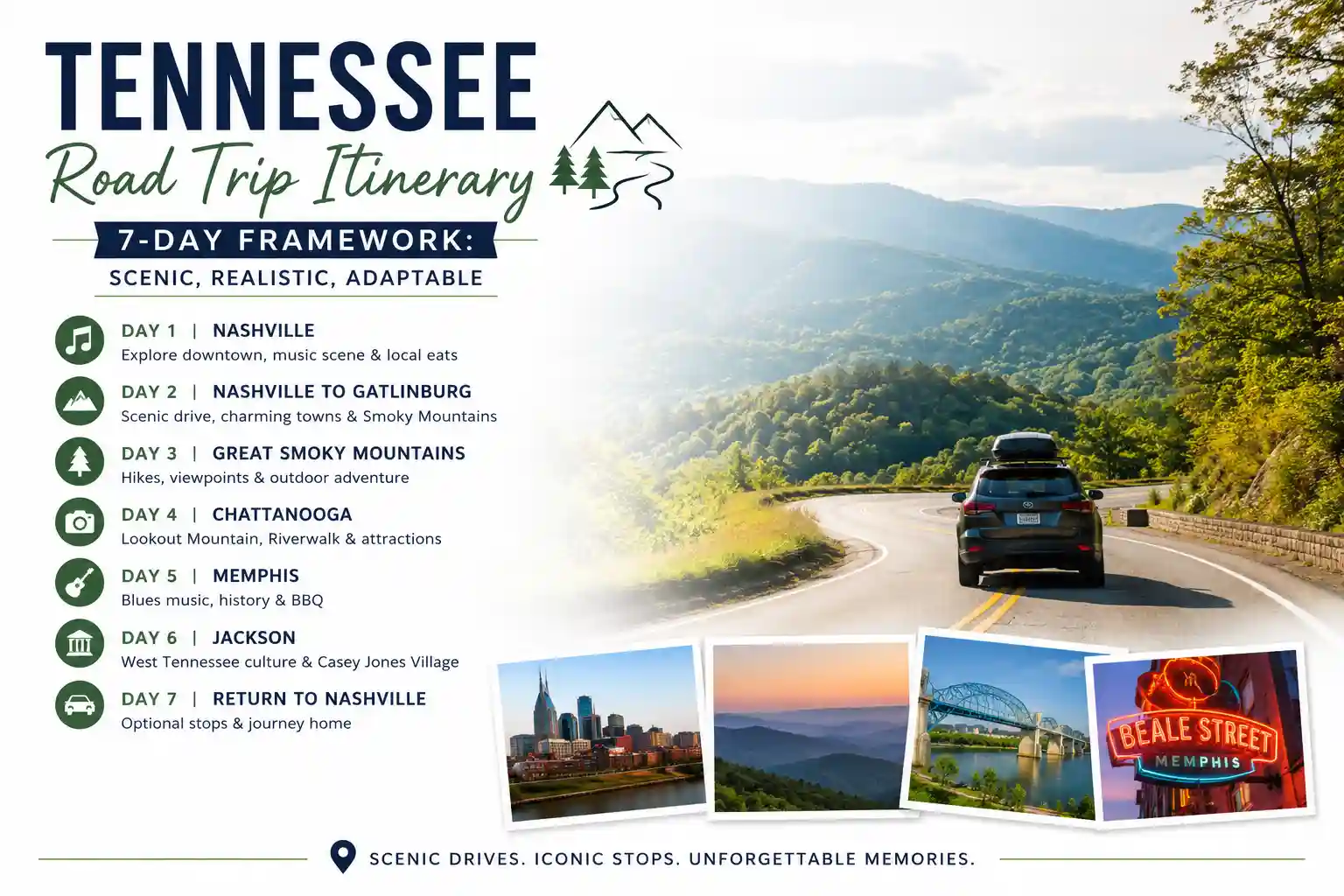
Day 1: Arrive in Nashville, Settle In, Explore Lightly
You’ve landed. Maybe you flew into BNA, maybe you drove in. Either way, resist the urge to cram Day 1 with big activities. Jet lag, travel fatigue, and unfamiliar roads add up.
Suggested flow: Pick up your rental car (if needed), check into lodging, then take a relaxed evening walk. The Gulch and 12 South neighborhoods offer pedestrian-friendly streets with local shops and casual dining. No reservations required for most spots if you eat before 7 PM or after 8:30 PM.
Practical note: Downtown Nashville parking can run $25–$40 per night at hotels. If budget matters, consider lodging in East Nashville or Germantown with free parking and a short rideshare to Broadway.
Why start light? You’ll have six more days. Beginning with low-pressure exploration helps you adjust to the rhythm of the trip without burning energy you’ll need later.
Day 2: Nashville Morning, Drive to Chattanooga (Scenic Route)
Morning in Nashville: pick one anchor activity. The Parthenon in Centennial Park for a quick photo. A biscuit at a local spot before 9 AM to avoid lines. A short walk along the Cumberland River.
Then, hit the road toward Chattanooga. Skip the fastest route (I-24 direct) and take the scenic alternative: TN-100 South to US-70S. It adds roughly 45 minutes but passes through rolling hills, small towns, and forested stretches that feel more like “Tennessee” than interstate driving.
Chattanooga arrival: Check into lodging, then head to the Riverwalk. It’s free, flat, and offers great views of the Walnut Street Bridge. Dinner options nearby range from casual to upscale—no need to overthink it.
Pro tip: If you’re visiting on a weekend, book lodging in Chattanooga at least 3–4 weeks ahead. Downtown fills quickly, and prices rise sharply with last-minute bookings.
Day 3: Chattanooga Highlights + Lookout Mountain
Chattanooga packs a lot into a small footprint. You don’t need to do everything. Pick two or three anchors and let the rest unfold.
Morning option: Ruby Falls or Rock City on Lookout Mountain. Both are commercial attractions, yes—but well-maintained and genuinely impressive. If you prefer free/natural, hike the Sunset Rock trail for panoramic views without an admission fee.
Afternoon: Explore downtown Chattanooga. The Tennessee Aquarium is excellent if you enjoy that kind of thing. If not, wander the Bluff View Art District or grab coffee and people-watch at a sidewalk cafe.
Evening: Dinner in the North Shore district. Less touristy than downtown, with local breweries and restaurants that see more residents than visitors.
Logistics note: Lookout Mountain attractions involve driving up a steep, winding road. If you’re uncomfortable with that, stick to downtown activities and save the mountain for another trip.
Day 4: Chattanooga to Great Smoky Mountains (via Ocoee)
Today’s drive is one of the scenic highlights of the entire trip. Instead of taking I-75 North directly to the Smokies, take the route through the Ocoee River area on US-64 East.
Why this route? You’ll pass through the Cherokee National Forest, with river views, forested hills, and small towns like Ducktown. It’s a slower drive but far more memorable than interstate travel.
Optional stop: If water levels are safe and you have time, the Ocoee River offers rafting opportunities. No advance booking is needed for some outfitters, but weekends fill fast.
Arrival in the Smokies: Most travelers stay in Gatlinburg or Pigeon Forge. Gatlinburg is more walkable and compact; Pigeon Forge has more lodging options and family attractions. Pick based on your preferences.
Important: Great Smoky Mountains National Park has no entrance fee, but parking at popular trailheads requires a free parking tag if you stay longer than 15 minutes. Get yours online or at visitor centers before hitting the trails.
Day 5: Great Smoky Mountains National Park
This is your deep-dive day in the Smokies. But “deep-dive” doesn’t mean “do everything.” The park covers 800+ square miles. Trying to see it all in one day leads to exhaustion, not enrichment.
Morning strategy: Pick one trail. Cades Cove Loop for wildlife viewing (go early—arrive by 7:30 AM to beat crowds). Or the Alum Cave Trail for a moderate hike with rewarding views. Or Clingmans Dome for the highest viewpoint (paved but steep walk at the end).
Afternoon flexibility: After your morning activity, keep the rest of the day open. Maybe you’ll feel like a second short walk. Maybe you’ll prefer a relaxed lunch and some downtime. That’s okay. Travel isn’t a productivity contest.
Weather awareness: Mountain weather shifts fast. Pack a light rain layer even if the forecast looks clear. Afternoon thunderstorms are common in warmer months.
Day 6: Smokies to Nashville (via Murfreesboro or Direct)
Today, you loop back toward Nashville. You have two routing options:
Option A (scenic): Take TN-66 North to I-40 West, passing through rural East Tennessee. Adds time but offers a different landscape than the outbound drive.
Option B (efficient): I-40 West directly to Nashville. Faster, less scenic, but practical if you’re tired or running short on daylight.
Optional detour: If history interests you, stop in Murfreesboro to visit Stones River National Battlefield. It’s a quiet, reflective site with well-maintained trails and informative signage.
Evening in Nashville: You’ve earned a relaxed final night. Skip the Broadway crowds if you’re over it. Try a neighborhood spot in East Nashville or Germantown for dinner. Save any last-minute souvenir shopping for tomorrow morning.
Day 7: Nashville Wrap-Up + Departure
Keep Day 7 light. You’ve got travel logistics to manage, and rushing creates stress.
Morning options: A final walk in a favorite neighborhood. Coffee at a local roaster. A quick visit to a museum or attraction you missed earlier in the week.
Practical prep: Allow extra time for returning your rental car, especially if flying out of BNA. Airport traffic can be unpredictable, and rental return lines sometimes grow longer than expected.
One last thought: If your departure is late afternoon or evening, consider storing your bags at your hotel or a luggage service and enjoying a few extra hours of exploration. No need to sit at the airport longer than necessary.
What Most Travel Blogs Get Wrong About Tennessee Road Trips
You’ll see endless itineraries that pack seven days with 12–15 “must-see” stops. That approach looks impressive on paper. On the ground, it creates a different experience: constant packing/unpacking, rushed meals, and little time to actually absorb where you are.
The bigger insight? Depth beats breadth. Spending a full morning in one location often creates more meaningful memories than checking off three attractions in the same timeframe. This itinerary intentionally leaves white space. Use it to wander, rest, or follow a local recommendation that wasn’t on any list.
Another common oversimplification: assuming scenic routes are always better. Sometimes they are. But a “scenic” backroad after dark, in rain, with low fuel, isn’t an adventure—it’s a risk. Know when to prioritize efficiency over aesthetics. Your safety matters more than a photo opportunity.
Practical Moves That Make the Trip Smoother
A few habits that pay off, based on real travel patterns:
Download offline maps for the entire route. Cell service gaps are real. Having your route saved locally prevents panic when your phone shows “No Service.”
Book lodging for Nights 2, 4, and 5 at least 3–4 weeks ahead. Chattanooga, Gatlinburg/Pigeon Forge, and Nashville see strong demand. Locking these down early reduces stress and often saves money.
Pack layers, even in summer. Mountain mornings can be 15–20 degrees cooler than valley afternoons. A light jacket or fleece takes minimal space but adds significant comfort.
Carry a small “trail kit” in your daypack: water, snacks, basic first-aid, phone charger. You won’t always have easy access to supplies once you hit the trails.
Keep a running list of backup options. If a trail is crowded or an attraction is closed, having 2–3 alternatives within 20–30 minutes helps you pivot without losing momentum.
Scenario Adjustments: Tailoring the Plan
Traveling with kids? Build in more downtime. Swap longer hikes for shorter, engaging stops like the Tennessee Aquarium or Cades Cove wildlife viewing. Keep daily driving under 3 hours when possible.
Interested in photography? Prioritize sunrise or sunset timing for key locations. Cades Cove at dawn, Sunset Rock in Chattanooga, or Clingmans Dome at golden hour offer dramatic light with fewer crowds.
Prefer quiet over crowds? Shift your schedule: start hikes by 7 AM, eat lunch at 11 AM or 2 PM to avoid peak restaurant rushes, and explore downtown areas in the early evening when day-trippers have left.
On a tighter budget? Focus on free attractions: national park trails, city riverwalks, scenic drives. Eat one “splurge” meal per day and keep other meals casual. Lodging slightly outside downtown areas often saves $30–$60 per night with minimal inconvenience.
Quick Answers to Common Questions
Do I need a 4WD vehicle for this trip? No. All routes described use paved, maintained roads suitable for standard rental cars. If you plan to explore unpaved forest service roads, that’s a different conversation—but this itinerary doesn’t require it.
Is this itinerary doable in the fall foliage season? Yes, but expect heavier crowds, especially in the Smokies and Chattanooga areas. Book lodging earlier (6–8 weeks ahead) and start activities earlier in the day to secure parking.
What about food preferences or dietary restrictions? Nashville, Chattanooga, and the Gatlinburg/Pigeon Forge area all offer diverse dining options. Research specific restaurants ahead of time if you have strict needs, but most travelers find adequate choices without extensive pre-planning.
Can I shorten or extend this itinerary? Absolutely. Remove Day 6’s return drive to add an extra night in the Smokies. Or combine Days 1 and 2 if you’re short on time. The framework is flexible—adjust based on your priorities.
Practical Recommendations
When planning a Tennessee road trip, clarity beats complexity. Pick lodging locations first—Nashville, Chattanooga, Smokies—then build daily activities around those anchors. This reduces daily packing stress and creates natural rest points.
Another move that pays off: designate one “flex day” where you don’t pre-book activities. Use it to revisit a favorite spot, follow a local recommendation, or simply rest. Over-scheduling is the fastest way to turn a relaxing trip into a logistical marathon.
Finally, remember that travel isn’t about perfection. You’ll still hit traffic. You’ll still have a meal that’s just okay. That’s part of the experience. The goal isn’t to eliminate every hiccup. It’s to create a framework where the good moments have room to happen.
About the Author
Eric Gamble is a travel researcher and editorial strategist focused on U.S. domestic travel logistics. His work centers on translating road trip patterns, seasonal considerations, and visitor data into practical guidance for travelers planning real-world itineraries. He does not chase viral destinations or fabricate personal adventure stories. His goal is simple: help readers make informed, confident decisions about where to go and how to prepare.
One Failure Insight (Because Real Experience Isn’t Perfect)
Early in my travel research work, I planned a Tennessee loop that looked efficient on a map: Nashville to Chattanooga to the Smokies and back in five days. I didn’t account for how mountain roads slow travel time, or how popular trailheads fill by mid-morning. The result? Rushed meals, missed photo opportunities, and more time in the car than I’d hoped. That trip taught me a lasting lesson: realistic pacing beats ambitious scheduling. Since then, I’ve found that travelers who build buffer time into their itineraries tend to return home feeling refreshed, not rushed. What looks tight on a spreadsheet often feels exhausting on the ground.
Leave a Reply