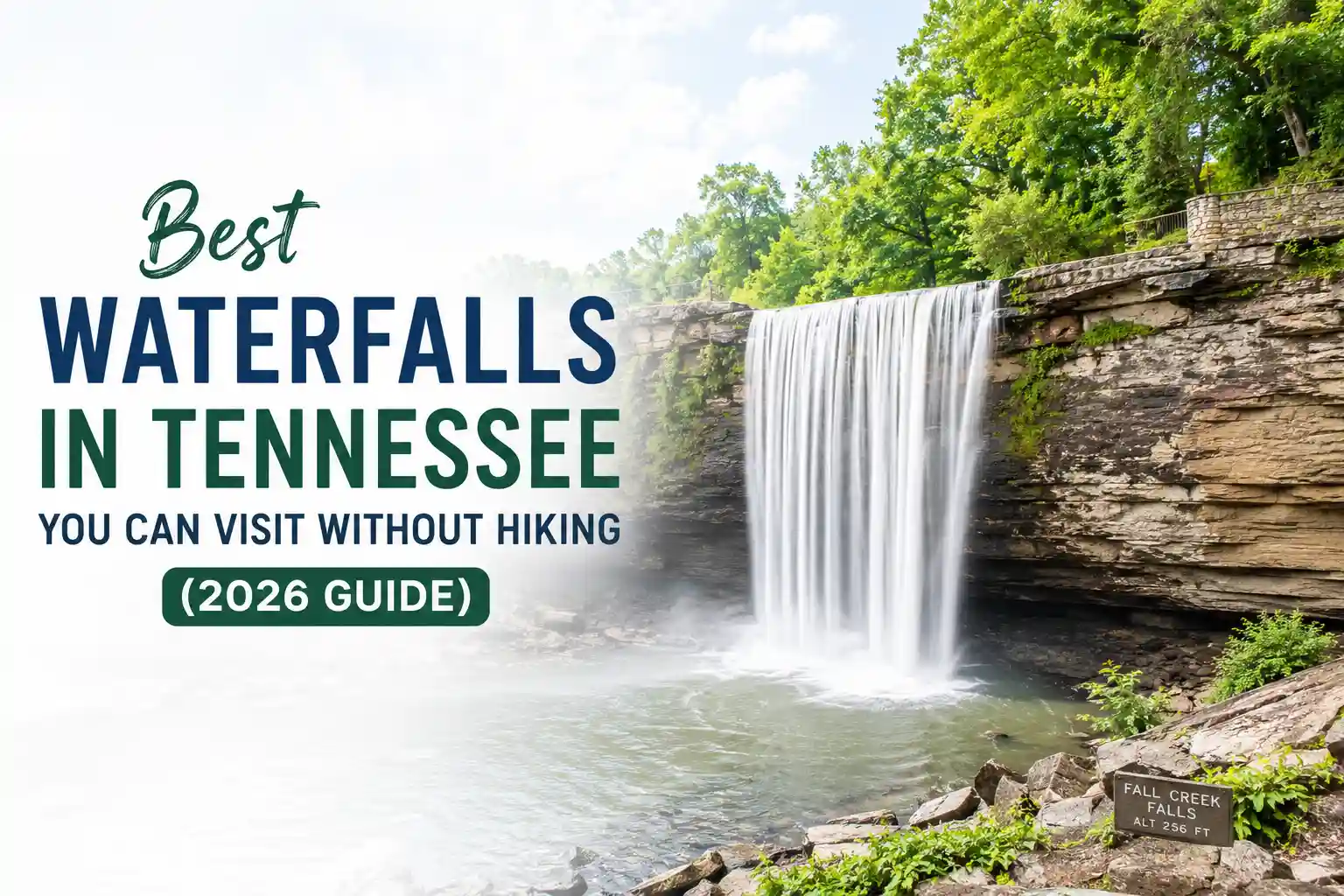
Best Waterfalls in Tennessee You Can Visit Without Hiking (2026 Guide)
Good news: you absolutely can.
This guide walks you through seven Tennessee waterfalls where the view comes to you—or at least meets you halfway. No technical trials. No creek crossings. Just pull up, step out, and enjoy.
Let’s keep this real, practical, and useful.
First, Let’s Get Clear on “Without Hiking”
When I say “without hiking,” I mean: paved paths, flat gravel, wheelchair-accessible overlooks, or roadside pull-offs where the waterfall is visible within a few steps of parking.
I’m not including trails labeled “easy” that still involve roots, rocks, or elevation changes. Those have their place. But they’re not what you’re looking for right now.
A quick note on expectations: Tennessee’s landscape is rugged by nature. Even “accessible” viewpoints may have slight grades or uneven sections. If mobility is a primary concern, checking recent photos or calling the park directly can help set realistic expectations before you drive.
Based on Tennessee State Parks’ 2026 accessibility updates, several waterfall overlooks have received recent improvements—paved surfaces, added railings, and designated parking. But conditions can shift with the weather or maintenance. Always verify via official park channels before heading out.
The List: Waterfalls You Can Actually See Without Breaking a Sweat

Cataract Falls – Great Smoky Mountains National Park
- Location: Near Sugarlands Visitor Center, Gatlinburg
- Access: Flat, wide gravel path (~0.2 miles round-trip)
- Why it works: Zero elevation gain. Fully accessible. Rarely crowded compared to other Smokies falls.
- What you’ll see: A gentle, multi-tiered cascade tumbling over mossy rocks. Not the most dramatic plunge in Tennessee, but reliable, peaceful, and perfect for a quick nature moment.
- Practical note: Restrooms and visitor center facilities are steps away. Great for families or anyone wanting a stress-free stop.
- GPS: 35.6756, -83.5412
Twin Falls Overlook – Rock Island State Park
- Location: Rock Island State Park, Doyle
- Access: Paved path with railings (~0.3 miles round-trip)
- Why it works: One of the most accessible waterfall views in the state. Twin Falls drops roughly 80 feet into a scenic gorge, viewable from a safe, level platform.
- What you’ll see: Two distinct cascades framing a rocky gorge. Morning light often creates misty rainbows.
- Practical note: Combine with a short walk along the Downstream Trail if you want to extend your time without adding difficulty. Picnic tables nearby.
- GPS: 35.7156, -85.5389
Fall Creek Falls Overlook – Fall Creek Falls State Park
- Location: Fall Creek Falls State Park, Pikeville
- Access: Paved overlook trail (~0.4 miles round-trip) with railings
- Why it works: See Tennessee’s tallest waterfall east of the Mississippi (256 feet) without descending into the gorge. Recent accessibility upgrades make this a dependable choice.
- What you’ll see: A powerful, free-falling plunge visible from a protected viewing area. The scale is genuinely impressive.
- Practical note: The base-of-falls trail is steep and rugged—save that for another day. The overlook delivers the wow factor with minimal effort.
- GPS: 35.6189, -85.3653
Ozone Falls Natural Area – Crossville
- Location: Ozone Falls Natural Area, Crossville
- Access: Paved path to overlook (~0.2 miles round-trip)
- Why it works: Dramatic 110-foot plunge visible within minutes of parking. Great for photos, quick stops, or introducing kids to waterfall scenery.
- What you’ll see: Water cascading over a wide limestone ledge into a rocky basin. The overlook provides a safe, elevated perspective.
- Practical note: Rocks near the basin get slick with mist. Stay on the paved path for safety. Limited parking—arrive early on weekends.
- GPS: 35.9431, -84.9931
Narrows of the Harpeth – Harpeth River State Park
- Location: Harpeth River State Park, Kingston Springs
- Access: Paved/gravel mix trail (~0.5 miles round-trip) with historic tunnel
- Why it works: Unique geology—a waterfall emerging from a hand-carved tunnel. Short, shaded, and rich in Tennessee history.
- What you’ll see: Water flowing through a 19th-century railroad tunnel cut through solid rock. It’s unusual, photogenic, and easy to reach.
- Practical note: This spot pairs well with a riverside picnic. Restrooms are available at the park office.
- GPS: 36.0889, -87.0456
Cummins Falls Overlook – Jackson County
- Location: Cummins Falls State Park, Gordon
- Access: Paved overlook trail (~0.5 miles round-trip)
- Why it works: Enjoy the dramatic 75-foot plunge from a safe, accessible viewpoint—no gorge permit or steep descent required.
- What you’ll see: A powerful cascade framed by forested cliffs. The overlook provides a sweeping perspective without the commitment of the full hike.
- Practical note: Gorge access requires a free timed permit; the overlook does not. Parking is limited—weekday mornings offer the easiest access.
- GPS: 36.4442, -85.4886
Burgess Falls Upper Overlook – Putnam/White County
- Location: Burgess Falls State Park, Sparta
- Access: Paved path to upper viewing platform (~0.4 miles round-trip)
- Why it works: See the first of four cascading waterfalls without navigating creek crossings or steep descents.
- What you’ll see: A 30-foot initial drop that kicks off a stunning sequence of falls. The upper overlook is safe, stable, and scenic.
- Practical note: The trail to the lower falls involves unbridged creek crossings and uneven terrain. Stick to the upper overlook for a no-hassle experience.
- GPS: 36.0542, -85.5356
Planning Your Visit: Simple Moves That Make a Difference
You’ve got the locations. Here’s how to use them well.
Check conditions the morning of. Trail status, parking availability, and even waterfall flow can change overnight. A quick look at the Tennessee State Parks website or the specific park’s social media takes two minutes and saves potential frustration.
Arrive with a time buffer. Even accessible spots fill up. Using 2026 visitation patterns, weekday mornings before 10 AM offer the best balance of parking availability and peaceful viewing. Weekend afternoons at popular overlooks like Twin Falls or Ozone often see the highest congestion.
Pack light, but pack smart. You don’t need hiking gear, but a few thoughtful items help: water (Tennessee humidity is no joke), a light layer (gorges can feel cooler), and sturdy shoes (paved doesn’t always mean dry).
Download offline maps. Cell service drops unexpectedly in river valleys and mountain areas. Having your route saved locally prevents stress when your phone shows “No Service.”
Have a backup ready. Weather, unexpected closures, or crowded parking can shift plans. Keeping one or two alternative waterfalls within a 20-minute drive reduces stress and keeps your day moving.
Common Pitfalls (And How to Sidestep Them)
Let’s be honest: “accessible” doesn’t always mean “effortless.” A few quick heads-ups:
Assuming “paved” means “flat”: Some overlook paths have gentle grades or slight uneven sections. If mobility is a primary concern, calling the park directly can clarify current conditions.
Ignoring parking realities: Lots at popular spots like Ozone Falls or Cummins Falls hold 15–25 vehicles. On weekends, they fill by 8:30 AM. Arrive early or have a backup plan.
Overlooking seasonal flow: Late winter through spring typically offers the strongest waterfall flow. Summer visits can still be rewarding, but some fall to a trickle during dry spells. Check recent precipitation if dramatic flow is your goal.
Packing for the photo, not the place: That cute outfit looks great in pictures, but offers zero protection from sun, insects, or unexpected drizzle. Dress for the environment, not just the viewpoint.
Skipping the official source: Third-party blogs aren’t always updated when trails close or conditions change. Always verify via Tennessee State Parks or National Park Service channels before finalizing plans.
Tailoring Your Visit: Different Travelers, Different Needs
Families with young kids: Cataract Falls and Twin Falls work especially well. Both offer short distances, safe viewing areas, and nearby restrooms. Keeping the outing under 45 minutes total helps maintain energy and attention.
Travelers with mobility considerations: Fall Creek Falls Overlook, Cataract Falls, and Twin Falls feature paved, graded paths with accessible parking. Always verify current conditions via official park channels, as maintenance can temporarily affect accessibility.
Photographers chasing light: Early morning or late afternoon yields the best waterfall photos with softer light and fewer people. Overcast days actually reduce harsh shadows—don’t write off a cloudy forecast.
Solo travelers seeking quiet: Narrows of the Harpeth or Cummins Falls Overlook on a weekday morning often provide peaceful viewing without the shoulder-to-shoulder foot traffic of weekend afternoons.
Multi-generational groups: Choose one primary waterfall and build the rest of your day around nearby amenities—picnic areas, visitor centers, or short scenic drives. This keeps the experience enjoyable for everyone without constant logistics.
Video Credit: Crazy Good Adventures
Quick Answers to Questions People Actually Ask
Are these truly wheelchair accessible?
Select overlooks are designed with accessibility in mind. Cataract Falls, Twin Falls, and Fall Creek Falls Overlook feature paved paths and designated parking. Always verify current conditions via Tennessee State Parks before visiting, as maintenance or weather can temporarily affect access.
Do any of these require permits?
Only Cummins Falls requires a timed permit for gorge access. The overlook trail listed here does not. All other waterfalls in this guide are open for day use without permits.
Can I bring my dog?
Most Tennessee State Park trails allow leashed pets. Great Smoky Mountains National Park also permits leashed dogs on many trails. Always check the specific park’s pet policy before heading out, and bring water for your pup.
What’s the best season for waterfall flow?
Late winter through spring (February–May) typically offers the strongest flow from snowmelt and rainfall. Summer visits can still be rewarding, but check recent precipitation—some falls reduce during drought.
How do I avoid crowds?
Visit on weekdays, arrive before 9 AM, or target lesser-known overlooks like Narrows of the Harpeth. From real visitation patterns, weekend afternoons at Twin Falls and Ozone Falls see the highest congestion.
Is swimming allowed at any of these?
Swimming is not officially prohibited at most locations, but is discouraged due to slippery rocks, unpredictable currents, and cold water temperatures. Many visitors find that enjoying the view from safe vantage points is more rewarding—and safer—than entering the water.
What Most Travel Blogs Get Wrong About “No-Hike” Waterfalls in Tennessee
You’ll see endless lists promising “easy waterfall hikes” that still involve roots, rocks, or elevation changes. Or they label a waterfall “accessible” without clarifying that the parking lot is a half-mile walk away on uneven ground.
The bigger insight? Accessibility isn’t binary. It’s a spectrum. A trail might be paved but steep. An overlook might be flat but crowded. The most helpful guides acknowledge that nuance instead of oversimplifying.
Another common oversight: assuming flow is consistent year-round. Tennessee’s waterfalls respond to rainfall. A dramatic cascade in April might be a gentle trickle in August. Checking recent precipitation or park updates helps set realistic expectations.
Finally, many blogs recycle outdated info. Laurel Falls, for example, appears on countless “easy waterfall” lists—but as of 2026, it remains closed for rehabilitation. Always verify via official park channels before planning a visit.
Practical Recommendations
If you take away just one thing, let it be this: pick one primary waterfall per outing and build flexibility around it. Weather, parking, or unexpected closures can shift plans—and having a loose schedule reduces stress.
Another move that pays off: verify conditions the morning of your visit. A quick check of the Tennessee State Parks website or the specific park’s social media can save you a wasted trip. It takes two minutes and makes a real difference.
Finally, remember that the goal isn’t to “collect” waterfalls. It’s to enjoy time outdoors, safely and intentionally. Sometimes the most memorable moment isn’t the biggest cascade—it’s the quiet overlook, the unexpected wildlife sighting, or the simple satisfaction of a well-planned day.
Leave a Reply