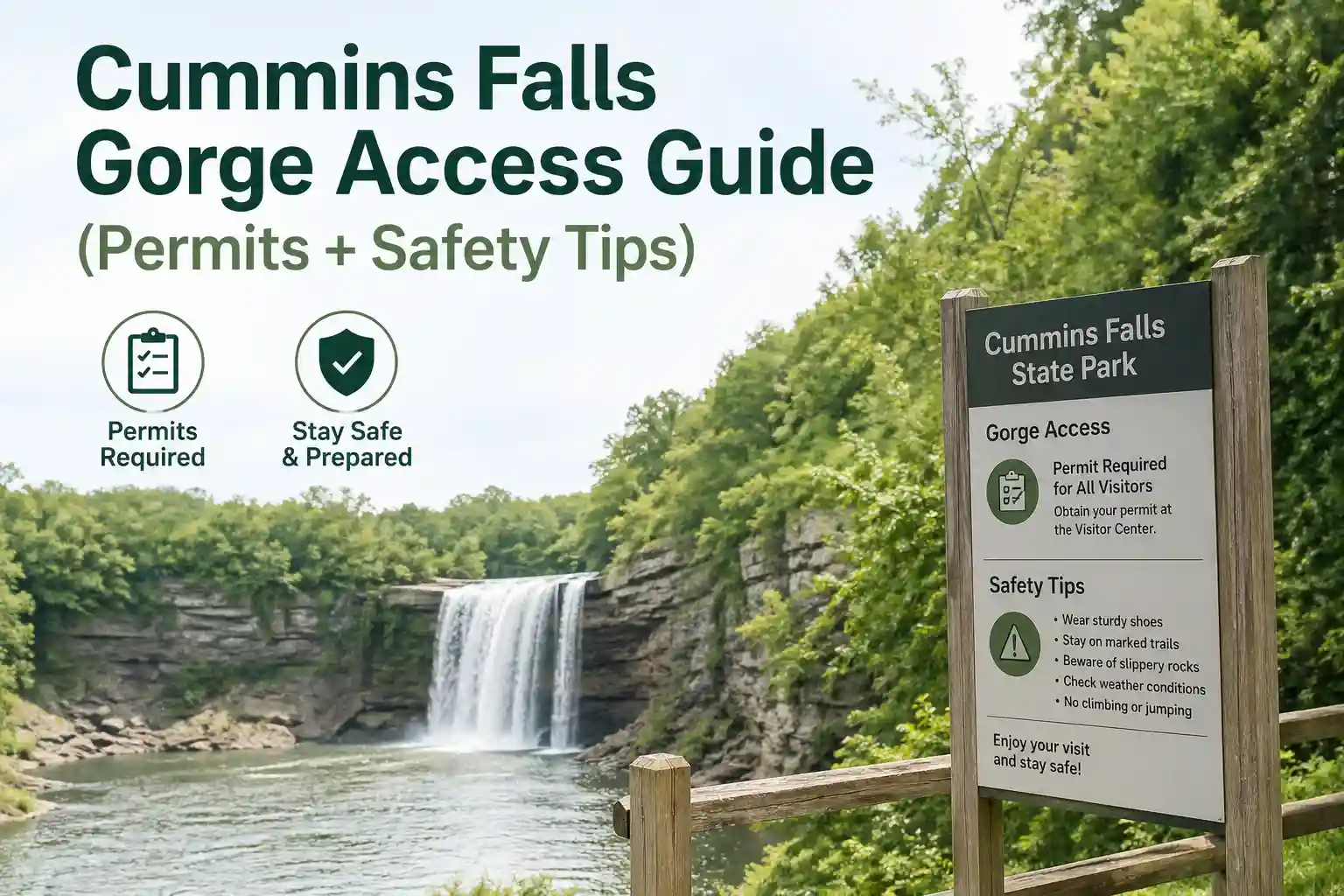
Cummins Falls Gorge Access Guide (Permits + Safety Tips): The Direct Answer First
That’s the short version. The longer, more useful version explains why the system exists, how to actually secure a spot without stress, and what to do when conditions change (because they will). This guide cuts through the recycled blog advice and focuses on what matters when you’re standing at the trailhead with your pack on.
The Permit System, Explained Without the Fluff
Cummins Falls State Park implemented a timed-entry permit system for gorge access due to overcrowding, safety incidents, and environmental protection needs. Based on Tennessee State Parks’ 2026 operational guidelines:
- Permits are required only for gorge access, not for the overlook trail.
- Reservations open 14 days in advance at 8:00 AM Central Time.
- Slots are limited per time window (typically 25-30 groups per slot).
- Permits are free but non-transferable and tied to a specific date/time.
- Group size is capped (usually 6-8 people per reservation).
According to park usage data from 2025, weekend permits during peak season (May-September) often book within minutes of release. Weekday slots, shoulder-season dates (April, October), and early-morning time windows tend to have better availability.
Here’s what many visitors don’t realize until they’re already planning: the permit system isn’t designed to make your trip harder. It’s designed to prevent the exact scenario where 200 people show up at a narrow, technical trailhead with limited parking, no cell service, and zero margin for error if someone gets hurt.
Deep Dive: Securing Your Permit Without the Stress
When to Book (and How to Actually Get One)
The 14-day advance window sounds straightforward, but timing matters more than most guides mention. From real reservation patterns:
- Set a reminder for 7:55 AM CT on your target booking day. Being “on time” at 8:00 AM often means missing out.
- Have your group details ready: names, contact info, and vehicle info before you start the booking flow.
- Use a desktop browser if possible. Mobile booking works, but page load delays on phones can cost you a slot.
- Target weekday mornings if your schedule allows. Tuesday at 9 AM has far less competition than Saturday at 10 AM.
- If your first-choice date is gone, don’t abandon the plan immediately. Check 24-48 hours before your target date. Cancellations do happen, and the system updates in real-time.
What the Permit Actually Covers (and What It Doesn’t)
A common point of confusion: holding a gorge permit doesn’t guarantee ideal conditions. It grants you legal access during your reserved window. It doesn’t control:
- Water levels after recent rainfall.
- Trail surface conditions (mud, loose rock, algae).
- Air temperature or humidity on the day.
- Parking availability if you arrive late.
Based on park incident reports, most safety issues in the gorge stem from visitors assuming the permit equals “all clear.” It doesn’t. You’re still responsible for assessing conditions when you arrive.
The Overlook Trail Alternative (No Permit Needed)
If gorge permits are booked or conditions look questionable, the overlook trail remains a viable option. It’s shorter (~0.4 miles round-trip), paved with railings, and offers a clear view of the 75-foot cascade. You won’t get the in-the-basin experience, but you’ll avoid the technical challenges entirely. For families with very young kids, travelers with mobility considerations, or anyone visiting after heavy rain, this is often the smarter choice.
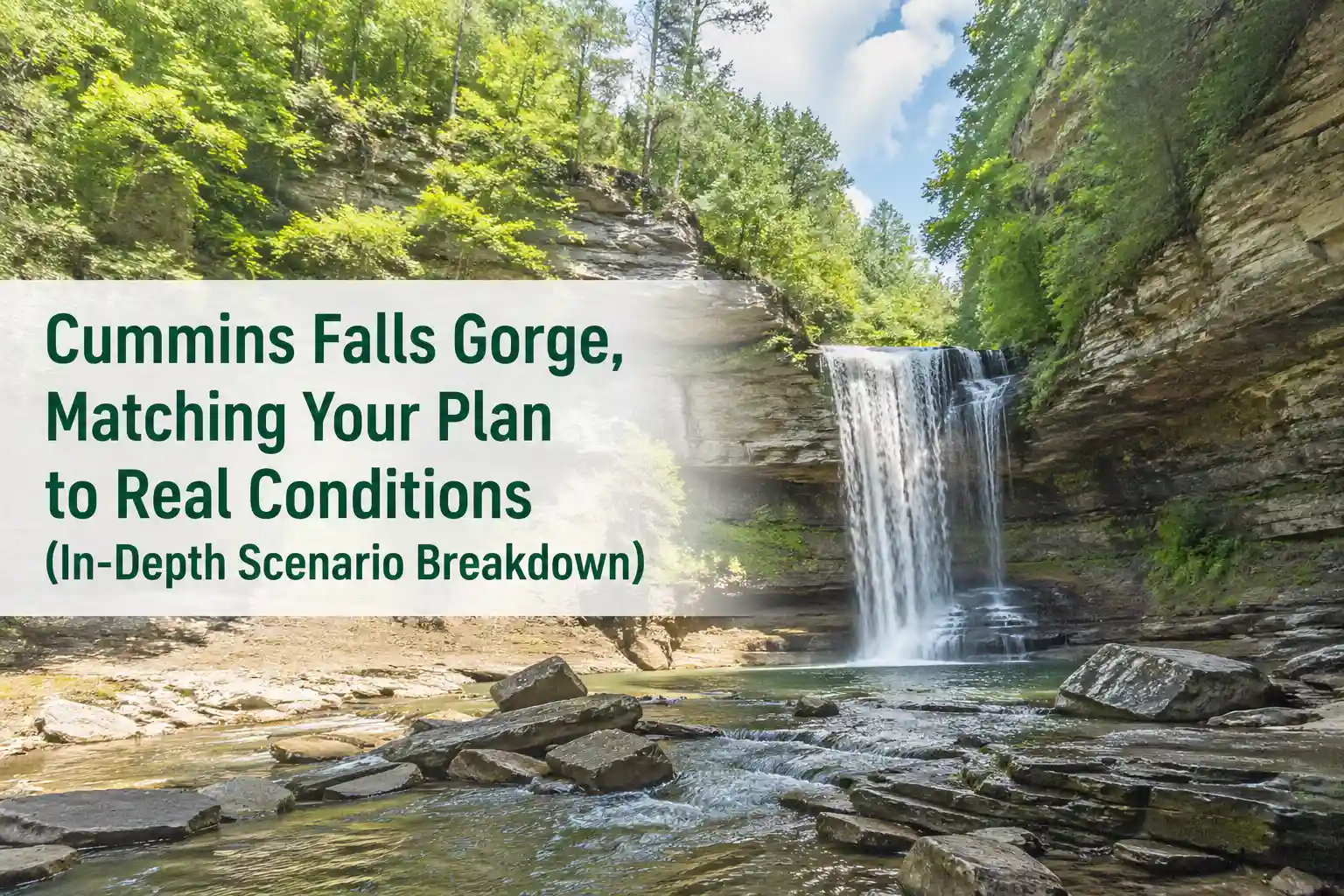
Matching Your Plan to Real Conditions (In-Depth Scenario Breakdown)
Scenario 1: First-Time Visitor, Weekend in Summer
You want the full experience but don’t know the terrain. Priority one: book your permit exactly 14 days out at 8 AM CT. Priority two: arrive 30 minutes before your reserved window to account for parking and check-in. Priority three: wear footwear with actual traction; smooth-soled sneakers increase slip risk on wet limestone. Bring more water than you think you’ll need; humidity in the gorge amplifies dehydration.
Scenario 2: Rain in the Forecast
Check precipitation for the 48 hours prior to your hike, not just the day of. Even if the skies are clear on your visit day, upstream rainfall can raise creek levels rapidly. If the park posts a gorge closure notice due to high water, respect it. The overlook trail usually remains open and still offers a rewarding view. Pushing into the gorge during elevated flow isn’t adventurous—it’s unnecessarily risky.
Scenario 3: Traveling with Kids or Less-Experienced Hikers
The gorge route involves multiple unbridged creek crossings, uneven rock surfaces, and sections where hand-over-hand movement helps. In practice, children under 8 or adults unfamiliar with uneven terrain may find the overlook trail more enjoyable. If you do attempt the gorge with younger hikers, keep the group small, move deliberately, and turn back early if anyone seems fatigued or uneasy.
Scenario 4: Photography or Solo Travel Goals
Early morning permits (first slot of the day) offer the best light and lowest crowds for photography. Solo travelers often find weekday visits provide more flexibility for pacing and spontaneous route adjustments. One detail worth noting: the gorge walls create natural shade, so midday visits can actually work well for exposure balance, just bring a headlamp if your permit window extends late.
Safety Realities That Generic Guides Skip
Water Levels Change Faster Than Forecasts Suggest
Creek-fed waterfalls respond to rainfall upstream, which may not match the weather at the trailhead. A sunny morning at Cummins Falls doesn’t guarantee safe creek crossings if it rained heavily in the watershed overnight. Park rangers monitor conditions and may close gorge access with little notice. Checking the official park social media or calling the visitor center the morning of your hike adds a layer of protection that static blog advice can’t provide.
Footwear Isn’t a Style Choice Here
This isn’t a paved boardwalk. The gorge route includes slippery rocks, loose gravel, and sections where water flows directly over the trail. Trail runners with grippy outsoles or hiking sandals with secure straps work well. Flip-flops, smooth-soled canvas shoes, or fashion sneakers increase fall risk significantly. Many travelers find that investing in one pair of purpose-built trail footwear pays off across multiple Tennessee waterfall hikes.
Turnaround Discipline Saves Trips
One analytical observation from incident data: most minor injuries occur on the return hike, not the descent. Fatigue, wet gear, and time pressure combine to reduce caution. Set a hard turnaround time before you start. If you haven’t reached your photo spot or the main basin by then, head back. The waterfall will still be there next time. Your ankle won’t be if you push too far.
What Most Travel Blogs Get Wrong About Cummins Falls Gorge Access
You’ll see endless posts framing the permit system as a bureaucratic hurdle to “work around.” That perspective misses the point. The system exists because unmanaged access created real problems: environmental damage to the gorge ecosystem, emergency rescues due to unprepared hikers, and parking overflow that impacted local roads.
Another frequent oversimplification: “just wear water shoes.” While water shoes help with creek crossings, they often lack the ankle support and traction needed for the rocky, uneven sections between pools. In practice, a hybrid approach works better—sturdy trail shoes for the hike, with quick-dry socks, rather than minimalist water shoes that sacrifice stability.
Many guides also treat the gorge route as a single, fixed path. Reality is more nuanced. Water levels, seasonal vegetation, and minor trail shifts mean the exact route can vary. Relying on a single blog photo or GPS pin from last year’s visitor can lead to confusion. What shows up in static content isn’t always what you’ll encounter on the ground.
Practical Recommendations
When planning gorge access at Cummins Falls, prioritize flexibility over rigid itineraries. Build buffer time into your schedule for parking, check-in, and unexpected trail conditions. If your permit window is tight, consider arriving early and waiting in the parking area rather than rushing the trail.
For gear, focus on function over aesthetics. A lightweight dry bag for phones and keys, a small first-aid kit for minor scrapes, and a printed copy of your permit (in case cell service fails at check-in) add minimal weight but significant peace of mind.
If permits are fully booked for your travel dates, don’t view it as a trip failure. The overlook trail offers a legitimate alternative, and nearby waterfalls like Burgess Falls or Greeter Falls provide complementary experiences within a short drive. One analytical takeaway: travelers who build “plan B” options into their itinerary report higher satisfaction overall, regardless of whether they access the gorge.
Leave a Reply