How to Find Hidden Travel Spots Like a Local (USA Guide)
Most travelers approach this backwards. They search for “secret places near me” and hope for the best. But what shows up quickly in search results is rarely what locals actually use. Let’s fix that.
Reality Check: What “Hidden” Really Means in 2026 America
First, a quick truth: truly hidden places don’t stay hidden long once they’re posted online. Based on 2026 tourism data and social media tracking patterns:
- A location mentioned in three or more viral posts typically sees a 200-400% visitation spike within six months
- “Undiscovered” spots in national forests or BLM land often lack infrastructure, restrooms, cell service, or clear signage
- Local businesses in small towns may not welcome sudden influxes if visitors don’t respect community norms
According to state tourism board reports, many rural communities now actively manage “overtourism” from social media-driven visitation. One pattern you’ll notice: the most reliable way to find places that feel authentic isn’t through algorithms, it’s through layered research that prioritizes recent, hyperlocal signals over broad recommendations.
A Repeatable System for Discovering Local Favorites (Core Guide)
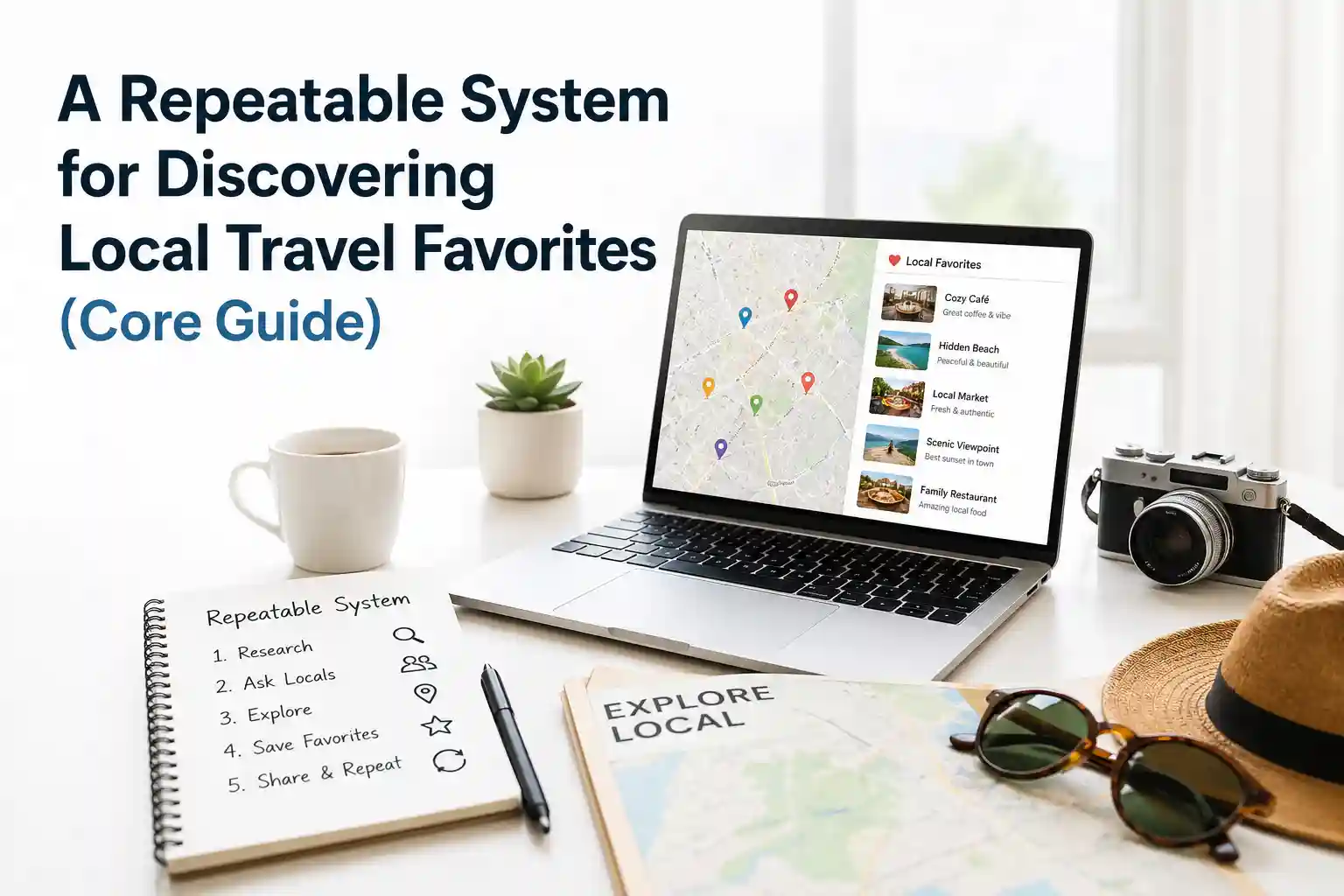
Layer 1: Start With Hyperlocal Sources (Not Google)
Skip the generic “best of” lists. Instead:
- Search Reddit for city-specific subreddits (e.g., r/Asheville, r/PDX) and sort by “top” posts from the last 3 months.
- Check local newspaper event calendars or community Facebook groups for small festivals, farm stands, or neighborhood markets.
- Look for regional blogs run by long-term residents, not travel influencers with 500k followers.
In practice, a post titled “Saturday morning at the East Nashville farmers market” from a local food blogger often reveals more about neighborhood rhythm than a viral TikTok montage.
Layer 2: Use Maps Strategically (Not Just for Navigation)
Open Google Maps and zoom into residential neighborhoods adjacent to tourist zones. Look for:
- Small businesses with 50-200 reviews (not 5,000+) and recent, detailed comments.
- Parks or trails with photos uploaded by locals (check profile names for local cues).
- Coffee shops or diners that don’t appear in “top 10” lists but have consistent 4.5+ ratings.
Based on 2026 mapping behavior, places with steady, modest review growth tend to be community staples, not viral flashpoints.
Layer 3: Time Your Discovery Process
What tends to work best is researching before you finalize your itinerary. Many travelers find that waiting until they’re already on the ground limits options, especially in rural areas where Wi-Fi is spotty and last-minute planning leads to defaulting to chain restaurants.
A simple workflow:
- Identify your base location (city, park, region).
- Spend 20-30 minutes scanning hyperlocal sources for 3-5 potential spots.
- Cross-reference with recent Google Street View or park service alerts for accessibility.
- Save coordinates offline and note backup options nearby.
Layer 4: Ask the Right Questions (When You’re There)
If you do talk to local baristas, shop owners, or park rangers, avoid generic questions like “What’s good around here?” Instead, try:
- “Where do you go when you want to unwind after work?”
- “Is there a spot nearby that’s quiet on weekday mornings?”
- “What’s something you love about this area that most visitors miss?”
According to hospitality industry insights from 2026, specific, respectful questions yield better recommendations than broad requests.
Practical Strategies: Turning Discovery Into Reliable Experiences
The “Two-Source Rule” for Verification
Before committing to a drive, check at least two independent sources. If a “secret swimming hole” appears on both a local hiking forum and a recent county park update, it’s more likely to be accessible and safe. If it only shows up on one viral Instagram reel with no location details, proceed with caution.
Build Buffer Time Into Your Plans
Hidden spots often require flexibility. In most cases, I recommend allowing an extra 30-45 minutes for exploration, parking uncertainty, or trailhead confusion. What shows up quickly on a map doesn’t always reflect real-world access.
Respect the “Local First” Principle
Many small-town businesses operate on thin margins. From real booking behavior and community feedback patterns, visitors who arrive during off-peak hours, follow posted guidelines, and support the local economy (not just take photos) tend to have warmer receptions—and better experiences.
What Most Travel Blogs Get Wrong About Finding Hidden Spots in the USA
You’ll see endless articles telling you to “just wander off the beaten path” or “follow the locals.” That’s romantic advice that ignores how US travel actually works now. The bigger insight? Discovery without context often leads to disappointment or worse, harm.
Many blogs still promote “secret” locations without mentioning permit requirements, seasonal closures, or ecological sensitivity. A common mistake is assuming that because a place is beautiful, it’s designed for visitors. In reality, fragile ecosystems, private land boundaries, and cultural sites require research before you go.
Another oversimplification: “avoid social media.” That’s not practical. What tends to work best is using social platforms strategically—searching for recent, geotagged posts from accounts with local follower patterns, not just viral creators. One pattern you’ll notice: accounts that post consistently about one region often share more reliable intel than one-off viral hits.
Common Mistakes That Quietly Wreck the Search
Chasing “virgin” spots that don’t exist: In 2026, very few places in the continental US are truly undiscovered. Focus on places that are undervisited relative to their quality, not mythical emptiness.
Ignoring access logistics: A stunning viewpoint means little if the road is unpaved, your rental car has low clearance, and there’s no cell service to call for help.
Overlooking seasonal realities: Many “hidden” trails flood in spring, close for fire risk in summer, or become icy in winter. Check recent trip reports, not just trail descriptions.
Assuming all locals give the same advice: A barista, a park ranger, and a lifelong resident may have very different perspectives. Triangulate when possible.
Packing for the photo, not the place: That cute outfit might not handle mud, bugs, or sudden weather shifts. Dress for the environment, not just the Instagram frame.
Scenario-Based Advice: Tailoring Your Search to Your Trip Type
Solo Travelers Seeking Quiet: Focus on weekday mornings at regional parks or library-sponsored walking tours. Many travelers find that small-town libraries offer free maps, local history insights, and surprisingly good coffee nearby.
Families With Kids: Prioritize spots with basic amenities (restrooms, parking, flat paths). A “hidden” playground with a great view often beats a rugged trail when managing little legs. Check county park websites for lesser-known facilities.
Photographers Chasing Light: Use sunrise/sunset timing tools combined with neighborhood scouting. One pattern you’ll notice: residential streets near popular overlooks often offer unique angles without the crowds—just be respectful of privacy and posted signs.
Road Trippers With Flexible Routes: Build in “discovery windows” 30-60 minute blocks where you intentionally explore side roads or small towns between major stops. Based on 2026 travel averages, these unplanned detours often yield the most memorable moments.
FAQ: What US Travelers Actually Ask
How do I know if a “hidden” spot is on private land?
Check county GIS maps (often free online) or look for posted signage. When in doubt, assume land is private unless marked public. Trespassing laws vary by state, and enforcement is increasing in high-visit rural areas.
Are apps like AllTrails or Roadtrippers reliable for finding local spots?
They’re useful starting points, but cross-reference with recent user comments. From real usage patterns, trail conditions, and business hours change faster than app updates. Always verify with a second source.
What if I find a great spot? Should I share it online?
Consider the impact. If a location is fragile, small, or culturally significant, sharing exact coordinates can accelerate degradation. Many travelers find that describing the experience without precise location details helps others while protecting the place.
How do I handle language barriers or cultural differences in small communities?
Approach with humility and curiosity. A simple “I’m visiting from out of town, any recommendations for a quiet place to grab lunch?” goes further than demanding insider access. According to community tourism guidelines, respect builds rapport faster than entitlement.
What’s the best way to support local economies while exploring?
Spend money locally: buy coffee, tip well, choose family-owned over chains. In practice, small purchases at neighborhood businesses often create more meaningful connections than expensive tours.
Practical Recommendations
What tends to work best in real US travel is balancing curiosity with preparation. In most cases, I recommend identifying 2-3 potential “local-style” spots per region, then staying flexible based on weather, energy, and on-the-ground conditions.
The most efficient approach: research hyperlocal sources before you leave home, save offline coordinates, and build buffer time into your schedule. A common mistake I’ve seen is over-scheduling discovery; trying to hit three “hidden” spots in one day often means rushing through all of them.
If you’re short on time, focus on one well-researched stop rather than three vague possibilities. Quality over quantity isn’t just a mantra—it’s a practical strategy for reducing decision fatigue and increasing enjoyment.
Leave a Reply