When Does it Snow in Gatlinburg? Snow Prediction Guide for 2026
I’ve watched travelers show up in early December expecting a winter wonderland, only to find 55-degree rain and bare trees. I’ve also seen folks miss a surprise January dusting because they assumed “Tennessee = mild.” The gap between expectation and reality isn’t huge—but it’s enough to derail a trip if you’re not prepared.
This isn’t a weather report. It’s a practical walkthrough for how to think about snow in Gatlinburg: when it’s likely, when it’s not, and how to plan around the uncertainty without losing your mind.
Let’s Start With the Basics (But Skip the Fluff)
Gatlinburg sits at roughly 1,300 feet above sea level. That matters. The Great Smoky Mountains National Park rises to over 6,000 feet just a short drive away. Elevation changes everything.
Using 2026 climate averages from NOAA and Tennessee weather stations:
- First measurable snow (0.1″+): Typically late November to mid-December
- Peak snow likelihood: Mid-January through early February
- Last measurable snow: Usually late February to early March
- Average seasonal total in Gatlinburg: 6–10 inches (but highly variable)
That “highly variable” part is doing a lot of work. One winter might dump 18 inches. The next might see two light dustings that melt by noon. Climate patterns like El Niño shift the odds, but never guarantee outcomes.
And here’s a detail many guides skip: snow in the valley (Gatlinburg) doesn’t mean snow on the trails. Newfound Gap, at 5,049 feet, can be 15–20 degrees colder than downtown. You could be scraping ice off your rental car in town while hikers at Clingmans Dome are dealing with whiteout conditions.
How to Actually Predict Snow (Without Becoming a Meteorologist)
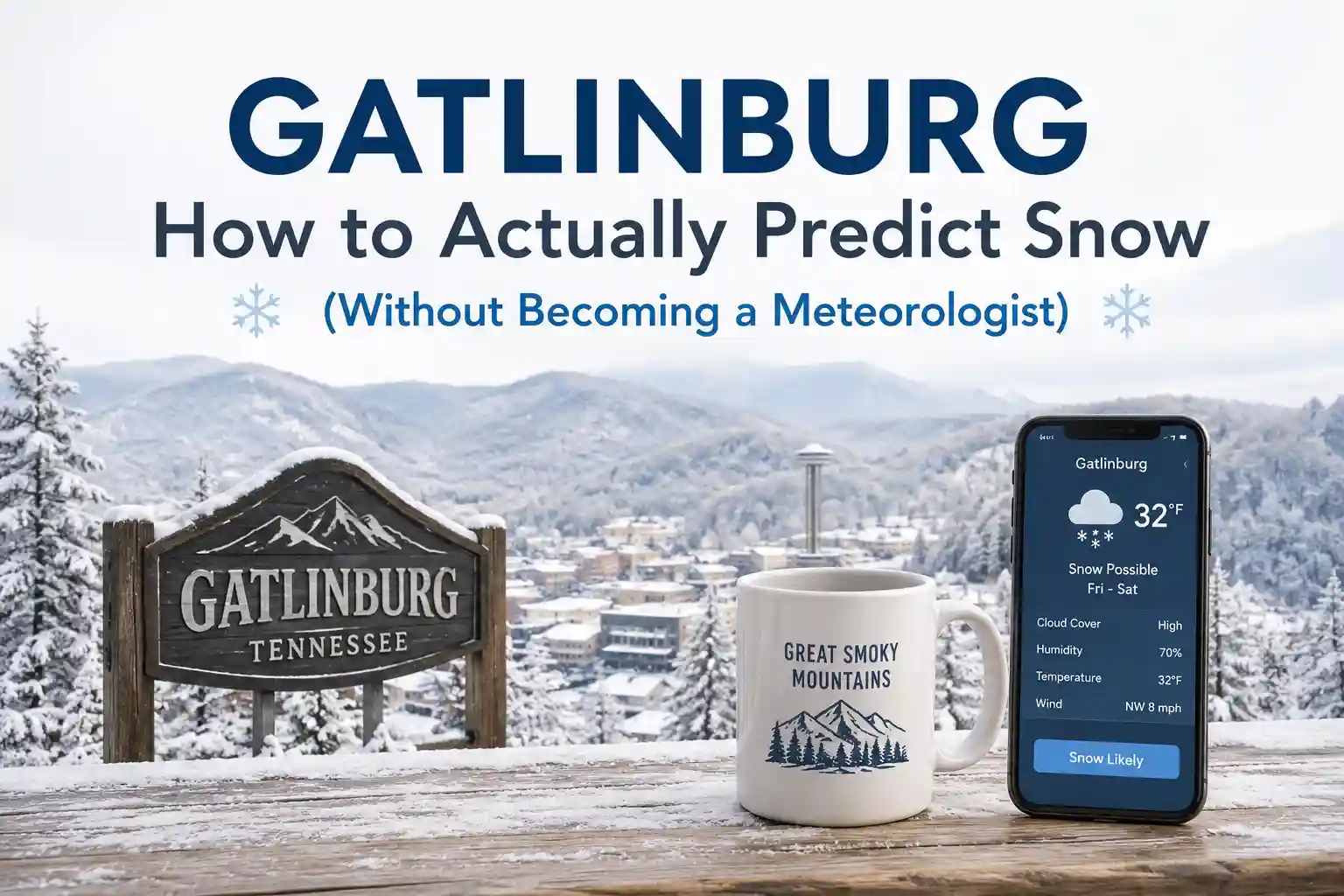
You don’t need a degree to get useful insight. You just need to know which signals matter, and which ones to ignore.
The 7-Day Window, Not the 14-Day
Long-range forecasts (10+ days out) are educated guesses at best. Mountain weather is notoriously chaotic. What shows up as “snow possible” two weeks ahead often evaporates as models refine. Focus on the 5–7 day window for actionable planning.
Dew Point + Temperature Combo
Snow needs cold air AND moisture. If the forecast shows temperatures dipping to 32°F but dew points stay above 28°F, you’re more likely to get sleet or freezing rain. For true snow, you’ll want dew points in the low-to-mid 20s alongside sub-35°F temps. Weather apps like Windy or Mountain-Forecast let you toggle these layers.
Elevation-Specific Forecasts
Generic “Gatlinburg” forecasts average valley and mountain conditions. Use tools that let you pick elevation bands. A storm that drops rain at 1,500 feet might deliver snow at 4,000. If you’re planning to hike or drive higher elevations, check forecasts for those specific zones.
Local Webcams (The Unfiltered Truth)
Before you commit to a drive, pull up live webcams: the Gatlinburg Parkway cam, the Clingmans Dome tower cam, or the Newfound Gap roadside cam. Seeing is believing. A forecast might say “light snow,” but the cam shows slushy roads—that changes your tire decision.
What Most Travel Blogs Get Wrong About Gatlinburg Snow Predictions
You’ll see posts claiming “Gatlinburg gets snow every December!” or “January guarantees white landscapes.” That’s not prediction—that’s wishful thinking dressed as advice.
The bigger issue: many guides treat Gatlinburg like a single weather zone. It’s not. The town sits in a valley. The park rises steeply on either side. A storm can dump snow on Mount LeConte while Gatlinburg’s streets stay wet but clear. Assuming uniform conditions leads to bad packing, risky driving, or missed photo opportunities.
Another oversimplification: relying solely on “chance of precipitation” percentages. A 40% chance of snow doesn’t mean “maybe.” It means models disagree. In mountain weather, that uncertainty is the most reliable signal of all. Plan for flexibility, not certainty.
Real Talk: What Snow Actually Looks Like on the Ground
Let’s get specific. Here’s how different snow scenarios tend to play out in and around Gatlinburg:
Light Dusting (1–2 inches)
Common in early December or late February. Usually melts within 24–48 hours on paved surfaces. Trails at higher elevations may hold snow longer. Roads stay passable with caution. Great for photos, minimal disruption.
Moderate Snow (3–6 inches)
Most likely mid-January. May require chains or 4WD for park roads. Downtown Gatlinburg plows priority routes quickly, but side streets and cabin driveways can stay slick. Power flickers are possible. If you’re driving from out of state, build in buffer time.
Heavy Snow / Winter Storm (7+ inches)
Rare but impactful. Typically tied to larger regional systems. Park roads close. Some businesses may delay opening. If you’re staying in a cabin on a steep road, confirm snow removal policies with your host ahead of time. These events create stunning scenery—but demand serious preparation.
One messy detail worth noting: Gatlinburg’s main parkway can get slushy fast when temperatures hover near freezing. At one downtown hotel, guests reported tracking wet snow through lobbies even after light accumulations, because the mix of foot traffic and warming pavement creates that heavy, clingy slush. It’s not dramatic, but it’s the kind of thing that affects your shoe choice more than the forecast does.
Video Credit: NCMemoryMakers
Practical Moves for Winter Planning
You don’t need to overthink this. A few grounded habits go a long way.
Check the park road status daily. Great Smoky Mountains National Park closes roads like Newfound Gap or Clingmans Dome during winter weather. The park’s website and social media post updates faster than generic weather apps. If your plan depends on driving high elevations, make this your morning ritual.
Pack for wet-cold, not just snow. Tennessee winter often brings damp chill rather than dry powder. A waterproof outer layer matters more than a puffy jacket alone. Wool socks, grippy footwear, and gloves that work when damp—these small choices keep you comfortable when conditions shift.
Have an indoor backup plan. Snow can limit trail access or make driving unpleasant. Gatlinburg has museums, distilleries, and cozy restaurants. If your outdoor plans get paused, you won’t feel stranded.
Confirm cabin access details. If you’re staying outside downtown, ask your host: Is the driveway steep? Do they plow or salt? What’s the backup if the road is impassable? These questions sound nitpicky until you’re staring at an icy incline with groceries in the trunk.
Common Missteps (And How to Sidestep Them)
A few patterns show up again and again when travelers plan for Gatlinburg snow:
Assuming “snow forecast” = “snow on the ground.” A forecast might call for snow, but if ground temperatures are above freezing, accumulation may not happen. Check both air and surface temperature trends.
Underestimating drive times. Snow or even just wet-cold conditions slow traffic on routes like US-441. A 45-minute drive can stretch to 90 minutes. If you have a timed reservation (dinner, tour, etc.), leave earlier than feels necessary.
Packing only for the photo. That cute knit hat looks great in pictures, but won’t keep your ears warm in the wind chill. Prioritize function for core items; style can come second.
Ignoring tire readiness. All-season tires handle light snow okay. Anything more, and traction drops fast. If you’re driving from a warmer climate, consider renting a vehicle with AWD or carrying portable traction mats.
Scenario-Based Advice: Tailoring Your Trip
First-Time Visitors Hoping for Snow
Aim for mid-January. It’s the statistical sweet spot. But build flexibility: book refundable lodging if possible, and keep a loose itinerary. If snow doesn’t cooperate, Gatlinburg’s winter charm still works—think fewer crowds, cozy fires, and clear mountain views on cold, sunny days.
Photographers Chasing Winter Scenes
Early morning light after a fresh snowfall is magical—but it’s also when roads are iciest. Scout locations the day before if you can. And remember: higher elevations hold snow longer. A short drive up to Newfound Gap might yield scenes that have already melted downtown.
Families With Young Kids
Snow play is fun, but cold tolerance varies. Dress kids in layers you can add or remove quickly. Keep outings short (30–45 minutes) for the first snow experience. And have a warm-up spot picked out—a café, lodge lobby, or your cabin—so you can retreat before shivering starts.
Travelers With Mobility Considerations
Snow and ice amplify accessibility challenges. Downtown Gatlinburg’s sidewalks are generally maintained, but side streets and trailheads vary. Check with lodging about cleared pathways. If using park facilities, call ahead: some overlooks or restrooms may close temporarily during winter weather.
Quick Answers to Questions People Actually Ask
Will it snow on Christmas in Gatlinburg?
It’s possible, but not probable. Historically, measurable snow on December 25 happens roughly once every 3–4 years. Don’t plan your entire trip around it—but do pack for cold, damp conditions just in case.
Do I need snow tires?
For staying mostly in town: probably not. All-season tires with good tread are usually sufficient. If you plan to drive park roads or steep cabin access routes during active snow, AWD/4WD or carrying traction aids is a smarter move than relying on tires alone.
How cold does it actually get?
Overnight lows in winter often dip into the 20s (°F) in Gatlinburg. Wind chill in exposed areas can feel colder. Daytime highs typically range from 40–55°F. Higher elevations run 10–20 degrees cooler.
Can I still hike in winter?
Yes—with preparation. Lower-elevation trails like Laurel Falls (when open) or the Gatlinburg Trail are often passable with sturdy footwear. Higher trails may have ice or snow. Always check trail conditions via the park website before heading out, and carry microspikes if ice is possible.
What if my flight into Knoxville gets delayed due to weather?
Winter weather can disrupt travel. If flying in, consider arriving a day early if your itinerary is tight. And keep your rental car company’s roadside assistance number handy—just in case.
Practical Recommendations
If you take away just one idea, let it be this: plan for conditions, not just dates. Picking mid-January improves your odds, but it doesn’t guarantee snow. Build a trip that works whether you get powder, drizzle, or clear cold skies.
Another move that pays off: pack a small “weather adjustment kit.” Think: an extra pair of wool socks, a compact umbrella, hand warmers, and a backup pair of grippy shoes. These items take minimal space but make a real difference when conditions shift unexpectedly.
Finally, keep your expectations flexible. Gatlinburg in winter has quiet beauty even without snow. Fog rolling through the valleys. Crisp air on a sunny morning. Fewer crowds at popular spots. The goal isn’t to chase a specific weather outcome—it’s to enjoy time in the mountains, whatever they offer that week.
About the Author
Eric Gamble is a travel researcher and editorial strategist focused on U.S. domestic travel logistics and seasonal planning. His work translates weather patterns, park policies, and visitor data into practical guidance for travelers who want to make informed decisions without getting lost in forecast noise. He doesn’t chase viral moments or fabricate personal adventure stories. His aim is straightforward: help readers prepare for real-world trips with clarity and confidence.
One Failure Insight (Because Real Experience Isn’t Perfect)
The first time I planned a Gatlinburg winter trip, I booked based on a 10-day forecast showing “high chance of snow.” I arrived to find 48-degree rain and bare trees. The forecast had shifted three days before my trip, but I hadn’t rechecked. That oversight meant I’d packed heavy snow gear but no decent rain jacket. I spent the first day damp and slightly frustrated. Since then, I’ve made it a habit to review the 48-hour forecast the morning before departure. It takes two minutes. It’s saved me from repeating that mistake more times than I can count.
Leave a Reply