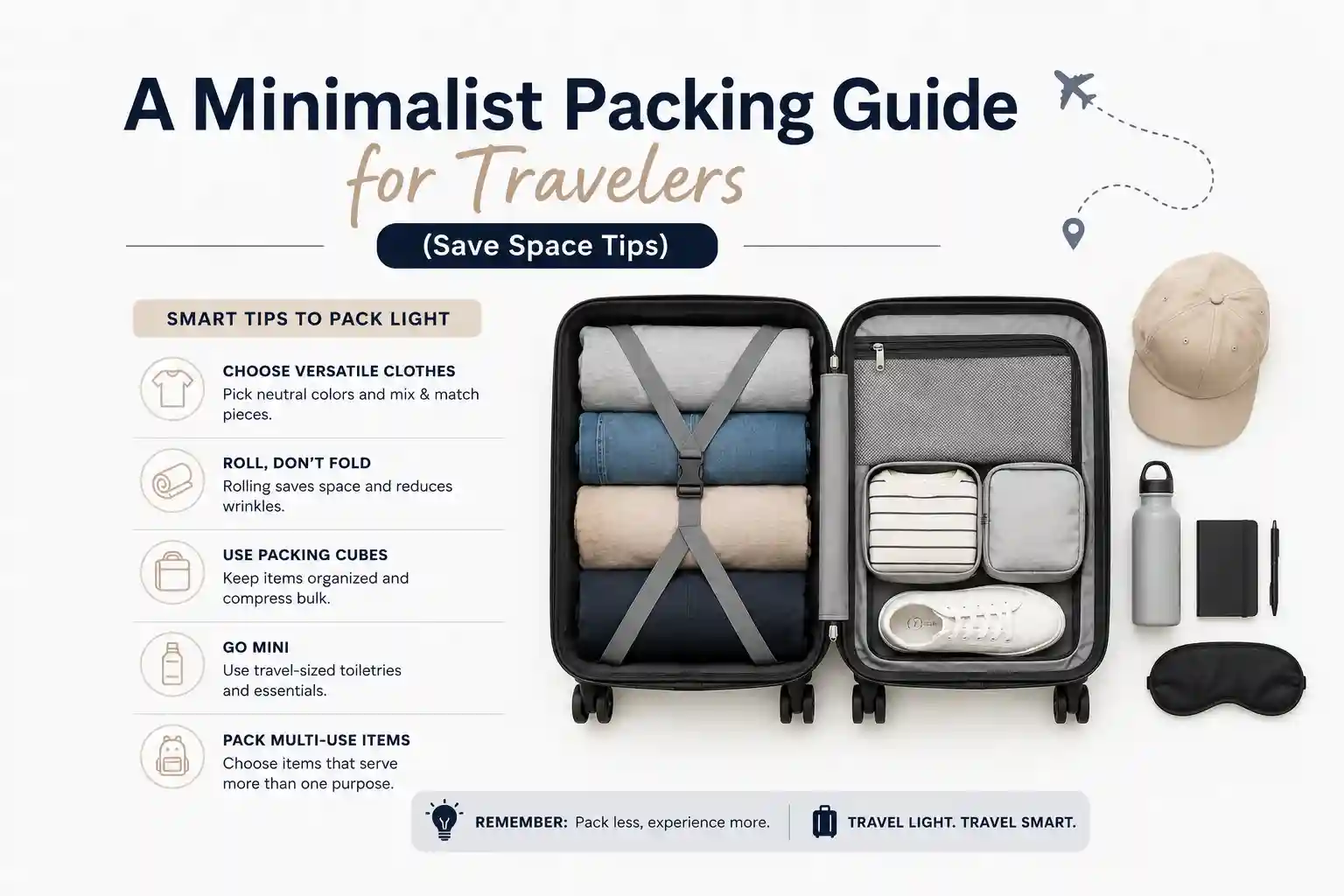
A Minimalist Packing Guide for Travelers: The Space-Saving System That Actually Works in 2026
Here’s the quiet truth most packing guides skip: minimalist packing isn’t about hitting a magic item count. It’s about building a flexible, decision-light system that adapts to the unpredictable reality of travel across the United States. Based on TSA guidelines, 2026 airline policies, and observable traveler behavior patterns, this guide focuses on what moves the needle: reducing friction, not just volume.
Quick Answer: The Core Framework
If you’re short on time, here’s the functional backbone of a minimalist US packing strategy that holds up across regions and trip types:
- Bag choice first: Select a carry-on compliant with the strictest airline you’ll use (typically 22″ x 14″ x 9″ for US domestic). A personal item that fits under the seat is non-negotiable for flexibility.
- Fluids strategy: The TSA 3-1-1 rule remains active in 2026: containers ≤3.4 oz, all fitting in one quart-sized clear bag. Pre-decide which liquids are non-negotiable; decant the rest or buy at destination.
- Clothing logic: Build around a 3-color palette where every top works with every bottom. Prioritize fabrics that resist wrinkles and dry overnight (merino wool blends, technical synthetics).
- Shoe limit: Two pairs maximum. One worn during transit (supportive sneaker or boot), one packed (versatile casual or dress option).
- Tech minimalism: One multi-port charger, one universal cable, one backup battery. Everything else is situational.
This isn’t theory. It’s a filter. If an item doesn’t serve at least two distinct purposes within this framework, it likely adds weight without adding value.
Why Most “Pack Light” Advice Fails US Travelers
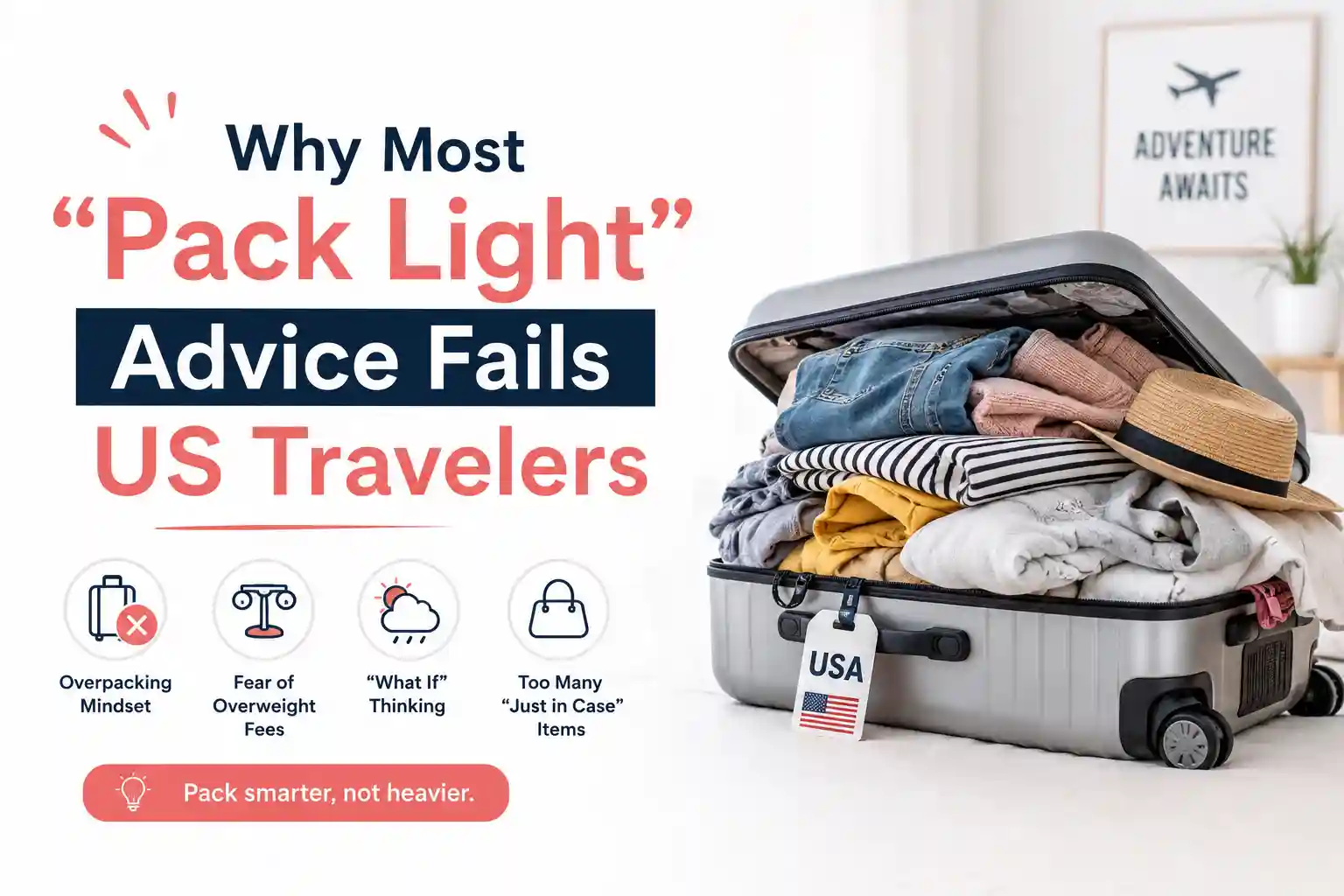
What most travel blogs get wrong about minimalist packing for US trips isn’t the gear, it’s the context. A system designed for two weeks in Southeast Asia doesn’t translate cleanly to a 10-day road trip through the Southwest, where temperature swings exceed 40°F and laundry access is inconsistent.
The layering myth. Advice like “just layer!” ignores bulk. Three thin layers often occupy more compressed volume than one well-chosen mid-weight piece. In practice, a single packable insulated vest + a moisture-wicking base layer handles more US spring/fall scenarios than a stack of fleeces.
The “buy it there” assumption. Suggesting travelers purchase forgotten items at the destination works in cities with 24-hour pharmacies. It fails in rural stretches of Montana or the Great Smoky Mountains. A better filter: if an item is critical for health, safety, or core function (glasses, prescription meds, specific footwear), pack it. If it’s convenience-only, assess destination access first.
Over-indexing on weight, under-indexing on access. TSA screening in 2026 still prioritizes quick visual inspection. Burying your liquids bag or electronics deep in a packed cube creates checkpoint friction. Organization isn’t aesthetic—it’s operational. Place high-inspection items in top-layer pockets.
The first time I built a digital packing checklist, assuming I could edit it seamlessly on mobile mid-trip, I learned this the hard way: offline access isn’t universal, and last-minute changes on a spotty hotel Wi-Fi connection cost more time than a simple printed backup would have saved. Systems need redundancy.
Deep Dive: Building Your Adaptive Packing System
1. Bag Architecture: The Foundation
Start with your container. For US domestic travel in 2026, the most restrictive common carry-on dimensions remain 22″ x 14″ x 9″. Choose a bag meeting this spec with two non-negotiable features: a dedicated, easily accessible exterior pocket for liquids/electronics, and compression straps internally to stabilize contents. Soft-sided bags with slight expandability offer flexibility for the return trip when souvenirs enter the equation.
Personal item strategy matters more than many realize. A slim backpack or tote that reliably fits under the seat becomes your “in-flight essentials” hub: medications, a change of socks, critical documents. This separation reduces the need to overhead-bin rummage during flight.
2. Clothing: Function Over Formula
Forget rigid counts like “5 tops, 4 bottoms.” Instead, apply a decision tree:
Climate range: Check historical averages for your destinations, not just current forecasts. A May trip to Denver could see 35°F mornings and 75°F afternoons. Pack for the range, not the midpoint.
Activity overlap: One pair of dark, technical-fabric trousers can transition from hiking to dinner with a simple top swap. A merino wool tee resists odor longer than cotton, reducing laundry frequency.
Laundry reality: If your itinerary includes hotels with in-room sinks, pack a universal sink stopper and a small soap sheet. Hand-washing one core item every 3-4 days dramatically reduces clothing volume needs.
Source anchoring: According to 2026 airline policies, basic economy fares on major US carriers often exclude overhead bin access for carry-ons. If you’re booking these fares, your “carry-on” must function as a personal item. This constraint alone can eliminate 30-40% of potential pack volume—forcing sharper prioritization.
3. Toiletries & Liquids: Precision Over Guesswork
The TSA’s definition of “liquid” in 2026 remains broad: anything that pours, spreads, or sprays. This includes cream blush, toothpaste, and lip gloss. Common error: assuming a nearly-empty 4 oz bottle is acceptable. Container size, not remaining product, determines compliance.
Practical approach: Use a dedicated, clear quart-sized bag placed in your carry-on’s most accessible pocket. Pre-trip, audit each liquid item: Is this used daily? Can it be replaced with a solid alternative (shampoo bar, solid deodorant)? For trips under 7 days, consider skipping liquids entirely and purchasing travel sizes at your destination’s first pharmacy stop.
4. Electronics: The Minimal Viable Setup
FAA guidance in 2026 continues to require lithium-battery devices in carry-on luggage. This isn’t just policy, it’s practical. A dead phone in checked baggage during a delay creates unnecessary stress.
Streamline with a single multi-port GaN charger (65W+ handles laptops and phones), one universal cable with interchangeable tips, and a slim power bank. Leave dedicated camera gear unless photography is a trip objective; modern smartphones handle most US travel documentation needs.
Scenario Breakdown: Adapting the System
Urban Northeast corridor (NYC-Boston-DC), 5 days, spring: Focus on versatile layers. A packable water-resistant shell handles unpredictable rain. Comfortable walking shoes are non-negotiable; cobblestones and subway stairs punish fashion-only footwear. Use hotel laundry services or pack a quick-dry underwear set to reset mid-trip.
Southwest road trip (AZ-UT-NV), 7 days, late spring: Temperature volatility is the core challenge. Mornings near freezing at Grand Canyon viewpoints, afternoons exceeding 90°F in Sedona. Prioritize moisture-wicking base layers, a sun-protective long-sleeve shirt, and a wide-brim hat. Hydration systems (collapsible water bottle) matter more than extra clothing.
Florida coastal + theme parks, 6 days, summer: Humidity changes everything. Fabrics that dry overnight become critical. Pack one “dry backup” outfit sealed in a compression sack for days when everything else feels damp. Water shoes double as pool footwear and protect feet on hot pavement.
Mountain West ski-to-summer transition (CO, March-April): This is where minimalist packing gets tested. Pack for the primary activity (ski gear), then add one versatile casual layer for aprés. Many resorts offer gear rental; shipping bulky items ahead via services like Luggage Forward can free up critical bag space for other needs.
Practical Recommendations
What works when theory meets pavement:
The 24-hour test: Before finalizing your pack, lay everything out and remove one item you’re unsure about. If you don’t miss it in the first day of your trip, you’ve validated the cut.
Compression cubes, used strategically: They work best for compressing soft, non-structured items (socks, underwear, base layers). Don’t force stiff items like jeans into them; you’ll gain minimal space and create awkward bulges.
Shoe packing hack: Place shoes in shower caps or dedicated shoe bags, then nestle them along the wheeled edge of your carry-on. This uses otherwise-wasted space and protects clothing from sole residue.
Document digitization: Photograph your passport, ID, insurance cards, and itinerary confirmations. Store in a secure, offline-accessible folder. If physical copies are lost, digital backups accelerate replacement.
Empty space is functional: Leave 10-15% of your bag volume unused on the outbound trip. This accommodates souvenirs, layers shed during warm afternoons, or unexpected purchases without requiring a baggage fee on the return.
Frequently Asked Questions
Can I really do a week-long US trip with just a personal item?
Yes, if your itinerary is urban with reliable laundry access and you prioritize versatile, quick-dry fabrics. For rural travel or variable weather, a compliant carry-on provides a necessary buffer without checked-bag fees.
How do I handle formal events without packing a suit or dress?
Focus on one elevated piece that travels well: a blazer that resists wrinkles, or a silk-blend dress that packs flat. Pair with your versatile basics. Many US cities also offer same-day formalwear rental services if needed.
What about souvenirs? Won’t I need space on the return?
This is why leaving outbound buffer space matters. Alternatively, ship larger items home via USPS Flat Rate boxes from your destination. Often cheaper than airline overweight fees.
Are packing cubes worth the investment?
For organization and compression of soft items, yes. For rigid or bulky items, minimal benefit. Test with inexpensive cubes first before investing in premium brands.
How do I manage medications within the 3-1-1 rule?
Prescription medications in liquid form exceeding 3.4 oz are exempt from the 3-1-1 rule but must be declared to TSA officers at screening. Keep them in original labeled containers and separate from your standard liquids bag for smoother inspection.
About the Author
Eric Gamble researches and analyzes travel logistics, focusing on practical systems for US domestic travel. His work emphasizes decision frameworks over gear lists, helping travelers reduce friction through preparation grounded in current policies and observable patterns. Connect with his travel research updates via Facebook.
Note: This guide synthesizes publicly available TSA guidelines, 2026 airline policies, and aggregated traveler behavior insights. It does not constitute official policy advice. Always verify current requirements with your airline and TSA before travel.
Leave a Reply