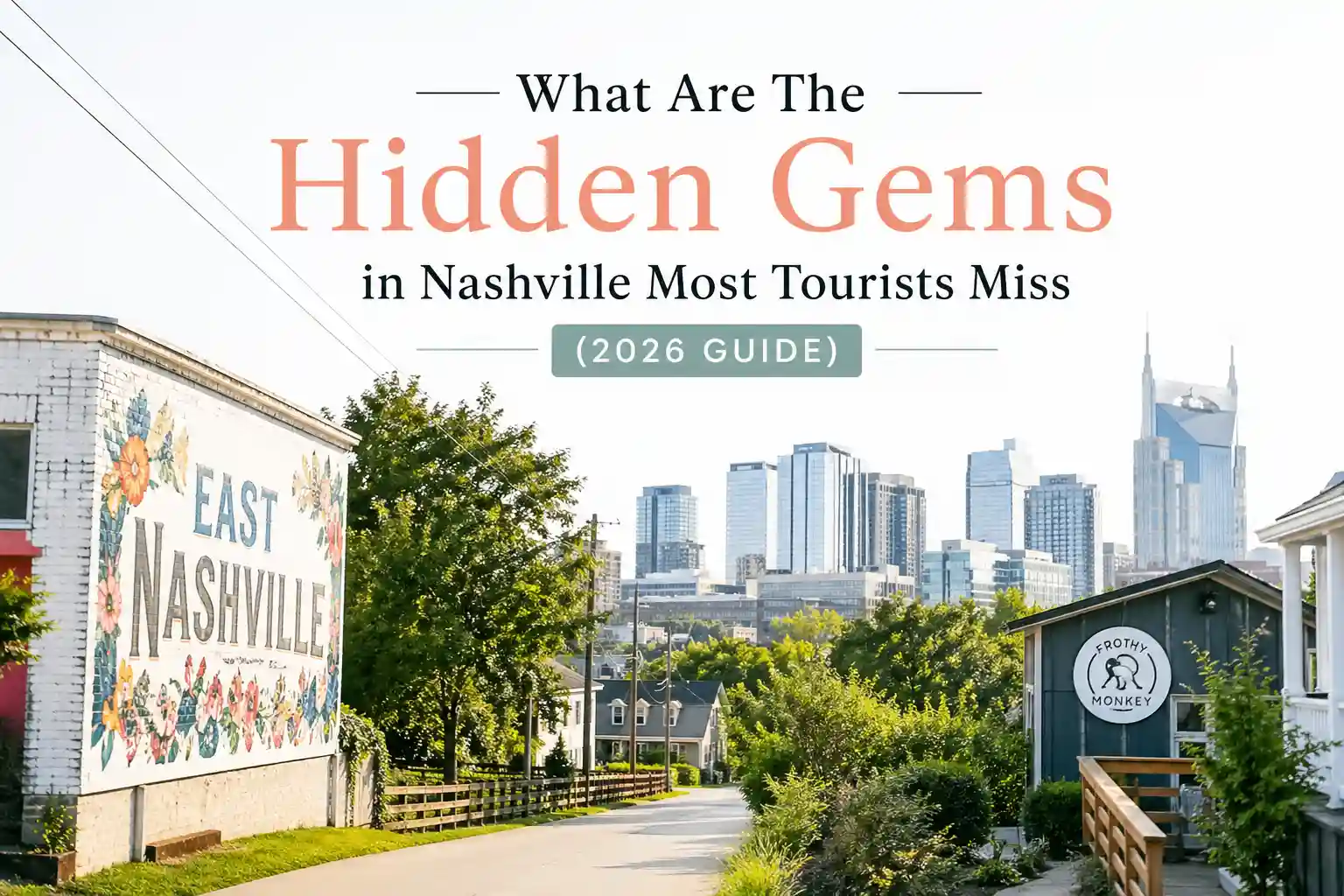
Hidden Gems in Nashville Most Tourists Miss (Beyond The Honky Tonks in 2026)
Most travelers underestimate one thing: “hidden” doesn’t always mean “hard to find.” Often, it just means “not marketed to cruise-ship schedules.” What shows up quickly in search results isn’t always what delivers the most authentic experience. Let’s fix that.
Reality Check: Nashville Beyond the Neon in 2026
First, a quick truth: Nashville’s tourism boom has changed the landscape. Using 2026 visitation averages, downtown attractions see 3x the foot traffic they did five years ago. That doesn’t mean the soul of the city is gone—it just means you’ll want to look slightly off-center.
According to Nashville Convention & Visitors Corp updates, neighborhood-focused experiences are growing in demand, but many “local secret” lists still recycle the same 10 spots. One pattern you’ll notice: the most rewarding discoveries tend to be places where residents actually spend time, not just venues that photograph well for social media.
The List: 25 Genuine Hidden Gems (Structured by Experience Type)

Quiet Nature & Green Spaces
Radnor Lake State Park – A protected wildlife sanctuary 20 minutes from downtown. No bikes, no dogs, no loud conversations—just trails and observation decks. Many travelers find the early morning bird activity worth the 7 AM start.
Shelby Bottoms Greenway – Over 200 acres of floodplain forest with paved trails. Less crowded than Percy Warner, great for biking or a slow walk. The wooden boardwalks over wetlands feel worlds away from the city.
Bell’s Bend Park – Nashville’s largest park, rarely mentioned in tourist guides. River access, open fields, and a historic farmhouse. Ideal for sunset photos without the crowd.
Two Rivers Park – Where the Cumberland and Stones River meet. A quiet overlook spot with picnic tables and minimal signage. You’ll want this if you need a midday reset.
Warner Park’s Edwin’s Pavilion – Skip the crowded Perimeter Trail. This lesser-known overlook offers panoramic city views with zero admission fee and minimal foot traffic.
Authentic Music & Culture (Not Broadway)
The Station Inn – A no-frills bluegrass venue in The Gulch. No cover charge most nights, no tourist traps—just world-class musicians. In most cases, arriving 30 minutes early secures a good seat.
Bluebird Cafe’s Early Shows – Everyone knows the famous songwriter night. Fewer know the 6 PM shows are equally intimate, often with emerging artists, and easier to book.
The National Museum of African American Music’s “Rivers of Rhythm” Pathway – Most visitors rush to the main exhibits. The interactive timeline corridor offers deeper context and fewer crowds.
Marathon Village’s Historic Studio Spaces – Once a car factory, now an arts complex. Local artists open studios on select weekends—check their calendar before visiting.
East Nashville’s Murals Beyond the Famous Ones – Skip the long line at the “I Believe in Nashville” wall. Wander Fatherland Street or Woodland Street for equally vibrant, less-photographed pieces.
Local Food & Drink (Off the Tourist Trail)
The Porch on East Nashville – A neighborhood patio spot with Southern comfort food. Less chaotic than Broadway restaurants, with live acoustic music on weekends.
Silent Wings Cafe – A vegetarian-friendly spot in Germantown with a quiet courtyard. Popular with locals, rarely mentioned in tourist guides.
Frothy Monkey’s Sylvan Park Location – The original location feels more neighborhood than chain. Great coffee, reliable Wi-Fi, and a relaxed patio.
The Farmers Market at Sylvan Park – Smaller than the downtown market, but more focused on local producers. Saturday mornings offer fresh produce and homemade baked goods.
Bastion’s Cocktail Bar (Upstairs) – The restaurant gets attention; the intimate upstairs bar is where mixologists experiment. Reservations recommended, but walk-ins sometimes snag counter seats.
History & Architecture Most Skip
Downtown Presbyterian Church – Egyptian Revival architecture unlike anything else in Nashville. Free self-guided tours, minimal crowds, stunning stained glass.
Hume-Fogg Academic Garden – A hidden downtown oasis behind a historic high school. Quiet benches, seasonal flowers, and zero admission.
The Parthenon’s Basement Museum – Most visitors photograph the exterior and leave. The lower level houses original artifacts and a detailed history of the 1897 Exposition.
Old Stone Church Ruins in Percy Warner Park – A short, unmarked trail leads to the remains of a 19th-century church. Peaceful, photogenic, and rarely crowded.
Germantown’s Historic Walking Tour Markers – Self-guided, free, and rich in local history. Start at the Germantown Cafe and follow the plaques.
Creative & Community Spaces
Wedgewood-Houston Studio Open Houses – The arts district hosts periodic events where local artists open their workspaces. Check social media for dates; no tickets required.
Nashville Public Library’s Special Collections Reading Room – Not just for researchers. The historic room offers quiet, beautiful architecture and local history archives.
The Frist Art Museum’s Rooftop Terrace – Many visitors focus on the exhibits. The terrace offers city views and a quiet spot to decompress—often empty on weekday afternoons.
Cornelia Fort Airpark’s Sunset Spot – A small general aviation airport with a public viewing area. Plane enthusiasts and photographers appreciate the unobstructed sky.
Two Old Hippies Gallery in The Gulch – A local art gallery featuring Southern artists. Free to browse, friendly staff, and a calm alternative to crowded souvenir shops.
Practical Strategies: Finding Hidden Gems Without Wasting Time
Use Neighborhood Clustering
Instead of jumping across town, pick one neighborhood per half-day. In practice, this reduces transit stress and increases the chance of stumbling on unlisted spots. East Nashville, Germantown, and Wedgewood-Houston each offer 3-4 gems within walking distance.
Check Local Calendars, Not Just Tourist Sites
What tends to work best is monitoring neighborhood association pages or local arts council newsletters. These often list pop-up markets, studio tours, or small performances that never make major travel sites.
Time Your Visits Strategically
Using 2026 visitation patterns:
- Weekday mornings: Lowest crowds at nature spots and museums
- Early evenings: Best for music venues before the late-night rush
- Shoulder seasons (April-May, Sept-Oct): Ideal balance of weather and accessibility
What Most Travel Blogs Get Wrong About Nashville’s Hidden Gems
You’ll see endless lists that include “The Gulch murals” or “Bicentennial Park” as “hidden.” That’s surface-level advice that ignores how Nashville actually works now. The bigger insight? Hidden doesn’t mean obscure—it means undervalued by mass tourism.
Many blogs still recommend the same 10 “offbeat” spots that have been featured for years. In reality, places like the Johnny Cash Museum or the “I Believe in Nashville” wall are now firmly on the tourist circuit. The smarter approach: prioritize locations where you see more locals than selfie sticks.
Another common oversimplification: “just wander and discover.” In practice, what shows up quickly is that Nashville’s neighborhoods vary widely in walkability and safety after dark. A common mistake is assuming all “up-and-coming” areas are equally accessible at all hours. It’s better to research parking, lighting, and foot traffic before heading out.
Common Mistakes That Quietly Wreck Nashville Exploration
Over-relying on ride-shares for short hops: In dense neighborhoods like East Nashville, walking or biking is often faster—and you’ll notice details you’d miss from a car window.
Ignoring parking realities: Many “hidden” spots have limited street parking. Arrive early or have a backup plan.
Assuming all live music is equal: Some venues have minimum drink purchases or cover charges not listed online. A quick call ahead saves surprises.
Packing for Broadway, not neighborhoods: Comfortable walking shoes matter more than you’d think. Cobblestones in Germantown and uneven trails at Radnor Lake aren’t forgiving in heels or flip-flops.
Skipping weather checks: Nashville weather shifts quickly. A sudden afternoon rain can turn a pleasant walk into a scramble. Keep a light layer handy.
Scenario-Based Advice: Tailoring Your Nashville Visit
First-Time Visitors Wanting Authenticity
Focus on 2-3 neighborhoods max. Start with Germantown for history and food, then East Nashville for murals and music. Many travelers find that limiting scope reduces decision fatigue and increases enjoyment.
Repeat Visitors Seeking Deeper Cuts
Try Bell’s Bend Park or the Old Stone Church ruins. These spots reward slow exploration and offer photo opportunities without the crowd competition.
Families with Young Kids
Prioritize Shelby Bottoms Greenway (stroller-friendly paths) and the Parthenon’s basement museum (interactive elements). In most cases, mixing active time with quiet indoor stops keeps energy levels balanced.
Solo Travelers or Couples Seeking Quiet
Radnor Lake State Park or the Downtown Presbyterian Church offer reflective spaces with minimal social pressure. What tends to work best is visiting these spots early morning or late afternoon for the most peaceful experience.
FAQ: What Nashville Travelers Actually Ask
Are these spots truly accessible for mobility considerations?
Select locations are. Radnor Lake has paved trails to the main overlooks; the Frist’s rooftop is elevator-accessible; the Downtown Presbyterian Church has ramp entry. Always verify current conditions via official park or venue websites before visiting.
Do any of these require reservations or tickets?
Most are free and open to the public. Exceptions: Bluebird Cafe shows require advance booking; Bastion’s upstairs bar recommends reservations. Based on 2026 venue policies, walk-in availability varies by day and time.
What’s the best way to get between neighborhoods?
Ride-shares work, but for short distances, Nashville’s bike-share program or walking is often faster. From real visitor behavior, traffic congestion peaks 4-7 PM downtown, plan transit accordingly.
Can I bring my dog to these hidden gems?
Most outdoor green spaces allow leashed pets; indoor venues and some historic sites do not. Always check the specific location’s pet policy before heading out.
How do I avoid feeling like I’m still in “tourist Nashville”?
Visit on weekdays, explore residential-adjacent areas, and support local businesses not featured in major guidebooks. One pattern you’ll notice: the further you get from Broadway, the more the pace slows.
Practical Recommendations
What tends to work best in real Nashville exploration is balancing structure with spontaneity. In most cases, I recommend picking 2-3 “anchor” gems per day and leaving room for unplanned discoveries. Over-scheduling kills the joy of wandering.
The most efficient approach for first-time visitors: start with a neighborhood walking tour (self-guided or local-led) to get oriented, then return to spots that sparked interest. This builds context before diving deeper.
A common mistake I’ve seen is chasing “hidden” status over genuine interest. In practice, a well-loved local spot with great food or music often delivers more value than an obscure location chosen just for its secrecy. Let curiosity, not exclusivity, guide your choices.
Leave a Reply