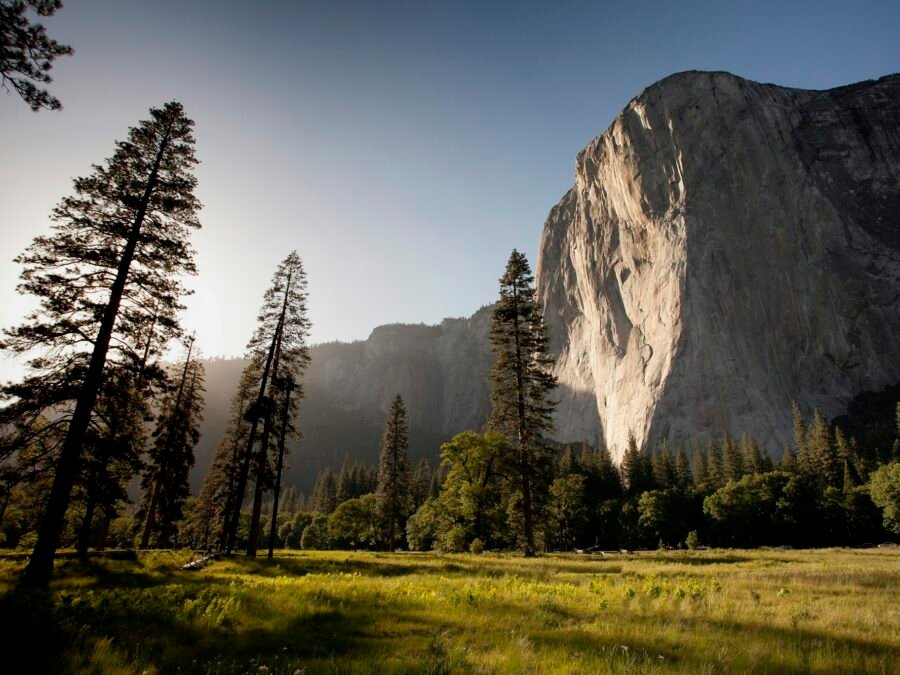
Sequoia and Kings Canyon Guide: Giant Trees, Moro Rock and a 2-Day Plan
The largest trees on Earth, a granite dome with 350 steps and a canyon deeper than the Grand Canyon in places. How to see Sequoia and Kings Canyon in two days without fighting the Generals Highway.
Spend two days in Sequoia and Kings Canyon National Parks. Day one: walk to the General Sherman Tree, loop the Congress Trail, climb the 350 steps of Moro Rock and drive through Tunnel Log in Sequoia’s Giant Forest. Day two: see the General Grant Tree in Grant Grove, then drive the Kings Canyon Scenic Byway down into Cedar Grove and walk Zumwalt Meadow. Go from June to October, when all roads are open. Leave big RVs out of the steep lower Generals Highway.
These are two separate national parks run as one, side by side in California’s southern Sierra Nevada. Sequoia was established in 1890, the second national park in the country. Kings Canyon followed in 1940. Together they protect the biggest trees on the planet, the highest point in the lower 48 on their eastern edge, and a glacier-carved canyon that plunges more than 8,000 feet from rim to river at its deepest. Yet they get a fraction of Yosemite’s crowds. That is a good reason to come.
- 2 daysCovers both parks’ highlights
- $35One vehicle fee for both parks, 7 days
- 275 ftHeight of the General Sherman Tree
- June–OctWhen every road is open
Why the trees are worth the trip
Giant sequoias are not the tallest trees on Earth. That title belongs to coast redwoods, their cousins in Northern California. Sequoias are the largest by volume, and nothing prepares you for how massive they are up close. The General Sherman Tree is about 275 feet tall with a trunk more than 36 feet across at the base. Its volume is estimated at about 52,500 cubic feet. It is still growing.
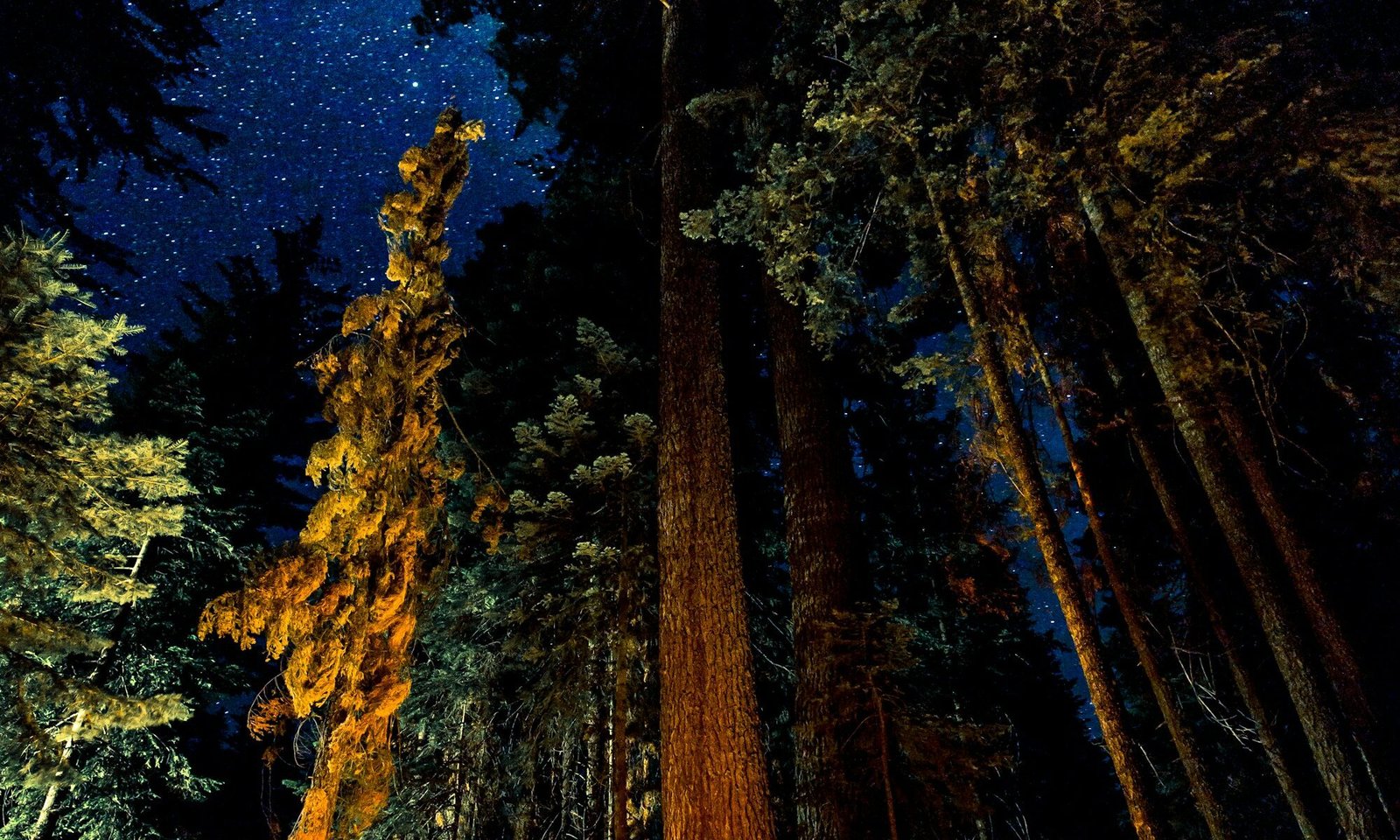
Photos fail here. The trunks look like reddish walls. Fallen sequoias you can walk inside look like tunnels. Some of these trees were already old when the Roman Empire fell; the oldest known giant sequoias are more than 3,000 years old. Stand at the base and look up, and the sense of scale feels almost physical.
Fire has changed the story recently. Giant sequoias are adapted to fire and need it to open their cones, but extreme wildfires between 2015 and 2021, including the Castle Fire and the KNP Complex Fire, killed a significant share of the world’s large sequoias. The Giant Forest survived largely intact, partly thanks to firefighters wrapping the base of General Sherman in protective foil in 2021. Seeing these groves is a privilege. Treat it like one.
Getting around: the Generals Highway
The Generals Highway connects the two parks, running about 46 miles from the Ash Mountain entrance near Three Rivers up to Grant Grove. It is slow, steep and very curvy in the southern section, climbing more than 5,000 feet in a few miles through tight switchbacks. Vehicles longer than 22 feet are advised against the stretch between the Potwisha campground and the Giant Forest Museum. If you are in a big RV, enter from the north via Highway 180 instead.
Plan on about two hours between Giant Forest and Grant Grove with a couple of stops. In summer, a free park shuttle runs in the Giant Forest area to General Sherman, Moro Rock and Crescent Meadow, and it is a great way to avoid the small, crowded parking lots. Check whether the gateway shuttle from Visalia is running during your visit.
Gas is not sold inside the parks. Fill up in Three Rivers, Visalia or Fresno, or at the few stations just outside the boundaries.
Sequoia National Park: the essentials
| Stop | Walk | Time needed | Why go |
|---|---|---|---|
| General Sherman Tree | 1 mi round trip, steep return | 45 minutes | The largest tree on Earth by volume |
| Congress Trail | 2.9 mi loop, paved | 1.5–2 hours | Groves of giants, the Senate and House groups |
| Moro Rock | 350+ steps, 0.5 mi round trip | 45 minutes | Panorama of the Great Western Divide |
| Tunnel Log | Drive-through | 10 minutes | A car-sized tunnel through a fallen sequoia |
| Crescent Meadow | 1.8 mi loop | 1 hour | Called the “gem of the Sierra” by John Muir |
| Tokopah Falls | 3.4 mi round trip | 2 hours | A 1,200-foot cascade in a granite canyon |
The main trail to General Sherman goes downhill from the upper parking lot, so the walk back up is the hard part. At around 7,000 feet, it can leave you breathless. There is also an accessible parking area near the tree for people with disability placards.
Moro Rock is our favorite single stop. A staircase carved into the granite climbs about 300 vertical feet to the top of a dome, with railings most of the way. The summit looks across the deep Kaweah River canyon to the jagged peaks of the Great Western Divide. Go late in the day for softer light. Skip it if thunderstorms threaten. Lightning and exposed granite don’t mix.
Crystal Cave, a marble cave with guided tours, has been one of the park’s highlights in the past but has closed for periods due to fire damage and road repairs. Check whether tours are running before you plan around it.
Kings Canyon: the canyon and the quiet side
Kings Canyon is the less visited of the two parks and, we think, the more underrated. Start at Grant Grove, where a short paved loop leads to the General Grant Tree, the second-largest tree in the world and the official “Nation’s Christmas Tree.” Walk through the Fallen Monarch, a hollow log that once housed people and horses.
Then drive the Kings Canyon Scenic Byway, Highway 180, east from Grant Grove down into the canyon. It is usually open from late April or May to November and closes in winter beyond Hume Lake junction. The road drops about 30 miles through switchbacks and granite walls to Cedar Grove and the end of the road at Roads End. Stop at Junction View for the canyon and Boyden Cavern area for the river.
At the bottom, walk the Zumwalt Meadow loop, about 1.5 miles along the South Fork of the Kings River beneath towering granite walls. Roaring River Falls is a short paved walk. For a longer day, hike to Mist Falls, about 8 miles round trip from Roads End, a big waterfall that peaks in early summer. The canyon floor here reminds many people of Yosemite Valley, without the crowds.
A two-day plan
Day one: Sequoia. Arrive early in Giant Forest. Walk to General Sherman, then loop the Congress Trail. Visit the Giant Forest Museum for exhibits on the trees. Take the shuttle or drive to Moro Rock, then Tunnel Log and Crescent Meadow. Watch the late light on Moro Rock or from the meadow. Sleep at Wuksachi Lodge, a park campground, or in Three Rivers.
Day two: Kings Canyon. Drive north on the Generals Highway, stopping at overlooks. Walk the General Grant Tree trail at Grant Grove. Drive the Scenic Byway into the canyon, with lunch along the river. Walk Zumwalt Meadow and Roaring River Falls. If you have energy, start toward Mist Falls. Return to Grant Grove or exit toward Fresno.
With a third day, hike to Tokopah Falls from Lodgepole or take on the Lakes Trail toward Pear Lake from Wolverton, a great day hike past a chain of alpine lakes.
When to go
Summer and early fall, June through October, are best. All roads are open, the high trails are snow-free by July, and wildflowers bloom in the meadows. September and October are quiet, with warm days and cold nights. In winter, Giant Forest gets heavy snow and the giant trees with snow on their branches are breathtaking, but chains are often required and the Kings Canyon Scenic Byway closes. Spring brings waterfalls but also lingering snow at higher elevations.
Summer smoke from wildfires can affect air quality and views, especially in August and September. Check air quality before you go.
Where to stay
Inside the parks, Wuksachi Lodge in Sequoia is a modern lodge near Giant Forest. John Muir Lodge and Grant Grove Cabins are in Kings Canyon, and Cedar Grove Lodge sits at the bottom of the canyon in summer. Campgrounds include Lodgepole, Dorst Creek, Potwisha and several around Grant Grove and Cedar Grove; most take reservations in summer.
Three Rivers, just outside the southern entrance, is a small riverside town with motels, cabins and a few good restaurants. Visalia, about an hour away, has chain hotels and is cheaper. Fresno is the closest major airport, about 1.5 hours from Grant Grove.
What it costs
One $35 vehicle entry covers both parks for seven days, or use the annual pass. In-park lodges usually cost $200 to $400 a night in summer. Three Rivers motels run cheaper. Campsites cost roughly $30 to $40. Food inside the parks is limited to a few markets and lodge restaurants. Bring a cooler.
Bears and food storage
Black bears are common in both parks. Every campground and many parking lots have metal food storage lockers. Use them for anything with a scent, including toiletries, coolers and trash. Never leave food in your car overnight. Bears have learned to recognize coolers through windows and will break in. A bear that gets human food often has to be killed. Store everything, every time.
With kids
Kids tend to love these parks, because the scale is so easy to feel. Walking inside the Fallen Monarch or through Tunnel Log in the car is the stuff of family stories. The Big Trees Trail, a flat 1.3-mile loop around a meadow near the Giant Forest Museum, is perfect for small legs and strollers. Moro Rock is fine for older kids who are comfortable with heights. The Junior Ranger program is available at visitor centers.
Common mistakes
Driving the lower Generals Highway in a big RV. Use Highway 180 from Fresno instead.
Skipping Kings Canyon. Most visitors see Sherman and leave. The canyon is the quieter half and often the more beautiful.
Forgetting gas. There are no stations inside the parks.
Assuming summer means warm. At 7,000 feet, nights are cold even in July.
Sequoia vs Yosemite: which should you choose?
Many travelers have time for only one Sierra park. Yosemite has the famous valley, the waterfalls and the big walls. It also has the crowds, and in recent peak seasons, reservation systems. Sequoia and Kings Canyon have bigger trees, a deeper canyon and far more breathing room. The Mariposa Grove in Yosemite has giant sequoias too, but the Giant Forest is larger and more impressive.
Our honest take: for a first Sierra trip, Yosemite Valley is hard to beat. For a second trip, or if you hate crowds, go to Sequoia and Kings Canyon. And if you have five days, do both. They are about three to four hours apart by car through the Central Valley. Our guide to the best time to visit Yosemite covers the other half of that plan.
Packing list
- Warm layers for cool mornings and evenings at altitude.
- Sturdy walking shoes for paved but steep trails.
- A cooler and groceries bought in Visalia, Three Rivers or Fresno.
- Snow chains in winter and spring, required when posted.
- Sunscreen and a hat for Moro Rock and the canyon floor.
- The ten hiking essentials for longer trails like Mist Falls.
Frequently asked questions
How many days do you need in Sequoia and Kings Canyon?
Two days lets you see both parks’ highlights. Add a third for longer hikes.
Can you see Sequoia and Kings Canyon in one day?
You can see General Sherman, Moro Rock and the General Grant Tree in a long day, but you will miss the canyon itself.
Is General Sherman the biggest tree in the world?
By volume, yes. It is the largest known single-stem tree on Earth.
Do you need a reservation for Sequoia National Park?
No timed entry is required. Lodging and campsites should be reserved ahead for summer.
Before you go
- Decide your direction: from Three Rivers in the south or Fresno in the north.
- Book lodging inside the parks or in Three Rivers early for summer.
- Fill your gas tank before entering.
- Pack layers and a cooler, and plan to use food lockers every night.
Eric Gamble
Eric Gamble is the founder of Travon Inc. and editor-in-chief of Travon Blog, based in New Orleans. He plans every guide around the questions travelers actually ask before they book: when to go, what it really costs, how to get around and what is worth skipping. Eric oversees research, fact-checking and the regular updates that keep each guide accurate.