Denver Weekend Guide: Red Rocks, RiNo and Easy Mountain Day Trips
A concert hall carved from red sandstone, a train from the airport to a restored 1914 station, murals, breweries and the Rockies on the horizon. How to spend a weekend in Denver and still get into the mountains.
For a weekend in Denver, take the A Line train from the airport to Union Station, spend Friday evening in LoDo and Larimer Square, and devote Saturday to the RiNo Art District’s murals and breweries plus a concert or sunset at Red Rocks Amphitheatre. On Sunday, drive into the mountains: Boulder and the Flatirons, Golden, or Rocky Mountain National Park. Visit from June to September or in early fall. Drink lots of water. At 5,280 feet, the altitude hits harder than you expect.
Denver sits on the high plains at the foot of the Rocky Mountains, which rise as a jagged wall to the west. The city has grown fast in the last 20 years and reinvented its old rail yards and warehouses into lively neighborhoods with breweries, restaurants and art. It makes a great weekend on its own, and it’s also the gateway to some of the best mountain scenery in the country. The trick is balancing the two. Our plan gives the city two days and the mountains one. If you only care about the peaks, flip that ratio and use Denver as a comfortable base with great food at the end of each day.
- 5,280 ftDenver’s elevation, one mile high
- 2–3 daysFor the city plus a mountain day
- About 37 minAirport to Union Station by train
- Red RocksThe most famous venue in the West
Altitude: a quick warning
Denver’s nickname, the Mile High City, is literal. The 13th step of the Colorado State Capitol is marked as one mile above sea level. Most visitors feel fine, but some get headaches, sleep poorly or tire quickly in the first day or two. Alcohol hits harder at altitude, too. Drink more water than usual, take it easy on the first night, and use sunscreen; there’s less atmosphere filtering UV. If you head higher into the mountains, the effects increase. Our altitude sickness guide explains what to watch for.
Getting in and around
Denver International Airport is about 25 miles from downtown, famous for its white peaked tent roof meant to evoke the snowcapped Rockies, and for the odd conspiracy theories about its murals and its blue mustang statue. The A Line commuter train runs from the airport to Union Station downtown in about 37 minutes. It’s the easiest way into the city.
Downtown and nearby neighborhoods are walkable, and light rail, buses and scooters fill the gaps. You don’t need a car in the city. Rent one for mountain day trips, or join a tour. Traffic on Interstate 70 into the mountains is notoriously heavy on weekend mornings and Sunday afternoons, especially in ski season. Leave early.
Friday: Union Station, LoDo and Larimer Square
Union Station, built in 1914 and restored in 2014, is the heart of downtown, with a grand Great Hall that serves as a hotel lobby, bar and public living room. Grab a drink there, then walk through LoDo, Lower Downtown, the city’s historic district of red brick warehouses turned into restaurants and bars. Larimer Square, the oldest block in Denver, is lined with Victorian buildings and strung with lights overhead. Have dinner there or nearby. The steakhouses and modern Western restaurants of LoDo are a good way to start a Colorado trip.
If the Colorado Rockies are playing, catch a game at Coors Field, a short walk from Union Station. One row of seats in the upper deck is painted purple to mark one mile above sea level.
Saturday: RiNo, museums and Red Rocks
Morning: the RiNo Art District. RiNo, short for River North, is a former industrial area covered in murals, with breweries, distilleries, galleries, food halls and design shops. Walk the alleys and streets around Larimer and Walnut streets to see the art, which changes constantly. Have brunch at a food hall.
Midday: museums. The Denver Art Museum has a dramatic angular building by architect Daniel Libeskind and strong collections of Indigenous American and Western art. Next door, the Clyfford Still Museum is devoted to one abstract expressionist painter. If you prefer something stranger, Meow Wolf Convergence Station, opened in 2021, is a huge immersive art installation with portals between surreal worlds. It’s unlike anything else, and great with kids or friends.
Evening: Red Rocks Amphitheatre. About 30 minutes west of downtown, near the town of Morrison, Red Rocks is a natural open-air amphitheater framed by two enormous red sandstone monoliths, with views across Denver. It opened as a concert venue in 1941, and the Beatles, U2 and countless others have played there. Seeing a concert at Red Rocks is a bucket-list experience. Check the schedule and buy tickets early; summer shows sell out. Even without a show, the park is free to visit during the day, with a visitor center, the Performers’ Hall of Fame and trails among the rocks. Locals jog the steep stairs for exercise. Sunset from the top rows is spectacular. Note that the venue may close to visitors on show days in the afternoon.
Sunday: into the mountains
Choose one of these day trips:
| Destination | Drive from Denver | Highlights | Best for |
|---|---|---|---|
| Boulder | About 30–40 minutes | Flatirons hiking, Pearl Street, Chautauqua | Easy hikes, college town vibes |
| Golden | About 25 minutes | Brewery tour, Lookout Mountain, Clear Creek | Short trip, history |
| Rocky Mountain National Park | About 1.5–2 hours | Trail Ridge Road, alpine lakes, elk | Big mountain scenery |
| Mount Blue Sky | About 1.5 hours | Paved road to over 14,000 feet | Views, mountain goats |
| Georgetown | About 1 hour | Victorian mining town, historic railroad | Families, train fans |
Boulder sits right at the foot of the Flatirons, giant tilted slabs of rock. Hike from Chautauqua Park, then walk Pearl Street’s pedestrian mall. Golden has a historic downtown and the Coors brewery. Drive up Lookout Mountain for views and the grave of Buffalo Bill Cody. Rocky Mountain National Park is the big one; timed-entry permits are often required in summer. See our Rocky Mountain guide. Mount Blue Sky, renamed from Mount Evans in 2023, has a scenic byway that climbs to one of the highest paved road points in North America; reservations have been required and the road is open only in summer.
What to eat and drink
Green chile: a spicy stew of roasted green chiles and pork, smothered over burritos. Coloradans argue that theirs beats New Mexico’s; New Mexicans disagree loudly. Rocky Mountain oysters: fried bull testicles, served as a dare at old steakhouses. The Denver omelet, with ham, peppers and onions. Bison burgers. And craft beer: Colorado is one of the leading craft beer states, and Denver hosts the Great American Beer Festival each fall. RiNo and Golden are full of breweries.
A note on cannabis
Recreational cannabis has been legal in Colorado for adults 21 and over since 2014. You will see dispensaries around the city. But public consumption is illegal, it can’t be used in most hotels, it is not allowed in national parks or on other federal land, and taking it across state lines is illegal. Edibles can be much stronger than people expect, especially combined with altitude. If you choose to partake, start low and go slow.
Neighborhoods to explore
Highlands, northwest of downtown across the Platte, has Victorian homes, Tennyson Street’s shops and some of the city’s best restaurants, with skyline views from the pedestrian bridges. South Broadway is a long strip of vintage stores, record shops, dive bars and music venues. Five Points, once called the Harlem of the West, was a center of Black culture and jazz in the mid-20th century; the Blair-Caldwell African American Research Library tells its story. Cherry Creek is the upscale shopping district. Pick one for a long, aimless afternoon walk.
When to go
Summer, from June to September, brings warm, dry days, concert season at Red Rocks and open mountain roads. Afternoon thunderstorms are common; plan mountain hikes for mornings. Fall, from mid-September to October, brings golden aspens in the mountains and pleasant city weather. Winter is sunny and often milder in the city than people expect, with snow that melts quickly, and ski resorts are a couple of hours away. Spring is unpredictable, with warm days and sudden snowstorms in March and April.
Where to stay
LoDo and Union Station put you near trains, restaurants and the ballpark. RiNo has trendy hotels and nightlife. Capitol Hill and Cherry Creek are quieter and residential, with good restaurants and shopping. Hotels downtown typically cost $180 to $350 a night, more on concert and event weekends. For lower prices, look near the airport or in the suburbs along light rail.
What it costs
A weekend for two might cost about $900 to $1,600, including a hotel, food, a museum and a Red Rocks show, before flights. Red Rocks tickets vary widely, from about $40 to well over $100. The A Line train is cheap compared with a taxi. Mountain day trips add rental car and park fees.
With kids
Denver is great for families. The Denver Museum of Nature & Science, in City Park, has dinosaurs, space exhibits and a planetarium. The Denver Zoo is next door. The Children’s Museum and the Downtown Aquarium are popular too. Meow Wolf is a hit with older kids. In the mountains, Georgetown’s historic railroad and easy hikes near Boulder are good picks.
Common mistakes
Ignoring the altitude. Drink water and go easy on alcohol.
Driving I-70 on a Saturday morning in ski season. Leave very early or go midweek.
Skipping Red Rocks. Even without a concert, visit at sunset.
Assuming the mountains are a short hop. Big destinations like Rocky Mountain National Park take most of a day.
Outdoors without leaving the city
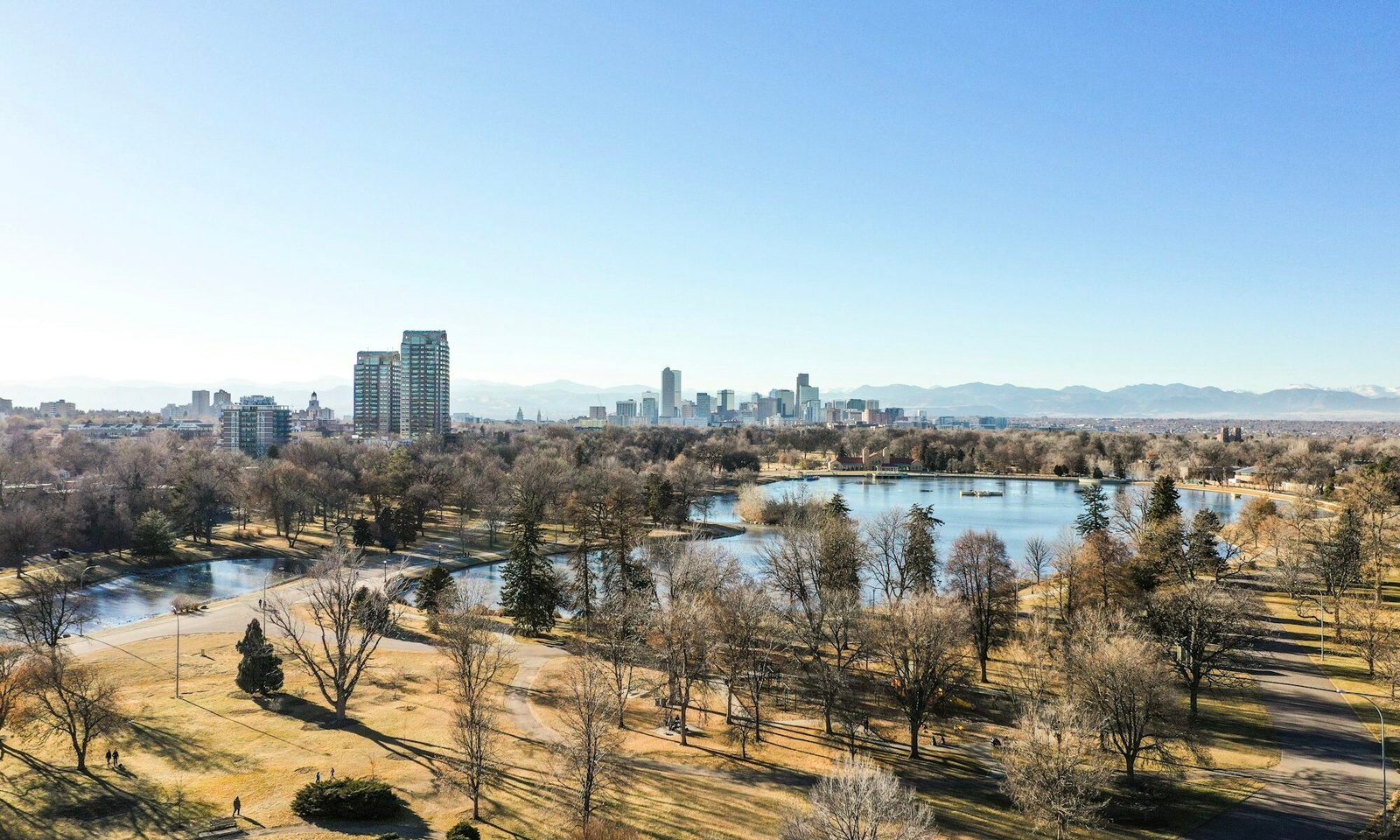
You don’t have to drive to the mountains to get outside. Denver has more than 200 city parks and an extensive network of paved trails. The Cherry Creek Trail and the South Platte River Trail meet at Confluence Park, near downtown, where people tube and kayak in summer. Rent a bikeshare or scooter and ride the trails for an hour. Washington Park, south of downtown, has two lakes, flower gardens and a loop full of runners. City Park has mountain views across a lake, with the downtown skyline in the foreground on clear mornings. The Denver Botanic Gardens, in Cheesman Park, are among the best in the country, with a strong collection of plants from dry, high-altitude climates.
Turning it into a ski weekend
From December to April, Denver is the gateway to some of the best skiing in North America. Resorts like Winter Park, Loveland, Arapahoe Basin, Keystone, Breckenridge and Copper Mountain are about one to two hours west along Interstate 70. Winter Park is reachable by a seasonal ski train from Union Station on weekends, which skips the traffic entirely. Book lift tickets online in advance; window prices are much higher. Check road conditions and chain laws before driving, and remember that I-70 traffic on Saturday and Sunday can add hours. Many locals ski midweek for that reason.
Packing list
- Layers. Temperatures can swing 30 degrees in a day.
- A warm jacket and rain shell for Red Rocks evenings.
- Sunscreen, lip balm and sunglasses for strong high-altitude sun.
- A refillable water bottle. The air is very dry.
- Sturdy shoes for trails in Boulder and the foothills.
Frequently asked questions
How many days do you need in Denver?
Two days for the city, plus one or two for mountain day trips.
Is Red Rocks worth visiting without a concert?
Yes. The park and amphitheater are free to visit when there isn’t an event setup, and the views are stunning.
Do you need a car in Denver?
Not in the city. Rent one for mountain day trips.
What is the best time to visit Denver?
June to September for concerts and mountain access, and mid-September to October for fall colors.
Plan your weekend
- Check the Red Rocks concert calendar and buy tickets early.
- Book a hotel near Union Station or in RiNo.
- Pick one mountain day trip and check for reservations or timed entry.
- Pack layers, sunscreen and a refillable water bottle.
Eric Gamble
Eric Gamble is the founder of Travon Inc. and editor-in-chief of Travon Blog, based in New Orleans. He plans every guide around the questions travelers actually ask before they book: when to go, what it really costs, how to get around and what is worth skipping. Eric oversees research, fact-checking and the regular updates that keep each guide accurate.