Philadelphia Weekend Guide: Liberty Bell, Cheesesteaks and Murals
The room where the country was argued into existence, a market older than most American cities, thousands of murals and a sandwich people fight about. A Philadelphia weekend for history lovers and eaters.
For a weekend in Philadelphia, spend Saturday morning at Independence Hall and the Liberty Bell, lunch at Reading Terminal Market, the afternoon at the Museum of the American Revolution and a cheesesteak in South Philly at night. On Sunday, run up the art museum’s famous steps, see the Barnes Foundation’s Impressionists, wander the Magic Gardens and the Italian Market, and tour Eastern State Penitentiary. Book Independence Hall’s timed tickets ahead. Walk everywhere you can.
Philadelphia is where the United States was born. In 1776, delegates signed the Declaration of Independence in a brick building that still stands. In 1787, the Constitution was drafted in the same room. For a decade, Philadelphia was the nation’s capital. But this is not a museum city. It’s a gritty, funny, proud, food-obsessed place with thousands of murals, a fierce sports culture and neighborhoods full of character. It’s also much cheaper than New York or Boston, and it’s an easy train ride from both.
- 2 daysRight length for a first visit
- 1776Declaration signed at Independence Hall
- 1893Reading Terminal Market opened
- ThousandsOf public murals across the city
Independence National Historical Park
The historic core sits in Old City, a short walk from Center City. Much of it is free.
Independence Hall is where the Declaration of Independence and the US Constitution were debated and adopted. Free ranger-led tours take you into the Assembly Room, where George Washington’s “rising sun” chair still stands. From roughly March through December, you need a timed ticket, available online for a small booking fee or as a limited number of same-day tickets. Go early.
The Liberty Bell hangs in its own glass pavilion across the street. Entry is free, with a security line. Its famous crack appeared in the 1800s, and abolitionists adopted the bell as a symbol of freedom, giving it its name. It’s smaller than many people expect. It’s still a powerful thing to see. Read the inscription, from the Book of Leviticus, about proclaiming liberty throughout the land.
Nearby, the Museum of the American Revolution, opened in 2017, is one of the best history museums in the country. Its centerpiece is the tent George Washington used as his office and sleeping quarters during the war, shown in a dramatic reveal. The National Constitution Center, at the north end of Independence Mall, explains the Constitution with interactive exhibits and a hall of life-size bronze statues of the signers.
Don’t miss Elfreth’s Alley, often called the oldest continuously inhabited residential street in the country, with homes built in the 1700s. Pay respects at Benjamin Franklin’s grave in the Christ Church Burial Ground, where visitors toss pennies onto the stone, a nod to his saying that a penny saved is a penny earned.
Reading Terminal Market
Opened in 1893 under a former railroad terminal, Reading Terminal Market is one of the oldest and largest public markets in the country, with dozens of food stalls. Come hungry. Try a roast pork sandwich with sharp provolone and broccoli rabe, which many locals rank above the cheesesteak. Eat Pennsylvania Dutch specialties from Amish vendors, including soft pretzels, scrapple and apple dumplings. Have ice cream from one of the city’s oldest makers. It gets packed at lunchtime on weekends. Go early or late.
The cheesesteak question
A Philly cheesesteak is thinly sliced beef cooked on a griddle, with melted cheese, on a long roll. That’s the whole idea. The details cause arguments. Pat’s King of Steaks, in South Philly, claims to have invented the steak sandwich in 1930. Geno’s, directly across the street, glows with neon and has been its rival since 1966. Visiting both and comparing is a tourist ritual. Many locals prefer neighborhood shops elsewhere.
How to order at the classic stands: say the cheese, then whether you want fried onions. “Whiz wit” means Cheez Whiz with onions. “Provolone without” means provolone, no onions. Have your money ready, keep the line moving, and enjoy it. American cheese is also popular. Nobody serious puts lettuce on it.
The art museum and the Rocky Steps
At the end of the Benjamin Franklin Parkway, the city’s grand art museum sits on a hill like a Greek temple. Its 72 front steps became famous in the 1976 film Rocky, when the boxer ran up them and raised his arms. Everyone does it. You will too. A bronze Rocky statue sits at the bottom for photos.
Inside, the museum has one of the largest collections in the country, including Van Gogh’s Sunflowers, works by Cézanne and Duchamp, and entire rooms transplanted from European buildings. Allow at least two hours.
Along the Parkway, the Barnes Foundation holds an astonishing private collection of Impressionist and Post-Impressionist art, including more Renoirs and Cézannes than most museums in Paris, displayed in Albert Barnes’s unusual arrangements. The small Rodin Museum nearby has one of the largest Rodin collections outside Paris, including a cast of The Thinker.
Murals and the Magic Gardens
Philadelphia has more public murals than almost any other city in the world, thanks to the Mural Arts program, which began in 1984 as an anti-graffiti effort. Thousands of murals cover walls across the city. Take a guided mural tour, or simply look up as you walk.
On South Street, Philadelphia’s Magic Gardens is a mosaic wonderland by artist Isaiah Zagar, built from broken tiles, bottles, mirrors and bicycle wheels across indoor and outdoor spaces. It’s strange, joyful and photogenic. Timed tickets are recommended.
City Hall and the view from the top
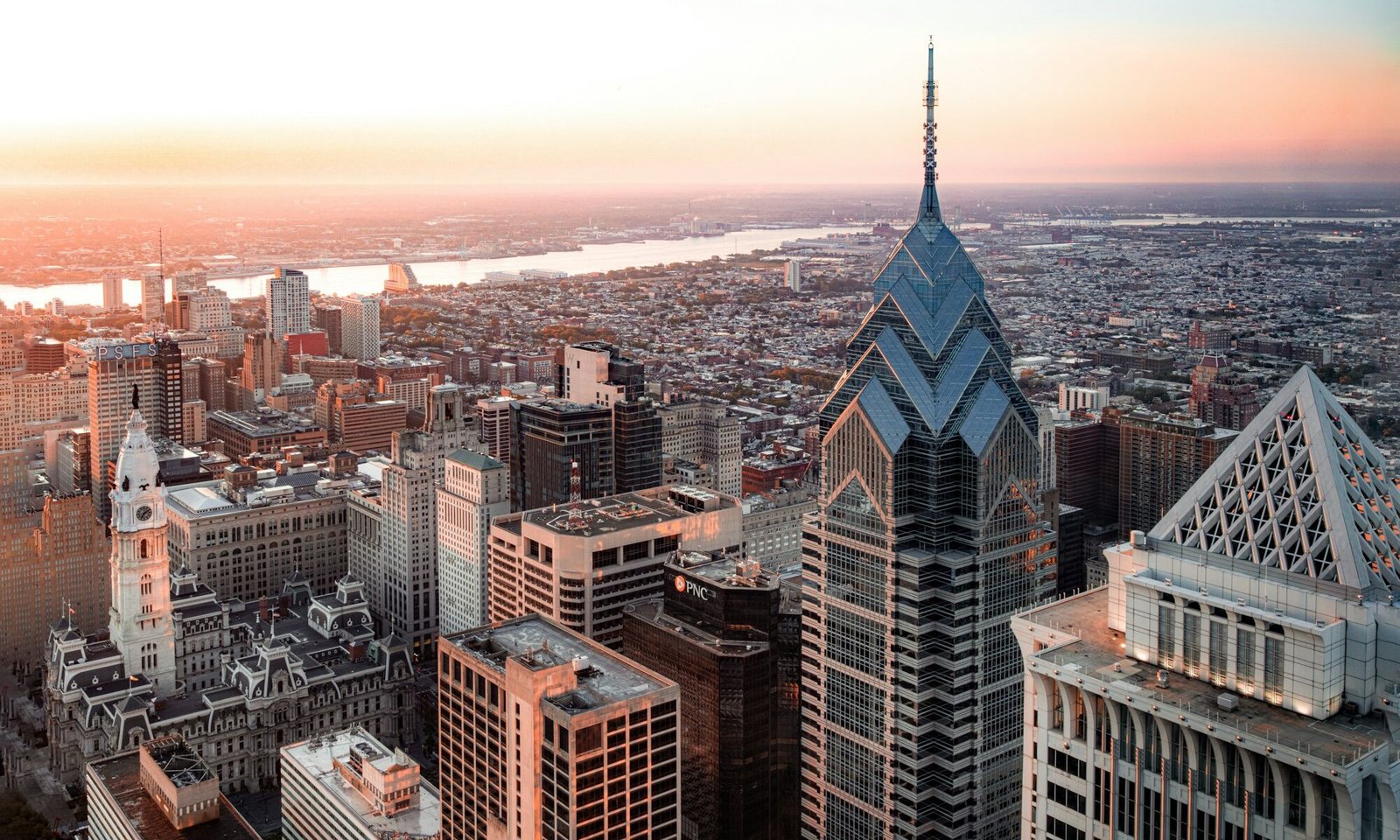
Philadelphia’s City Hall, finished in 1901, is one of the largest municipal buildings in the country, and for a few years it was the tallest habitable building in the world. A 37-foot bronze statue of William Penn, the city’s founder, stands on top. For decades, an unwritten rule kept new buildings shorter than Penn’s hat. Tours take you up the tower to an observation deck just below the statue, with views straight down Broad Street. Tickets are limited, so book ahead.
Eastern State Penitentiary
Opened in 1829, Eastern State Penitentiary was one of the most famous prisons in the world, designed around solitary confinement as a path to penitence. Its crumbling cellblocks now form a museum. See Al Capone’s surprisingly comfortable cell. The audio tour is excellent, and exhibits address modern mass incarceration. In the fall, it hosts a famous Halloween event.
The Italian Market and South Philly
The Italian Market, along 9th Street in South Philadelphia, is one of the oldest outdoor markets in the country, with butchers, cheese shops, produce stands under awnings and a growing number of Mexican and Southeast Asian shops reflecting newer communities. Grab a cannoli, buy some sharp provolone and enjoy the noise.
A two-day plan
Day one. Independence Hall at opening, the Liberty Bell, Elfreth’s Alley and Franklin’s grave. Lunch at Reading Terminal Market. Afternoon at the Museum of the American Revolution or the Constitution Center. Evening cheesesteak in South Philly, then a walk along South Street.
Day two. Morning run up the Rocky Steps, then the art museum or the Barnes. Lunch near Rittenhouse Square. Afternoon at the Magic Gardens and the Italian Market, then Eastern State Penitentiary. Watch the sunset over Boathouse Row, the historic rowing clubhouses on the Schuylkill River, outlined in lights at night.
Packing list
- Comfortable shoes for brick sidewalks and cobblestones in Old City.
- A small bag. Independence Hall and the Liberty Bell have security screening.
- Layers for chilly museum air conditioning and changeable spring weather.
- An umbrella. Summer storms roll in fast.
- A team cap, if you plan to catch a game.
When to go
Spring, from April to June, and fall, from September to November, have the best weather. Summer is hot and humid but full of outdoor events, and the Fourth of July is a big celebration in the city where it all began. In 2026, Philadelphia is at the center of the country’s 250th anniversary, and the city is also hosting matches in the FIFA World Cup in summer 2026. Expect bigger crowds and higher hotel prices during those events. Winter is cold, but museums are quiet and hotels are cheap.
Where to stay
Old City puts you next to the historic sites. Center City and Rittenhouse Square are central, elegant and full of restaurants. Fishtown, north of Old City, is a trendy area with bars and music venues. Hotels are generally cheaper than in New York or Boston, often $180 to $350 a night.
Getting there and around
Philadelphia International Airport connects to Center City by regional rail in about 25 minutes. Amtrak’s 30th Street Station links the city with New York, about 1.5 hours away, and Washington, DC, about 2 hours. Center City and Old City are very walkable. SEPTA buses, trolleys and subways cover the rest. Driving and parking downtown are a hassle.
What it costs
Many of the top historic sites are free, including Independence Hall, the Liberty Bell and the Constitution Center’s grounds. Museums typically charge $20 to $35. A cheesesteak costs about $15 to $20. A weekend for two might cost $800 to $1,400, before travel.
With kids
Philadelphia is a terrific family city. The Franklin Institute science museum has a giant walk-through heart. The Please Touch Museum is designed for young kids. The Philadelphia Zoo was the first zoo in the country. Kids also love running the Rocky Steps, the Liberty Bell and Franklin Square, with its mini-golf and carousel.
Common mistakes
Not booking Independence Hall tickets. Tours fill up, especially in summer.
Only trying the famous cheesesteak stands. Try the roast pork too.
Skipping the neighborhoods. South Philly and Fishtown show the real city.
Driving downtown. Walk and use transit.
History beyond 1776
The founding story is only part of Philadelphia’s history. Next to the Liberty Bell, the President’s House site marks where George Washington and John Adams lived while Philadelphia was the capital. Its open-air exhibit tells the stories of the nine people Washington enslaved there, including Oney Judge, who escaped to freedom in 1796. A few blocks south, Mother Bethel AME Church sits on land owned continuously by Black Americans longer than any other parcel in the country; Richard Allen founded the congregation in 1794, and it became the mother church of the African Methodist Episcopal denomination. The African American Museum in Philadelphia, near Independence Mall, was among the first institutions of its kind built by a major US city. These sites make the founding story fuller and more honest.
A sports town
Philadelphia fans are famously passionate, loud and loyal. The Eagles play football, the Phillies baseball, the Sixers basketball and the Flyers hockey, all in the South Philadelphia sports complex, reachable by subway from Center City. Catching a game is one of the best ways to feel the city’s energy. Wear green or red, cheer hard, and don’t boo anyone unless the crowd does it first.
Day trips
Valley Forge National Historical Park, about 30 minutes northwest, is where Washington’s Continental Army spent the hard winter of 1777–78. Longwood Gardens, about an hour southwest, is one of the great gardens of the world, with huge conservatories and fountain shows. Lancaster County, about 1.5 hours west, is home to one of the largest Amish communities in the country, with farms, markets and quilt shops. And the Jersey Shore, about 1.5 hours east, has classic boardwalk towns like Cape May and Ocean City.
Frequently asked questions
How many days do you need in Philadelphia?
Two days covers the historic sites, the market, the art museum and a cheesesteak. Three days lets you go deeper.
Is the Liberty Bell free?
Yes. Entry to the Liberty Bell Center is free, with a security line.
Do you need tickets for Independence Hall?
Yes, timed tickets are required for much of the year.
Where is the best cheesesteak in Philadelphia?
Everyone has an answer. Try a classic stand and a neighborhood shop and decide for yourself.
Plan your weekend
- Reserve Independence Hall timed tickets.
- Book a hotel in Old City or near Rittenhouse Square.
- Plan your Reading Terminal Market lunch for a weekday or early on a weekend.
- Continue your trip with our Washington, DC itinerary or New York City itinerary.
Eric Gamble
Eric Gamble is the founder of Travon Inc. and editor-in-chief of Travon Blog, based in New Orleans. He plans every guide around the questions travelers actually ask before they book: when to go, what it really costs, how to get around and what is worth skipping. Eric oversees research, fact-checking and the regular updates that keep each guide accurate.