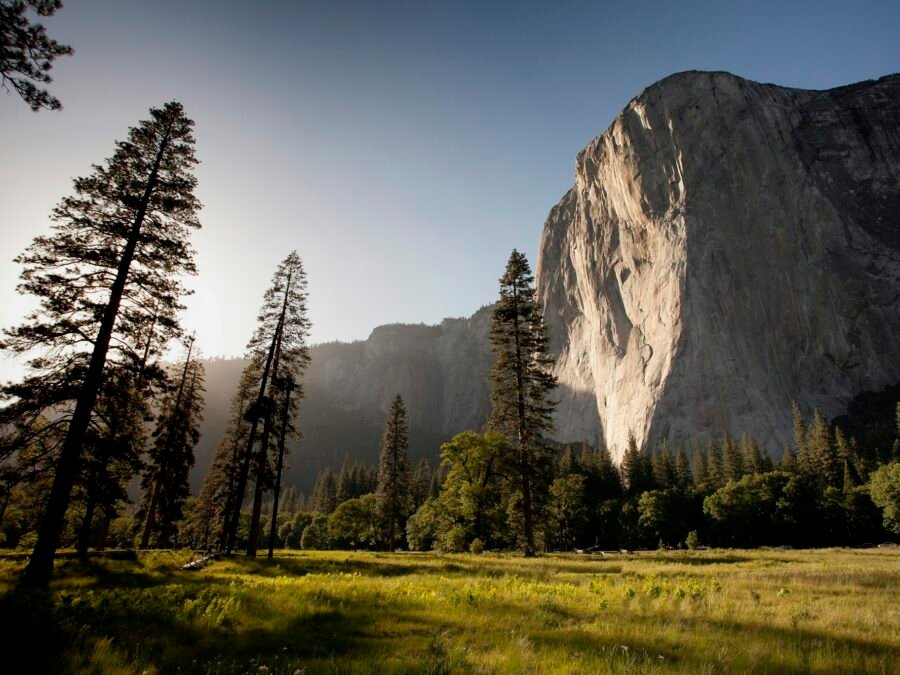
Yellowstone Itinerary: How to Spend 3, 4 or 5 Days in the Park
Four days, two bases and an early alarm. The Yellowstone itinerary we give friends, with the geyser basins in the right order, the best wildlife hours and where to sleep so you are not driving all day.
Four days is the right length for a first Yellowstone trip. Spend days one and two on the geyser basins between Old Faithful and Norris, day three on the Grand Canyon of the Yellowstone and Hayden Valley, and day four at dawn in Lamar Valley for wolves and bison. Sleep in two different areas, not one. Visit in June or September if you can. With three days, cut Lamar. With five, add a day in Grand Teton.
Yellowstone is huge: about 3,472 square miles, larger than Rhode Island and Delaware combined. The main road, the Grand Loop, runs 142 miles in a figure eight, and wildlife jams can turn a 30-minute drive into 90. A good itinerary is mostly about geography. Get that right and the park takes care of the rest.
- 4 daysThe sweet spot for a first visit
- 142 miLength of the Grand Loop road
- $35Seven-day private vehicle entry
- 2 basesOld Faithful area, then Canyon or Gardiner
The biggest planning mistake
Booking four nights in one gateway town. We see it constantly. Someone books West Yellowstone for the whole stay because it has the most hotels, then spends their trip driving two hours each way to Lamar Valley and the Lake area. They see the park through a windshield.
Split it. Two nights near the geyser basins, meaning Old Faithful Inn, Old Faithful Lodge, Grant Village or West Yellowstone. Then two nights in the north or center, meaning Canyon Lodge, Mammoth or Gardiner. Each base keeps your driving under an hour to that day’s sights. You gain three or four hours of park time per day. Over four days, that is an extra full day.
In-park lodging is run by a concessioner and reservations open far in advance. Popular rooms and campgrounds sell out for summer months ahead. If the park is full, look at Gardiner and West Yellowstone first, then Cody or Jackson as fallbacks.
There is no timed-entry system, which makes Yellowstone simpler than Glacier or Rocky Mountain. You just pay the entrance fee or show your pass. Note that from 2026, non-US residents face an extra per-person fee at Yellowstone and several other high-traffic parks. Check nps.gov/yell for the current amount.
When to go
The main roads usually open from mid-April through early November, with some high passes opening later. June is our favorite. Bison calves are everywhere, waterfalls run high and snow lingers on the peaks. September is the best month for photographers and people who hate crowds; elk rut in Mammoth and the light turns gold. July and August are busiest, and still wonderful if you start early.
| Month | Crowds | Weather | Highlights |
|---|---|---|---|
| May | Low | Cold, snow possible | Bears out of hibernation, some roads closed |
| June | Medium-high | Mild, variable | Baby bison, full waterfalls |
| July–Aug | Highest | Warm days, cold nights | Everything open, afternoon storms |
| September | Medium | Crisp, clear | Elk rut, fewer cars |
| Oct | Low | Cold, early snow | Quiet roads, closures begin |
Winter is a different trip entirely. Most roads close to cars and you travel by snowcoach or snowmobile tour. It is magical. It is also expensive and needs its own plan.
Day 1: Old Faithful and the Upper Geyser Basin
Arrive through the West Entrance and drive to Old Faithful. Check the predicted eruption time at the visitor education center; rangers post it for Old Faithful and several other predictable geysers. Watch one eruption from the boardwalk benches, then walk away from the crowd.
The Upper Geyser Basin holds the densest cluster of geysers on Earth, and most people never get past the first viewing area. Walk the boardwalk loop north toward Morning Glory Pool. It is about 1.5 miles one way on flat ground. You pass Castle, Grand, Riverside and Daisy geysers, plus dozens of hot springs. Grand Geyser is the tallest predictable geyser in the world. If its eruption window lines up with your walk, wait for it. People who have seen both say it beats Old Faithful.
For the classic overhead view of Old Faithful, hike the short, steep trail to Observation Point. It takes about 20 minutes up. Have dinner in the Old Faithful Inn’s dining room or just sit in its log lobby, built in 1904, and look up. The lobby alone is worth the stop.
The ground around thermal features can be a thin crust over boiling acidic water. People die in Yellowstone’s hot springs. Stay on boardwalks and marked trails, keep kids close, and never touch the water.
Day 2: Grand Prismatic, Midway and Norris
Go early. The Grand Prismatic Spring parking lot at Midway Geyser Basin fills by mid-morning in summer, and morning steam can hide the colors on cold days anyway. Here is the trick most visitors miss: the boardwalk is the wrong place for the famous view. Drive a mile south to the Fairy Falls trailhead and walk about 0.6 miles to the Grand Prismatic overlook. From above, the rainbow rings make sense. From the boardwalk, you mostly see steam.
Continue north on the Firehole Lake Drive, a short one-way loop with Great Fountain Geyser, then stop at Fountain Paint Pot for bubbling mud pots. In the afternoon, drive to Norris Geyser Basin, the hottest and most acidic thermal area in the park. Steamboat Geyser lives here; it is the world’s tallest active geyser but erupts unpredictably, sometimes days apart and sometimes years.
If you are switching bases, end the day at Canyon or Mammoth.
Day 3: Grand Canyon of the Yellowstone and Hayden Valley
Most visitors don’t know Yellowstone has its own grand canyon. It does, and it is one of the best things in the park. The Yellowstone River drops 308 feet at Lower Falls into a canyon of yellow, pink and orange rock. Walk to Artist Point on the south rim for the postcard view, then to Lookout Point on the north rim. If your knees cooperate, take Uncle Tom’s Trail when it is open, or the Brink of the Lower Falls path, where you stand right above the drop.
In the afternoon, drive south through Hayden Valley toward Yellowstone Lake. Bison herds graze right beside the road, and in summer you will hit at least one bison jam. Stay in your car. A bison can run 35 miles an hour and injures more visitors than any other animal in the park. Pull into a turnout to watch, and use binoculars for grizzlies on the far hillsides.
Return to Canyon for the evening, or drive down to West Thumb Geyser Basin, where hot springs sit right at the edge of the lake.
Day 4: Lamar Valley at dawn and Mammoth Hot Springs
Set the alarm. Wolves and bears are most active in the first hours after sunrise, and Lamar Valley, in the park’s northeast corner, is the best place in the lower 48 to see wolves in the wild. Look for clusters of parked cars with spotting scopes. The people behind those scopes are often wolf watchers who come back every year, and most are happy to let you look.
Afterward, drive west to Mammoth Hot Springs, where hot water builds white travertine terraces that look like a frozen waterfall. Walk the lower and upper terrace boardwalks. Elk often lounge on the lawns in town. Exit through the North Entrance and the Roosevelt Arch in Gardiner.
If you have 3 days or 5 days
Three days: combine days one and two by doing Grand Prismatic at dawn and Norris in the afternoon, skip Lamar, and finish at Mammoth.
Five days: add a day for a real hike. Mount Washburn is about 6 miles round trip with views over half the park. Or exit through the South Entrance and spend a day in Grand Teton, about an hour away. Our Grand Teton guide covers that side.
Wildlife rules that matter
Stay at least 100 yards from bears and wolves. Stay at least 25 yards from bison, elk and all other animals. Those distances are park rules, not suggestions. Carry bear spray on trails and know how to use it. And don’t stop in the middle of the road for a photo. Find a pullout.
Packing for Yellowstone
Pack for four seasons. Summer mornings can be near freezing and afternoons hit the 80s. Afternoon thunderstorms are common in July. Bring layers, a rain jacket, binoculars, bear spray and a cooler, because food options inside the park are limited and lines are long at lunch. Our ten essentials guide covers trail gear.
Getting there
The closest airports are Yellowstone Airport in West Yellowstone (seasonal), Bozeman, Jackson Hole and Cody. Bozeman usually has the most flights and the cheapest rental cars. Salt Lake City is about five hours’ drive and often much cheaper to fly into. A rental car is essential; there is no public transit loop inside the park.
How to actually see wildlife
Luck helps. Timing helps more. Animals in Yellowstone follow a daily rhythm, and most visitors are out at exactly the wrong hours. Between about 10 a.m. and 5 p.m., bears and wolves bed down in shade and timber. Bison and elk keep grazing, so you will see those almost anywhere, but the predators show up at dawn and dusk.
So split your days. Wildlife at first light, geysers at midday, wildlife again in the last two hours before dark. The geyser basins don’t care what time it is. The animals do.
Location matters as much as timing. Lamar Valley and the road from Tower Junction to the Northeast Entrance are the best stretches for wolves. Hayden Valley, between Canyon and the lake, is excellent for bison, grizzlies and the occasional wolf pack crossing the river. The Mammoth area is reliable for elk. Swan Lake Flat, south of Mammoth, is a quiet spot for grizzlies in early summer.
Bring real binoculars. A grizzly at a mile looks like a brown rock without them. A spotting scope is better still if you have one. Watch for clusters of parked cars and long lenses, then pull fully off the road before you stop. And keep a pair of binoculars in the front seat, not buried in the trunk. Bears don’t wait while you dig.
Last point, and it matters. If an animal changes its behavior because of you, you are too close. Back off. The 100-yard and 25-yard rules exist because every summer someone gets gored trying to take a selfie with a bison.
Food, gas and cell service
Inside the park, food is expensive and basic. General stores at Old Faithful, Canyon, Grant Village, Lake and Mammoth sell sandwiches, groceries and ice. Dining rooms in the lodges serve sit-down meals; El Tovar-style fine dining it isn’t. Our advice is to stock a cooler in Bozeman, West Yellowstone or Jackson and eat lunch at a picnic area overlooking a river. You save money and hours.
Gas stations operate at several junctions in summer, including Old Faithful, Canyon, Grant Village, Fishing Bridge, Mammoth and Tower. Prices run higher than outside the park. Keep your tank above half.
Cell service is patchy. You get signal around developed areas and almost nothing in Lamar or Hayden valleys. Download offline maps before you enter and grab the official NPS app, which works offline once you save the park.
What it costs
Entry is $35 per private vehicle for seven days, or covered by the annual pass. In-park lodges in summer typically run from about $200 a night for a basic cabin to $400 or more for historic rooms. Gateway town motels range widely, often $150 to $350 in July. Campgrounds cost roughly $25 to $50 a night. A four-day trip for two, with a rental car from Bozeman, mid-range lodging and cooler lunches, commonly lands between $1,800 and $2,800 before flights. Our road trip cost guide breaks budgets down further.
Frequently asked questions
How many days do you need in Yellowstone?
Four days lets you see the main geyser basins, the canyon and the wildlife valleys without rushing. Three is the minimum.
What is the best entrance to Yellowstone?
For geysers first, the West Entrance. For wildlife first, the Northeast Entrance near Lamar Valley. Coming from Grand Teton, the South Entrance.
Can you see Yellowstone in one day?
You can see Old Faithful and Grand Prismatic in one day, but you will miss most of the park.
Do you need a reservation for Yellowstone?
No timed-entry reservation is required. Lodging and campsites, however, should be booked months ahead.
Book these first
- Two lodging bases: one near Old Faithful, one near Canyon or Gardiner.
- A rental car from Bozeman or Jackson Hole.
- Bear spray, which you can buy or rent in gateway towns but can’t fly with.
- A first-morning alarm for Lamar Valley. Seriously.
Eric Gamble
Eric Gamble is the founder of Travon Inc. and editor-in-chief of Travon Blog, based in New Orleans. He plans every guide around the questions travelers actually ask before they book: when to go, what it really costs, how to get around and what is worth skipping. Eric oversees research, fact-checking and the regular updates that keep each guide accurate.