Miami Travel Guide: South Beach, Little Havana and the Everglades
Pastel Art Deco, cafecito at a walk-up window, murals the size of buildings and alligators an hour from downtown. A four-day Miami plan that goes well beyond the beach clubs.

Spend four days in Miami. Day one on South Beach and an Art Deco walking tour. Day two in Little Havana for Cuban coffee and food, then Wynwood’s murals. Day three at Vizcaya Museum and Gardens and the beaches of Key Biscayne. Day four in the Everglades. Visit from December to April for dry, warm weather, and avoid spring break and Art Basel week if you hate crowds. Stay in South Beach for the classic experience, or Brickell and downtown for better value.
Miami is the closest thing the United States has to an international capital. More than half the people in the metro area were born outside the country, many from Cuba and other parts of Latin America and the Caribbean. You hear Spanish everywhere. You drink Cuban coffee from walk-up windows. The beaches are world-famous, the nightlife runs until dawn, and an hour away sits one of the strangest and most important wilderness areas in the country. Most visitors only see South Beach. That’s a mistake. The city’s real character lives in its neighborhoods, its kitchens and its music, and those are a short ride across the bay. This plan gives each of them a day.
- 4 daysFor the city and a day trip
- 800+Art Deco buildings in Miami Beach
- Dec–AprDry season and best weather
- 1 hourTo the Everglades
Miami vs Miami Beach
First, a geography lesson that confuses many visitors. Miami is the city on the mainland, with downtown, Brickell, Little Havana, Wynwood and the Design District. Miami Beach is a separate city on a barrier island across Biscayne Bay, home to South Beach, Ocean Drive and the Art Deco District. Causeways connect them. A trip without a car means choosing where you spend your time, because getting between the two can take 20 to 45 minutes in traffic.
Day 1: South Beach and the Art Deco District
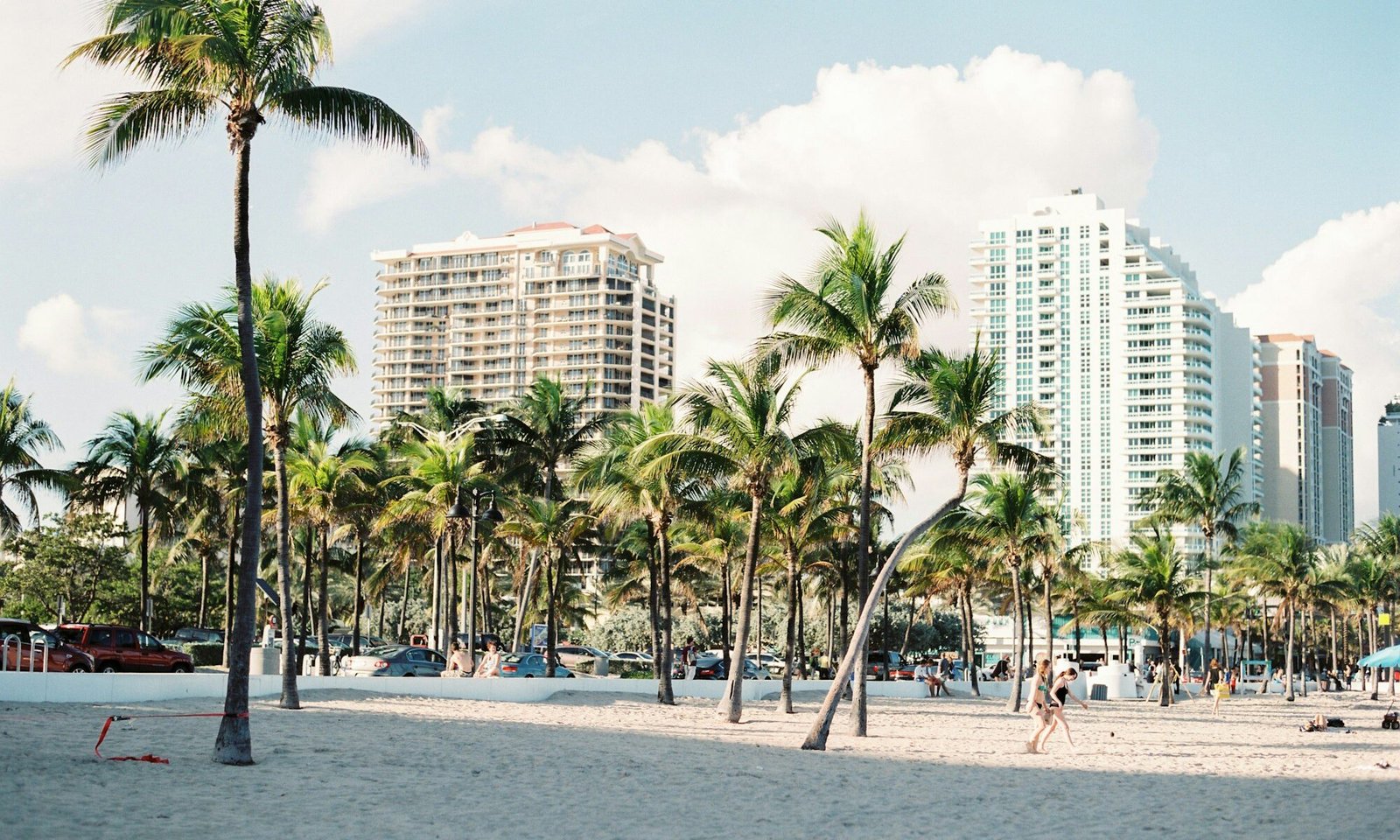
Morning: the beach. South Beach, the southern end of Miami Beach, has wide white sand, turquoise water and the famous colorful lifeguard towers. Go early, before 10 a.m., when the sand is cool and the crowds thin. Lummus Park, along Ocean Drive, is the classic stretch. South Pointe Park, at the southern tip, is calmer, with a pier and views of cruise ships leaving the port.
Afternoon: Art Deco. Miami Beach has one of the largest concentrations of Art Deco architecture in the world, mostly built in the 1930s and 1940s. Pastel facades, neon signs, porthole windows and racing stripes line Ocean Drive, Collins Avenue and Washington Avenue. In the 1970s, many of these buildings were threatened with demolition, until preservationists led by Barbara Capitman fought to protect them. The district was listed on the National Register of Historic Places in 1979. Join a guided walking tour from the Art Deco Welcome Center to learn the stories behind the buildings.
Evening: Ocean Drive and Lincoln Road. Ocean Drive comes alive at night, with neon glowing, music pouring out of hotels and sidewalk cafés. Be warned: restaurants on Ocean Drive are often overpriced, with big drinks and big bills. Some add automatic service charges of 18 to 20 percent. Read the menu and the receipt before you tip again. Walk a few blocks to Lincoln Road, a pedestrian mall with better options, or to Española Way, a Spanish-style lane with restaurants and string lights.
Day 2: Little Havana and Wynwood
Morning: Little Havana. Cross to the mainland for Little Havana, the heart of Miami’s Cuban community since the 1960s. Walk Calle Ocho, Southwest 8th Street, past cigar shops where you can watch workers hand-roll cigars, fruit stands, art galleries and murals. Watch older men play intense games of dominoes at Máximo Gómez Park, known as Domino Park. Order a cafecito, a tiny, sweet, powerful shot of Cuban espresso, from a ventanita, a walk-up coffee window. Then eat a Cuban sandwich: ham, roast pork, Swiss cheese, pickles and mustard pressed on Cuban bread. Versailles, a famous restaurant on Calle Ocho since 1971, is a classic stop.
On the last Friday of each month, Viernes Culturales brings live music, art and dancing to Calle Ocho.
Afternoon: Wynwood. Once a neighborhood of warehouses, Wynwood is now one of the world’s best-known street art districts. The Wynwood Walls, an outdoor museum of murals by artists from around the globe, opened in 2009 and charges admission. But the whole neighborhood is covered in murals, and walking the streets around it is free. Stop at breweries, galleries and cafés. Nearby, the Design District has luxury shops and public art.
Evening: dinner in Wynwood or Brickell, then a rooftop bar with views of the skyline.
Day 3: Vizcaya and Key Biscayne
Morning: Vizcaya Museum and Gardens. Built between about 1914 and 1922 as the winter home of industrialist James Deering, Vizcaya is an Italian Renaissance-style villa on Biscayne Bay, filled with European art and surrounded by formal gardens with fountains and statues. It’s one of the most beautiful places in Miami and a quiet escape from the city. Allow about two hours.
Afternoon: Key Biscayne. Drive over the Rickenbacker Causeway to Key Biscayne. At the southern tip, Bill Baggs Cape Florida State Park has one of the best beaches in the area, calmer than South Beach, and a lighthouse built in 1825, the oldest standing structure in Miami-Dade County. Climb it for views of the Atlantic and the skyline. Crandon Park, nearby, has a family-friendly beach and a nature center.
Day 4: The Everglades
About an hour from downtown, Everglades National Park protects the largest subtropical wilderness in the United States, a vast, slow-moving river of grass that flows south toward Florida Bay. It’s home to alligators, crocodiles, manatees, Florida panthers and hundreds of bird species. It’s the only place in the world where alligators and crocodiles live side by side.
Two easy ways to visit from Miami:
- Shark Valley: off the Tamiami Trail, with a 15-mile paved loop you can bike or tour by tram, with a tall observation tower. You will likely see dozens of alligators.
- Royal Palm and the Anhinga Trail: near the main park entrance, west of Homestead. A short boardwalk where alligators, turtles and wading birds are often right beside you.
Airboat rides are sold by operators along the Tamiami Trail, outside the park’s main areas, including tours run by the Miccosukee Tribe. They’re fun and loud. The park itself doesn’t allow airboats in most areas. Visit in the dry season, December to April, when wildlife gathers around water and mosquitoes are bearable. In summer, the mosquitoes are legendary.
Nearby, Biscayne National Park is about 95 percent water, protecting coral reefs and islands. Boat and snorkel tours run from the visitor center at Convoy Point.
What to eat
- Cuban sandwich and cafecito in Little Havana.
- Croquetas: small fried rolls of ham or chicken, a Miami snack staple.
- Stone crab claws: served cold with mustard sauce, in season from mid-October to May.
- Ceviche and Peruvian food, plentiful thanks to Miami’s South American community.
- Key lime pie.
- Haitian food in Little Haiti, from griot to legume.
Nightlife
Miami’s nightlife is famous, and it starts late. Big clubs in South Beach and downtown often don’t fill up until after midnight, and some stay open until 5 a.m. Covers and drink prices are high, especially for headline DJs. For a more relaxed night, try the rooftop bars of Brickell and downtown, the cocktail bars and breweries of Wynwood, or the live salsa and Cuban music in Little Havana, where Ball & Chain, a bar first opened in the 1930s, has a tropical stage shaped like a pineapple. Dress codes matter at many clubs: no sneakers or flip-flops, so check before you go.
Art and culture
Every December, Art Basel Miami Beach turns the city into one of the art world’s biggest stages, with satellite fairs and parties across town. The rest of the year, visit the Pérez Art Museum Miami (PAMM) on the bay, with hanging gardens on its terraces, the Institute of Contemporary Art in the Design District, which is free, and The Bass in Miami Beach. The New World Center, home to a training orchestra, projects concerts onto a huge outdoor wall in its park, with free WALLCAST screenings that people enjoy from picnic blankets on the lawn.
When to go
December to April is the dry season, with warm, sunny days in the 70s and low 80s and low humidity. It’s also peak season and most expensive. Spring break, mostly in March, brings huge college crowds to South Beach; the city has imposed curfews and restrictions in recent years. Art Basel Miami Beach, in early December, fills hotels and pushes prices up. Summer is hot, humid and stormy, with daily afternoon thunderstorms, and hurricane season runs from June to November. Seaweed called sargassum can pile up on beaches in spring and summer.
Where to stay
South Beach: the classic choice for beaches and nightlife, with Art Deco boutique hotels and big resorts. It can be noisy and pricey. Mid-Beach and North Beach: quieter, with big resorts and more space. Brickell and Downtown: modern high-rises, closer to Little Havana and Wynwood, often better value. Coconut Grove and Coral Gables: leafy, relaxed and residential.
Many hotels charge resort fees. Read our guide on resort fees explained before booking.
Getting around
From Miami International Airport, the Metrorail connects to downtown and Brickell. The free Metromover loops downtown and Brickell. Buses run to Miami Beach. Rideshares fill the gaps. A car helps for Key Biscayne, Vizcaya and the Everglades, but parking in Miami Beach is expensive and limited. Traffic is heavy, especially on the causeways at rush hour.
What it costs
Miami is expensive in high season. Hotels in South Beach often cost $250 to $500 a night or more in winter, plus resort fees. Food ranges from $10 Cuban sandwiches to very expensive restaurants. Everglades entry is $35 per vehicle, or covered by the annual pass. A four-day trip for two typically runs $2,000 to $3,500, before flights.
With kids
Kids love the beaches, the Everglades tram and airboats, Zoo Miami, and the Frost Science Museum, with its huge three-level aquarium and planetarium. Crandon Park on Key Biscayne has calm water and a playground. Skip South Beach at night with young kids.
Safety
Miami is generally safe in tourist areas, but watch your belongings on crowded beaches, keep drinks close at clubs and use licensed taxis or rideshares at night. Swim near lifeguards; rip currents are common. Respect heat and sun, and drink water. In the Everglades, keep a safe distance from alligators. Never feed them.
Common mistakes
Only seeing South Beach. Little Havana, Wynwood and the Everglades are essential.
Eating on Ocean Drive without checking prices. Some bills shock visitors.
Visiting the Everglades in July. The mosquitoes will win.
Ignoring event calendars. Spring break and Art Basel change everything.
Packing list
- Reef-safe sunscreen, a hat and sunglasses.
- A swimsuit and a cover-up for walking to and from the beach.
- Light, breathable clothes and one dressy outfit for nights out.
- Bug spray for the Everglades, even in winter.
- A small umbrella or rain jacket for afternoon storms.
- Our full beach vacation packing list.
Frequently asked questions
How many days do you need in Miami?
Three to four days covers the beach, Little Havana, Wynwood and a day trip to the Everglades.
When is the best time to visit Miami?
December to April, for dry, warm weather. Avoid spring break and Art Basel if you dislike crowds.
Is South Beach the same as Miami?
No. South Beach is in the city of Miami Beach, across Biscayne Bay from Miami.
Can you do the Everglades as a day trip from Miami?
Yes. Shark Valley and the Anhinga Trail are about an hour from downtown.
Plan your trip
- Choose your base: South Beach for the beach, Brickell for value and access.
- Check dates for spring break and Art Basel before booking.
- Book an Art Deco walking tour and Vizcaya tickets.
- Pair Miami with our Florida Keys road trip.
Eric Gamble
Eric Gamble is the founder of Travon Inc. and editor-in-chief of Travon Blog, based in New Orleans. He plans every guide around the questions travelers actually ask before they book: when to go, what it really costs, how to get around and what is worth skipping. Eric oversees research, fact-checking and the regular updates that keep each guide accurate.